How Fast Can an ATV Go? Engine Sizes and Speed Realities
Jun 05 2026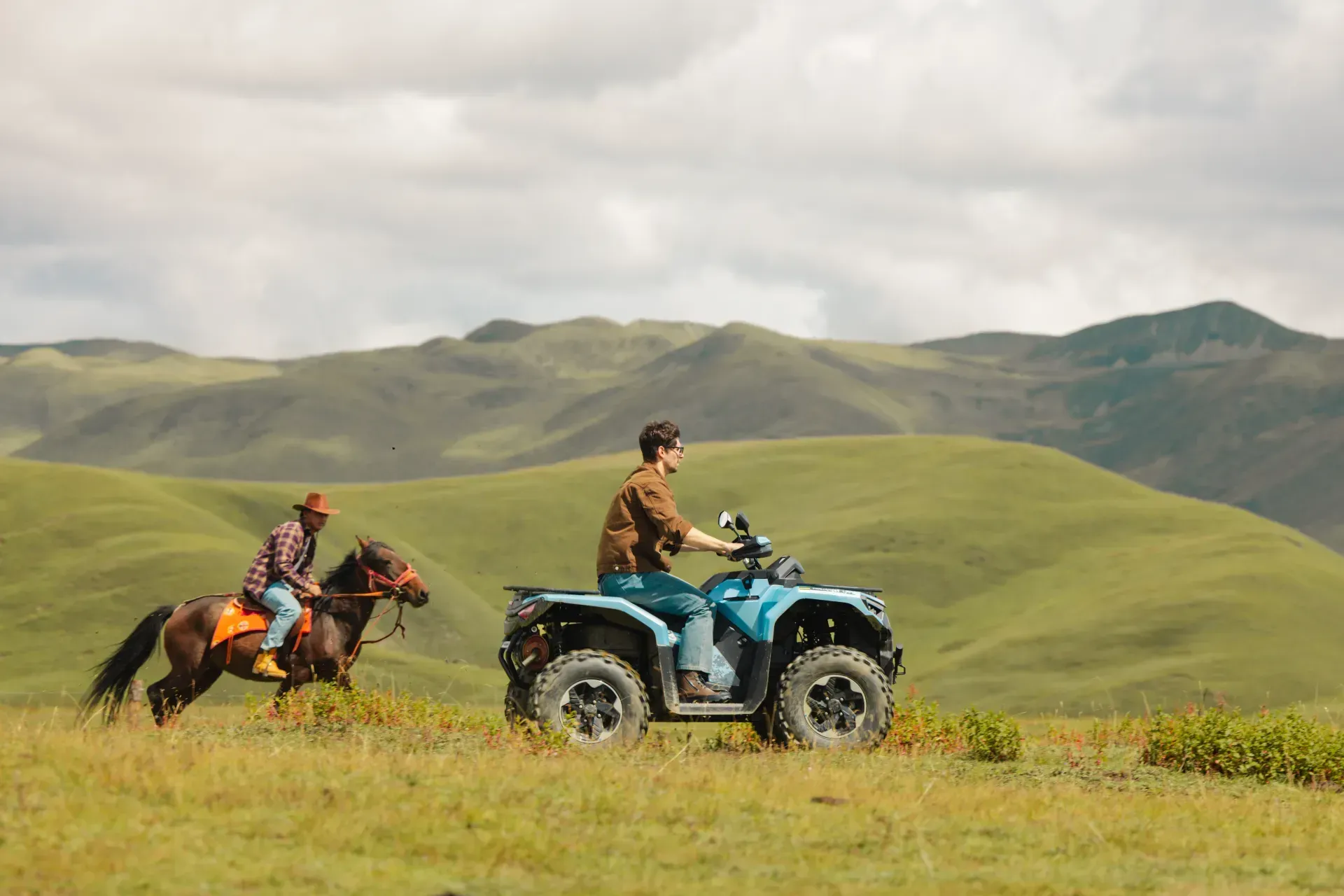
You might be looking at your first ATV. And the main thing you want to know is pretty simple: how fast can an ATV go?
Maybe you need it to haul feed around the farm. Or you’re just planning weekend rides with friends. Either way, actual top speed matters more than a brochure number. Sure, you’ve heard about the crazy builds online – custom machines that hit 190 mph (about 305 km/h). But let’s put that aside. The stock ATVs you can actually buy are tuned for safety and real world use. Most of them top out somewhere between 15 mph and a little over 80 mph.
So what really decides that number? Three things: engine size (cc), how heavy the ATV is, and how the factory set it up from the start. Nothing mysterious. Let’s go through the actual industry data, and I’ll walk you through it step by step.
The Speed Chart: Average MPH by ATV Engine Size
To keep things simple, here’s a clean speed ladder based on engine displacement. These are stock ATVs on flat ground, no mods. Take a look:
Engine Size (cc) | Average Top Speed | Example Industry Models | Primary Use Case |
50cc – 110cc | 15 to 30 mph (roughly 24-48 km/h) | Polaris Outlaw 50, Kawasaki KFX 50 | Kids and teens, just learning the basics |
125cc – 250cc | 25 to 35 mph (40-56 km/h) | Can-Am Renegade 110, Denago Daytona 250 | Light patrol around the property, teen chores |
400cc – 500cc | 45 to 65 mph (72-104 km/h) | Honda FourTrax Rancher, Polaris Sportsman 450 | Hunting, farm work, everyday utility tasks |
600cc – 850cc | 65 to 75 mph (104-120 km/h) | Yamaha Raptor 700R, Can-Am Renegade 650 | Sport riding or heavier utility work |
900cc and up | 80+ mph (128+ km/h) | Can-Am Outlander 1000R, Polaris Scrambler 1000 | Racing, hardcore off-road fans |
1. Lightweight Class: 110cc – 250cc
These are your small-displacement ATVs. If you go on Google and search “how fast does a 125cc ATV go”, the real stock top speed you’ll find is around 25 to 35 mph. Nothing crazy. But here’s the thing – they don’t need massive power. Their big wins? Great fuel economy, light weight, and easy handling. Perfect for a beginner cruising around a cornfield or hauling a little hay.
2. The Workhorse Range: 400cc – 600cc+
This displacement category is the real gold standard for farming, industrial work, and commercial patrols worldwide. On a flat, open stretch, they’ll do 45 to 65 mph. But don’t get it twisted. The engineers who built these weren’t thinking about drag races.
Their main focus is Low-end Torque. That’s the pulling power you get at low RPMs. It means you can drag a thousand pounds of gear up a steep hill without the engine gasping for air or stalling halfway. That’s what matters.
6 Real Things That Inadvertently Slow Down Your ATV Speed
A lot of people just read the brochure and think they’ll hit that top speed every time. Then reality hits. Out on the trail or in the field, you often go slower. Why? Because these six sneaky “speed vampires” are quietly holding you back.
Factory Speed Limiters
You just bought a new ATV, and it feels like it won’t go past half throttle. Don’t panic. The factory installs a physical throttle screw or an ECU limiter on purpose. Think of it as a cautious coach that keeps the gas pedal from going wild. It stops new riders from flying into a corner and flipping over.
The “Big Tires” Trap
We get it – big, wide tires look tough. But here’s the hidden cost. Larger tires add a ton of weight. That creates something called Rotating Mass. It’s the inertia your wheels have to fight every time they spin. More mass means slower acceleration and a lower top speed, even if the bigger diameter should theoretically roll farther per rotation.
Extra Cargo and Vehicle Weight
You bolt on a heavy steel bumper, add a winch mount, strap a toolbox and a big cooler to the back. Then you ride through mud and it cakes the undercarriage. All that extra weight adds up fast. And it drags down your top speed more than you’d think.
Low Tire Pressure
When you hit rocky trails or deep mud, you air down to get better grip. Makes sense. But low pressure also increases the tire’s contact patch with the ground. That blows up your Rolling Resistance – the friction and deformation that fight against your forward motion. So you get traction, but you lose speed.
High Altitude and Thin Air
Ever ride up in the mountains and feel your ATV get sluggish? That’s normal. Most gas engines rely on a precise Air to Fuel Ratio – the perfect balance between air weight and fuel weight. Up high, there’s less oxygen. So your engine can’t burn fuel as efficiently, and power drops.
Terrain Surface Resistance
Dry, hard dirt lets you fly. But the moment you ride into deep mud, loose sand, or fresh snow, your tires start slipping and sinking. That creates massive resistance. Your engine has to work way harder, and your speed naturally falls off a cliff.
How to Get the Best Performance Without Modifying Your ATV
You don’t need to drop a ton of cash on aftermarket exhaust pipes or high flow air intakes. Honestly, most of those mods are a bad idea. They can burn up your engine, void your warranty, or make your ATV too loud for legal trails. So how do you get great performance the smart way? Lean into the factory engineering.
1. Rely on Factory-Matched Powertrains
If you want to haul heavy loads without losing speed, look for an ATV where the engine size, gear ratios, and suspension were designed together. That’s what Factory Engineered Geometry means.
And here’s something interesting for 2026. The industry is seeing a real shift toward Alternative Powertrain Tech (electric and hybrid systems). Old school electrics used to top out at 31 mph and feel weak. But new high end electric powertrains skip the complex transmission. They send instant torque straight to the wheels. No lag. No mods needed.
2. Get EPS Standard – Save Your Arms
When you’re riding fast over rocks or through deep mud, the handlebars shake violently. That vibration pounds your hands and arms, causing serious Hand Fatigue. And if your grip slips at high speed? That’s dangerous. Some new models, like the 2026 SWM lineup, come stock with EPS (Electronic Power Steering). It absorbs those shocks and keeps you in control without wearing you out.
3. Smart Safety for High Center of Gravity Vehicles
Here’s a fact. ATVs have a high center of gravity and no roll cage or seatbelt like a UTV. Take a turn too fast on uneven ground, and you’re looking at a serious ATV accident – a rollover. Old mechanical ATVs have no answer for that.
But newer ones, like the SWM 2026 heavy duty models, include a digital safety net called Smart Fleet Management. It has a built in automotive grade gravity sensor that constantly checks your ATV’s tilt angle. If you roll over in the middle of nowhere, the system automatically triggers an alert within a fraction of a second. It sends a real time GPS Live Location to your fleet manager or emergency contacts. That’s real protection for your body and your asset.
Conclusion: Choose True Pulling Power Over Empty Speed Numbers
So let’s wrap this up. Figuring out how fast an ATV can go? It’s not about chasing some big number on a spec sheet. On a real farm, during an actual patrol, or out in the backcountry, what matters way more is low end torque, factory built comfort (like EPS that saves your arms), and smart digital safety features. Those things will keep you working longer, safer, and happier than any top speed bragging right ever will.
-
Jun 10 2026
learn more
 UTV Troubleshooting Guide: How to Troubleshoot Common Side by Side Problems
UTV Troubleshooting Guide: How to Troubleshoot Common Side by Side Problems
UTV Troubleshooting Guide: How to Troubleshoot Common Side by Side Problems
-
Jun 08 2026
learn more
 How to Maintain an ATV: The Ultimate Guide for High-Performance Reliability
How to Maintain an ATV: The Ultimate Guide for High-Performance Reliability
How to Maintain an ATV: The Ultimate Guide for High-Performance Reliability
-
Jun 05 2026
learn more
 How Fast Can an ATV Go? Engine Sizes and Speed Realities
How Fast Can an ATV Go? Engine Sizes and Speed Realities
How Fast Can an ATV Go? Engine Sizes and Speed Realities
-
Jun 04 2026
learn more
 ATV Uses: 25 Common Ways to Get More Out of Your Vehicle
ATV Uses: 25 Common Ways to Get More Out of Your Vehicle
ATV Uses: 25 Common Ways to Get More Out of Your Vehicle