ATV to Plow Snow: How to Use Your ATV for Winter Snow Removal
Jul 07 2026
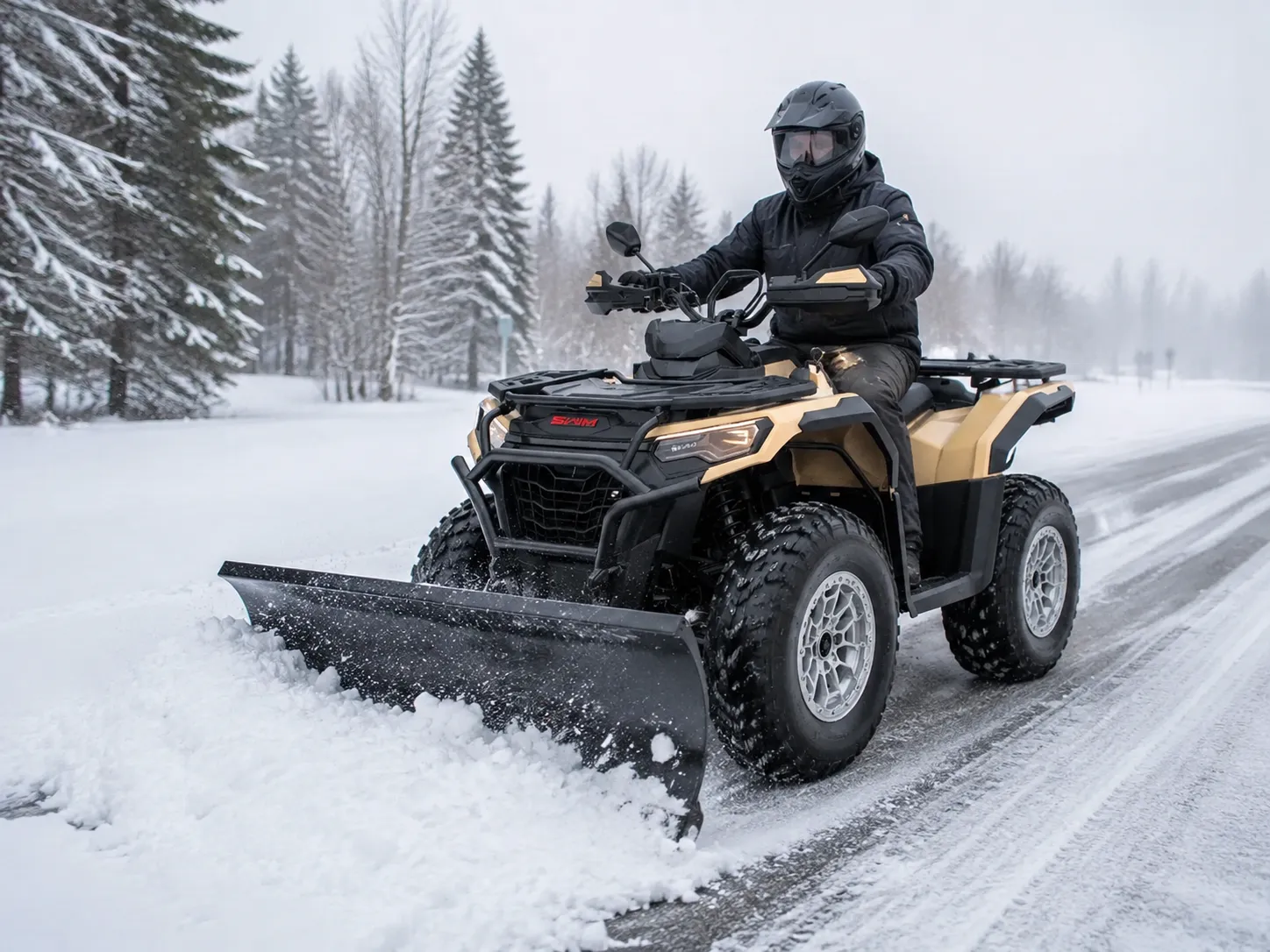
Using an atv to plow snow is one of the smartest ways to handle heavy winter weather on your property.
When a winter blizzard buries your private driveway, farm lane, or backyard under a thick blanket of snow, a walk-behind snow thrower is not only slow – it also leaves your back aching. That’s when you turn the ATV sitting in your shed into a snow-moving monster. It can clear snow at least five times faster, and honestly, you get to enjoy the thrill of gunning the throttle in the white stuff.
So, can your machine actually do this? What parts do you need to buy? How do you push without damaging your quad? This no-nonsense guide breaks it all down for you, step by step.
Can You Use an ATV to Plow Snow?
Yes, an ATV Can Plow Snow With the Right Setup
The answer is a definite yes. ATVs are built to chew up rough terrain, so with the right three-piece add-on – a snow plow blade, a chassis mount, and a winch for lifting – your machine turns from a warm-weather toy into a serious winter workhorse. Across North America, farmers and rural homeowners rely on their quads to clear snow every single season. It’s not a gimmick; it’s a proven solution.
How Much Snow Can an ATV Plow?
A standard ATV can easily handle 6 to 8 inches (about 15 to 20 cm) of fresh, fluffy snow without breaking a sweat. If your machine has a bigger engine and more heft, you can push through over a foot (roughly 30 cm) of wet, heavy snow. But here’s the catch: the real limit isn’t just depth. It’s the density. That hard, icy crust that’s been sitting for days? That stuff fights back. You’ll have to shave it in layers, or angle the blade to slice it sideways instead of bulldozing straight on.
What Equipment Do You Need for an ATV Snow Plow?
To get your ATV ready for winter work, you need these three core hardware pieces. Don’t skip any.
Snow Plow Blade
This is the steel shield that actually meets the snow. When shopping, pay attention to two main specs.
Size: Common blades run from 48 to 60 inches wide. For a typical ATV, 52 or 54 inches is the sweet spot – it fully covers your machine’s width so you don’t leave an untouched stripe, but it’s not so huge that it overloads your front suspension.
Material: Traditional steel blades are tough and great for gravel driveways. Polyethylene (poly) blades are lighter, and snow doesn’t stick to them as much, so they glide through drifts more smoothly. Either way, make sure the blade has replaceable wear bars and skid shoes at the bottom. These act like sacrificial soles – they grind against the pavement so your expensive asphalt doesn’t get gouged.
Winch and Plow Mount
Winch: Your plow blade is heavy, and you need to lift it off the ground when you reverse or turn. That’s what the front-mounted winch does – it raises and lowers the blade via a steel cable. If your ATV already comes with a factory-equipped 3,500-lb or heavier winch, you’ve just saved a few hundred bucks in aftermarket parts and wiring headaches.
Plow Mount: This bracket attaches the blade to your machine. You have two main styles: front-mount and mid-mount. Go with mid-mount if you can. Why? Because a mid-mount system channels the enormous pushing force directly into the strongest part of the chassis – the central frame. A front-mount setup transfers that stress to your suspension arms and A-arms, which aren’t designed for that abuse. Trust me, you don’t want to bend an A-arm in the middle of a blizzard.
Tires and Traction Accessories
On snow and ice, traction is everything. If your wheels just spin and dig holes, you’re not moving. Two items turn a stuck ATV into a gripped-up tank.
Tire chains: Wrap these around your rear tires. They bite into ice like claws and give you forward motion when you’d otherwise be polishing the snow.
Rear ballast: This is a pro tip that too many people ignore. When you hang all that weight off the front with a plow, your ATV’s center of gravity shifts forward, and the rear tires lose grip. Fix it cheaply: strap two sandbags – about 50 to 100 pounds total – onto your rear cargo racks with bungee cords. That balances the weight distribution and keeps all four wheels planted. Your 4WD system will thank you.
How to Choose an ATV for Snow Plowing
Not every ATV is cut out for this heavy work. If you’re shopping for a new machine and snow plowing is on your list, match these specs.
Choose Enough Power for Your Snow Conditions
Horsepower matters, but for plowing, it’s torque that does the real work. The industry rule of thumb: engine displacement should be at least 400cc to 500cc. Anything smaller, and you’ll struggle with wet, heavy slush. The engine will bog down, or worse, you’ll overheat and burn up the drive belt.
If you have an extra-long driveway or deal with serious lake-effect snow, step up to a V-twin engine platform. These motors produce thick, grunty low-end torque that shoves snow like it’s nothing. That brute force makes all the difference when the white stuff gets deep and dense.
4WD Is Important for Snow Plowing
Let’s be honest: a 2WD ATV is practically useless for snow plowing. When that heavy blade bites into a drift, the rear wheels spin, the front washes out, and you go nowhere.
You need switchable 4WD at minimum. Even better: get a machine with a front differential lock. When one tire hits black ice and spins freely, the diff lock forces equal power to all four wheels, so you claw forward like a tank instead of sitting there watching your tires polish the snow.
Weight and Durability Affect Plowing Performance
Physics doesn’t lie – heavier machines push snow better. A lightweight, small-displacement quad gets shoved around by the snow instead of the other way around. You want a solid, heavy chassis with a rugged steel frame that stays planted.
And here’s something people often forget: plowing means sustained heavy pushing at low speeds, which generates heat in the transmission and engine. If your machine has a dedicated heavy-duty cooling system that circulates fluid even when airflow is minimal, you can work for hours without overheating – a big deal in subzero temps.
Plowing Snow With ATV Step by Step
Let’s walk through the actual process. Follow these steps to clear snow faster while protecting your machine and your driveway.
Step 1: Check Your ATV Before Plowing
Before you fire up the engine, check your oil and coolant levels. And don’t forget tire pressure – this is a big one. Drop your PSI to about 4 or 5 pounds. That flattens the tire footprint a bit and gives you more surface contact with the ground. Better grip without spending a dime.
Step 2: Adjust the Snow Plow Blade
Whatever you do, don’t push straight on with a flat blade – that just makes you work harder. Use the angle adjustment mechanism on the back of the blade to set it at roughly 25 to 30 degrees off center. Now when you drive forward, snow flows sideways off the blade and gets tossed to the shoulder. Less resistance, less strain.
Step 3: Start Plowing From the Right Direction
Here’s a strategy that pays off all winter: plan your first pass right down the middle of your driveway or yard. Push that first load as far to the edges as you can. Why? Because if you start piling snow at the edge right away, those piles freeze solid after a few storms and become icy mountains that even the biggest ATV can’t budge. Start wide and stay ahead.
Step 4: Control Your Speed and Traction
I know you might be curious about how fast an ATV can go on open trails – we’ve all been there. But plowing is not the time for speed. Lock your machine into low-range 4WD and keep your speed under 5 miles per hour. Plowing is about low-end torque, not velocity. Some beginners like to charge into snowbanks at speed – that’s incredibly dangerous. If there’s a hidden curb, fire hydrant, or rock under that snow, a high-speed hit will launch you off the seat and destroy your front suspension and A-arms.
8 Tips for Using an ATV to Plow Snow Better and Safer
You want to be the person on your block who makes snow removal look easy. Keep these eight golden rules in mind.
1. Plow Snow Early Before It Gets Too Deep
Don’t wait for the storm to end. The smartest ATV riders get out there when the snow is only 3 to 4 inches deep. It’s light, it’s fluffy, and it moves like nothing. If you let it pile up to a foot and pack down under its own weight, you’re setting yourself up for a much harder job.
2. Plan Where You Will Push Snow Before Starting
Take a walk around your property before the first flake falls. Know exactly where you’re going to stash that snow. Avoid drainage grates, your neighbor’s walkway, and any spots with buried utility lines. Mark them in your head so you don’t accidentally bury something important.
3. Adjust Your Snow Plow Blade for Different Conditions
Open areas like wide driveways? Angle the blade to sling snow to the side. Tight corners or spots where you need to pile snow in one heap? Straighten the blade out. Switching angles as needed cuts your clearing time in half – it’s that simple.
4. Use the Right Speed, Gear, and Driving Technique
This deserves repeating: do not use high range when you’re pushing snow – ever. Running in high gear under heavy load at slow speeds cooks your CVT drive belt. It gets hot, wears out fast, and can snap right in the middle of a storm. Low gear is your friend – use it every single time.
5. Use 4WD and Maintain Good Traction
Engage 4WD before you start moving. If you feel the tires break loose and start spinning, don’t just mash the throttle. Back off. Lift the blade an inch or two to reduce the load. Let the tires regain bite, then ease back into the push. Smooth and steady wins this race.
6. Avoid Overloading Your ATV When Plowing Snow
If you’re pushing snow across a long stretch, the pile in front of your blade gets heavier and heavier – at some point it feels like wet concrete. Pay attention to your engine sound. If it starts to bog down and your speed drops, you’re overloaded. Back up, take a smaller bite, or hit it at an angle. Two lighter passes are faster than one stalled-out attempt.
7. Stay Safe When Operating an ATV Snow Plow
I know it’s your own yard, and I know it’s tempting to skip the gear. But put on a helmet and goggles anyway – visibility is terrible in falling snow, and you have no idea what’s buried underneath. Pro tip: before winter hits, mark the edges of flower beds, curbs, and other obstacles with bright marker flags. That way you’ll see them when the snow covers everything.
8. Check and Maintain Your ATV After Snow Plowing
Don’t just park it and walk away. After a session, take a minute to inspect your winch cable – it can bunch up and cross-wind from all that raising and lowering. Spool it out and rewind it neatly. Also check the wear bar on the bottom of your plow blade. If it’s ground down to nothing, replace it – otherwise you’ll start chewing up the blade itself.
ATV Winter Maintenance After Snow Plowing
Here’s something that catches a lot of people off guard: municipalities spread road salt and de-icing chemicals everywhere in winter, and that stuff is pure poison for your ATV’s metal parts.
Clean Salt and Moisture After Use
After every plowing session, if you have a warm space to work in, rinse down the chassis, suspension, and winch cable with warm water. Salt residue left on your frame will eat through steel and leave a crust of rust in just one season. Once rinsed, let the machine dry in a ventilated area, and spray key metal joints with a rust-inhibiting lubricant.
Inspect Plow and ATV Components
Heavy plowing puts serious stress on your ATV’s joints and fasteners. Check the mounting bolts on your plow frame regularly – they vibrate loose over time. Lube all the grease points on your driveshaft and differential bearings. And don’t forget your steering: pushing heavy snow is tiring on your arms, especially if you don’t have power assist. If your machine has electronic power steering (EPS) from the factory, you’re in for a much easier winter – EPS takes a ton of strain off both you and your steering rack.
Remember, plowing in freezing temps under heavy loads demands more care than your standard trail-riding maintenance. It’s a different beast. And if you want a deeper dive into general ATV upkeep, check out this guide on how to maintain an ATV – it covers the basics, but winter is where you really need to step up your game.
Final Thoughts: Is an ATV Good for Snow Removal?
So when you weigh the pros and cons of plowing snow with an ATV, the answer leans hard toward yes. With the right setup, it’s absolutely one of the best tools for winter property maintenance. It clears snow way faster than any walk-behind machine, and it’s also far more maneuverable than a full-size truck plow – you can slip into tight driveways and around corners that big rigs can’t touch.
If you’re talking about a high-end utility ATV with a torquey V-twin engine, a factory-equipped 3,500-lb winch, and electronic power steering, you’ve got a machine that dominates mud, rocks, and trails in the warmer months. Then when winter rolls in, it becomes the most reliable shield against a snowed-in driveway.
If you want to check out ATVs that hit every one of these hard-core specs and laugh in the face of winter weather, head over to SWM Powersports – they’ve got the technical details and the right machines to get you started on your winter adventure.
-
Sep 30 2026
learn more
 First Buying ATV 10 Thing Need to Know
First Buying ATV 10 Thing Need to Know
First Buying ATV 10 Thing Need to Know
-
Sep 28 2026
learn more
 How to Prepare an ATV for Hunting Season
How to Prepare an ATV for Hunting Season
How to Prepare an ATV for Hunting Season
-
Sep 23 2026
learn more
 Best UTV Accessories for Hunting: Build the Right Hunting Setup
Best UTV Accessories for Hunting: Build the Right Hunting Setup
Best UTV Accessories for Hunting: Build the Right Hunting Setup
-
Sep 23 2026
learn more
 what is the best side by side utv for hunting?
what is the best side by side utv for hunting?
what is the best side by side utv for hunting?