ATV Troubleshooting: How to Fix 14 Common Maintenance Issues
Jun 30 2026
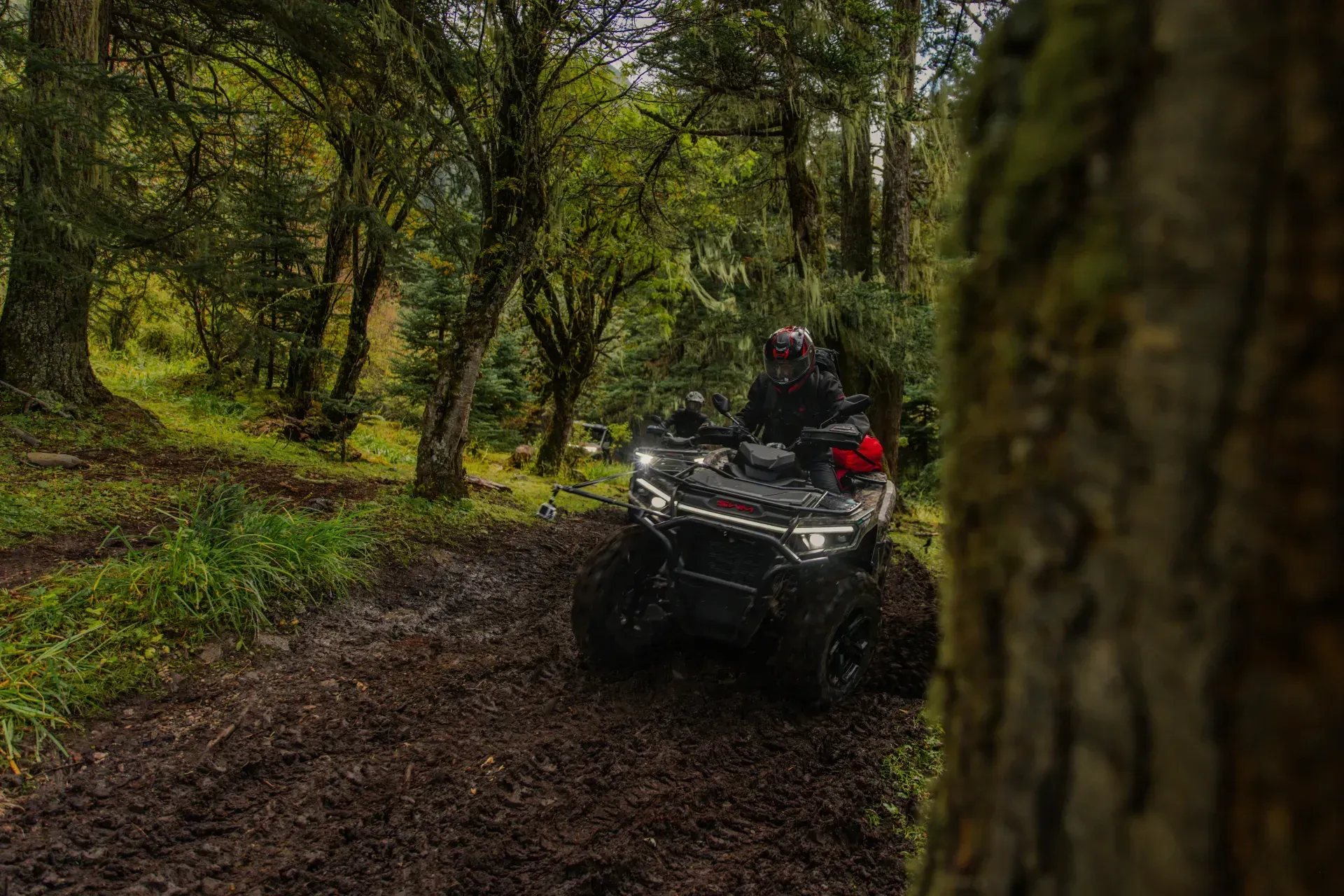
Every off-road rider experiences this exact moment of pure frustration. It is a beautiful weekend morning, you are hyped up, and you just hauled your ATV right to the trail entrance. You have got all your riding gear and your helmet on. Then, you hop on the machine and push that starter button. What do you get? Total silence, or maybe just a super annoying clicking sound that drives you crazy. Look, when that happens, please do not throw your helmet just yet.
When you are dealing with all kinds of weird machine glitches, having a solid, step by step atv troubleshooting master checklist in your back pocket can save you a ton of money at the repair shop. Today, we are going to walk through everything from an engine that refuses to fire up, to rough idling, slipping belts, spongy brake handles, and weird chassis noises. We will show you how to trace and fix these 14 common trail blockers yourself, so let us get right into it.
Starter & Electrical Problems
1. The Machine is Completely Dead
You turn the key, but the dashboard stays pitch black. You hit the horn, nothing happens. The whole quad basically feels like a useless hunk of rock. Just take three seconds to look at two silly mistakes that really do trip people up all the time before you start pulling your wiring apart.
First check that red Kill Switch because a lot of riders accidentally flip this to the OFF position while they are tying down caravan straps, wiping down the bike or just bumping into it by accident. If it's off, the circuit is physically broken, which means you can press that starter button until your finger opens up and nothing will happen.
Secondly, make sure you are in Neutral or Park as modern four-wheelers have safety interlocks. If the machine is in an active forward or reverse gear the system automatically blocks the electrical flow. It does not want the bike to jump forward and hurt someone.
2. Clicking Noises But No Crank
So, you press the starter button. Instead of a healthy, deep engine cranking sound, you hear this fast, sharp, rhythmic clicking noise coming from right under your seat. Well, the good news is your finger is sending the signal properly.
That noise is your starter solenoid opening and closing very fast. That clicking means the juice in your battery is dangerously low and the voltage has probably dropped way below 11.5V about 90% of the time. Either that, or your battery terminals vibrated loose while you were pounding through a rough trail section, meaning the high current simply cannot pass through, so the starter motor cannot spin the engine.
3. The Golden Diagnostic Sequence
When the starter motor spins perfectly fine but the engine just refuses to catch and fire up, guessing blindly and tearing the motor apart is a terrible idea.
When dealing with a completely dead machine, always follow the standard why won't my atv start diagnostic sequence to rule out low battery voltage, stale fuel, or a fouled spark plug before tearing into the mechanical components of the engine. Following this specific, logical order keeps you from wasting time on massive mechanical teardowns.
4. Battery Won't Hold a Charge
Rider buys a brand new battery for a hundred bucks, rides for three days on the trail, leaves it overnight and wakes up to a totally dead battery.
Don't immediately blame the battery, you really should suspect your regulator rectifier or internal stator. When the regulator rectifier fails, the vehicle can’t charge the battery when riding and it drains the battery until it’s completely drained.
If you want to test it, take a multi-meter and measure the voltage at the battery terminals with the bike running in neutral. If you open the throttle and that voltage doesn't go up to 13.5V to 14.5V then your charging loop is totally broken.
Engine Performance & Fuel Issues
5. Rough Idle or Stalling
The machine actually fires up, but the absolute second you let go of the throttle pedal, it dies instantly, or it just sits there coughing and chugging hard.
On older Carburetor models, severe trail vibrations can easily back your idle screw right out, or if the bike sat for a while, the gas has turned into a gummy mess and clogged up the tiny idle jet.
If you are on a modern EFI model, this usually means your idle air control valve, or the IAC, is covered in black carbon muck and oily residue, causing it to get stuck open or closed. All you need to do is pull it off, spray it down with some throttle body cleaner, and it should go right back to normal.
6. Engine Misfires & Backfiring
You are accelerating hard down a trail, and suddenly your exhaust pipe lets out this massive popping noise that sounds like firecrackers, while the bike hesitates and you see black smoke shooting out. We call this an engine misfire or backfiring.
What happens is that fuel that is supposed to burn inside the cylinder has leaked out into the hot exhaust pipe and caught fire there. This means your spark plug tip is carbon loaded or worn out, causing the spark to be way too weak and messing up the firing timing, or it could mean your fuel system is way too rich.
You can fix that yourself just pull that spark plug out and check the tip. If it looks black like a charcoal briquette, clean it off with a wire brush or put in a new one.
7. Engine Bogs Down on Acceleration
We in the off-roading community call this bogging. If you feather the gas pedal, the bike will creep along, but the moment you hit the throttle to tackle a big hill, the engine just groans, loses power and dies.
Start with the Air Filter, as a muddy trail or deep water hole can completely cover your filter element in thick muck. The engine is starved for oxygen, like someone putting their hand over your mouth when you’re trying to run.
Also check for bad fuel. Petrol that sits in a tank for more than 3 months will have the ethanol in the petrol start to absorb moisture from the air. This turns into a sticky slime that totally plugs up your fuel filter starving the engine when you want real speed.
8. Vacuum Lock in the Tank
This is a total ghost story of a breakdown that tricks a lot of mechanics. The bike runs absolutely beautifully for about twenty minutes, then shuts off out of nowhere. You sit on the trail, have a smoke, and suddenly it fires right back up, only to die again another mile down the trail.
The root cause is that your gas cap vent or breather tube is completely plugged up. As the fuel pump sucks gas out of the tank, air needs to flow in to take its place, and if it cannot, a heavy vacuum lock forms inside, creating a suction force so strong that the pump cannot fight it anymore, and the fuel flow stops.
Here is a quick trick to tell, next time it dies, open the gas cap immediately, and if you hear a clear sucking hiss and the bike starts right up afterwards, your vent hole is clogged with mud, so just clear it out.
Cooling & Drivetrain Malfunctions
9. Engine Overheating & Boiling Coolant
The coolant warning light on your dash starts flashing, or you hear this loud boiling water sound right underneath your seat while white steam shoots out of the overflow reservoir, meaning your motor is cooking.
The biggest design flaw here is that your radiator fins are caked in dried mud. Quads live in the mud, and it flies everywhere, so while the radiator might look clean from a distance, up close, the tiny air passages are totally sealed off, meaning no air can pass through to cool the fluid.
As a backup cause, thick mud can also jam your cooling fan blades, which either blows the electrical fuse or burns out the fan motor entirely.
10. CVT Belt Slip
If you have an automatic machine with CVT system , upon pressing the gas pedal the engine screams with high RPMs but the quad barely moves forward with a horrible burnt rubber smell in the air . This means your belt is slipping .
Water damage is common, as an old clutch housing gasket will allow water to enter when you go through deep puddles or pressure wash the bike, causing the belt to slide wildly on the wet metal clutches. So you just have to remove the drain plug at the bottom of the housing and drain the water.
Then there is belt wear, because belts are consumables, and if you use your quad for heavy towing or non-stop hill climbs, the belt thins out over time, and once it wears past its limit, it loses all its grip, and you have to install a new one.
Suspension, Steering & Brakes
11. Spongy Brake Levers
You pull your brake handle, and it feels like you are squeezing a marshmallow, with no firm stop at all, forcing you to pull the lever all the way back until it touches the grip just to slow down.
In the atv troubleshooting world, this means air got inside your hydraulic brake lines. Brake fluid is not compressible, but air is very compressible. If your fluid is old and has absorbed water, that water can boil under high heat, creating air bubbles that swallow up your braking force.
To fix it, you have to bleed the brakes. That means going to the bleeder screw on the brake calliper, pumping the lever and cracking the screw open to bleed out the air until clean fluid comes out without any bubbles.
12. Steering Wheel Shakes at Speed
The steering feels perfectly fine when you are crawling along, but the second you cross 30 mph, the handlebars start shaking like a jackhammer, turning your hands completely numb.
Check the tire pressure first to see if your front tire pressures are unbalanced. ATV tires run on very low pressure, usually around 4 to 7 PSI, so if one tire loses even two pounds, its outer diameter changes, which causes a nasty pull and wobble at high speeds.
Second, check the wheel bearings by jacking the front end up and grabbing the tire with your hands, shaking it up and down, and if you feel any loose metal play or slack, your wheel bearing has been ruined by trail mud and water and needs to be replaced immediately.
13. Clicking Noises When Cornering
The bike drives nice and quiet on straight paths, but the moment you lock the handlebars to turn or make a tight U-turn, a sharp, steady metallic clicking sound echoes from the front wheels.
The cause is that your CV joint, or constant velocity joint, is about to fail. If you look under the machine right at the front axle, there is an accordion-like rubber CV boot protecting the joint. Riding through rock piles or branches can easily rip this rubber boot open, letting the grease leak out, and once dirt and water get in, the steel bearings inside get chewed up into junk.
14. Suspension Squeaking & Loose Ends
And every time you hit a bump on a rough trail, the bottom of the bike makes this annoying squeaking noise like a rusty old bed frame moving around.
That's because your A-arm bushings are totally out of grease and running bone dry, metal-on-metal because the trail water washed all the factory grease out.
Most professional quads have grease fittings, also called zerk fittings, built right into the suspension joints. Get yourself a manual grease gun, pump some water-resistant lithium grease into the fittings until the nasty old black grease squirts out, and the chassis will go right back to being perfectly quiet, and remember to check your tie rod ends for slack while you are under there too.
Conclusion
Running through a smart atv troubleshooting routine doesn't mean you need an advanced automotive engineering degree. Off-road quads spend their time living in deep mud, dust and heavy vibrations, but the core logic always reverts to basic mechanical concepts. When your machine breaks down in the boonies next time, go through your electrical, fuel, air and chassis steps methodically and you'll find that most aggravating problems can be fixed with a basic wrench, a can of cleaner, or just a few minutes of scraping mud away.
The best solution to a problem is to not have the problem at all. Whenever you have completed a game in deep mud holes give yourself thirty minutes to hose out your radiator fins, your suspension joints and your clutch case. Keep your fittings topped up with fresh grease and check your belt for wear. Take care of your four wheeler and it will keep you safe on the trail and get you home safely every time.
-
Sep 28 2026
learn more
 How to Prepare an ATV for Hunting Season
How to Prepare an ATV for Hunting Season
How to Prepare an ATV for Hunting Season
-
Sep 23 2026
learn more
 Best UTV Accessories for Hunting: Build the Right Hunting Setup
Best UTV Accessories for Hunting: Build the Right Hunting Setup
Best UTV Accessories for Hunting: Build the Right Hunting Setup
-
Sep 23 2026
learn more
 what is the best side by side utv for hunting?
what is the best side by side utv for hunting?
what is the best side by side utv for hunting?
-
Sep 21 2026
learn more
 How Much Snow Can a UTV Side-by-Side Plow?
How Much Snow Can a UTV Side-by-Side Plow?
How Much Snow Can a UTV Side-by-Side Plow?