Side-by-Side Buying Guide: How to Choose the Best UTV for Work and Play
Jun 10 2026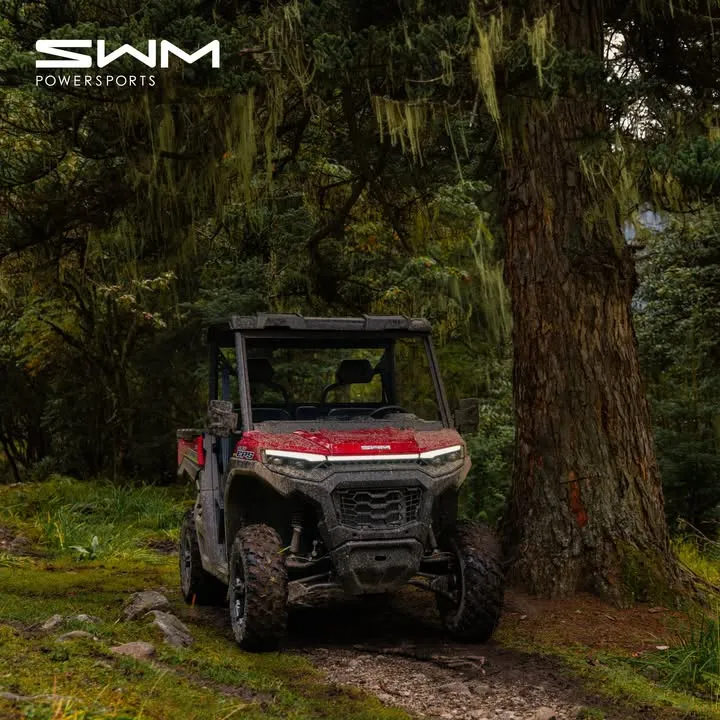
A farmer shouldn't dread the weekend trail. A dune rider shouldn't struggle to haul gravel on Monday morning. Today's Side-by-Sides — also called Utility Terrain Vehicles (UTVs) — have outgrown the old labels. They are no longer slow-moving farm tools or purely high-speed toys. Modern buyers demand one machine that works hard on the job site and plays hard on the trail.
The challenge is real: a pure utility vehicle lacks the suspension and comfort for weekend riding, while a high-performance sport UTV lacks the bed space, payload, and low-end torque for serious site work. This guide breaks down the essential specs, mechanical trade-offs, and features you must weigh to choose the right machine for both worlds.
Define Your Use Case
Before diving into spec sheets, honestly assess how your vehicle will spend its time. Most buyers fall somewhere on the utility-to-recreation spectrum — and knowing your position determines every spec that follows.
Profile | Primary Use | Key Priorities |
70% Work 30% Play | Farm, ranch, construction sites — with occasional hunting or short trail runs | Max towing & payload, large cargo box, durability, self-dumping bed |
50% Work 50% Play | Daily tasks (firewood, fencing, snow removal) + weekend family trail rides | Balanced suspension, mid-range torque, fold-down rear seats, EPS steering |
30% Work 70% Play | Camping, sand dunes, off-road adventure — light chores on the side | Sporty power delivery, long suspension travel, comfortable seating, accessories |
2-Seat vs. 4-Seat: Which Platform Fits You?
Seat count affects far more than passenger capacity. It changes the vehicle's dimensions, weight distribution, trail agility, and work versatility. Choose the wrong platform and no amount of performance specs will compensate.
2-Seat Platform | 4-Seat Platform | |
Wheelbase | Shorter — tighter turning radius | Longer — smoother over bumps, better climb stability |
Width | Narrower — fits tight trails and barns | Wider — more cabin comfort, broader stance |
Weight | Lower — easier to tow and transport | Higher — greater inertia on rough terrain |
Cargo | Full bed always available | Rear seats fold flat for extended cargo area |
Best For | Solo/duo riders, dense terrain, tight work sites | Families, group adventures, mixed open terrain |
The decision comes down to one honest question:
▪ If you ride alone or with one companion on tight trails or dense work sites, the 2-seat platform is almost always the smarter choice.
▪ If your riding typically includes family members, multiple colleagues, or open terrain, the 4-seat platform delivers stability and shared-adventure capability that the shorter model cannot match.
Match Your UTV to Your Terrain
Your operating environment should drive your mechanical specification choices as much as your use-case split. A machine perfectly calibrated for open ranch land will fight you in a dense forest, and vice versa.
Terrain Type | Recommended Setup | Watch Out For |
Tight Wooded Paths & Forests | 2-seat platform, narrow width (<55 in.), shorter wheelbase, high-clearance A-arms | Trail width restrictions; low-hanging branches requiring roof protection |
Rocky & Mountain Terrain | 4-seat wheelbase for climb stability, 12+ in. ground clearance, skid plates, low-gear crawl ratio | Undercarriage damage; tipping risk on off-camber slopes |
Mud & Flat Wetlands | High intake snorkel, deep-tread mud tires, sealed cab, aggressive low-range gearing | Clogged radiators; getting high-centred in deep ruts |
Core Mechanical Specs for Dual-Purpose Performance
A crossover UTV earns that title only if its mechanical architecture genuinely supports both demands. Three pillars separate capable crossovers from compromised ones.
Engine Power & Displacement
For mixed-use operation, target 600cc–1,000cc with a fuel injection system tuned for a broad, flat torque curve across the rev range. High-horsepower sport engines are typically optimized for peak RPM output — which produces jerky, difficult-to-control power delivery at the slow, precise speeds required when backing a loaded trailer or crawling over a boulder field.
▪ Provides smooth, progressive power from idle to high RPM — critical for precision work and technical trail sections alike.
▪ Consistent fuelling regardless of altitude or temperature. Avoid carburetted engines for serious all-season, all-altitude use.
▪ Heavily loaded engines produce significantly more heat. Ensure the machine's thermal management system is rated for sustained high-load operation.
Suspension & Ground Clearance
This is where most compromises are made and most buyers feel disappointed. Stiff springs prevent bed sag under a heavy load but produce a harsh, punishing ride on trails. Soft trail suspension bottoms out under payload. The solution is adjustability.
▪ Allow you to tune the suspension for light trail riding or heavy load-bearing without changing hardware.
▪ The minimum range for genuine multi-terrain adaptability. Less than 10 inches and you'll feel every rut on a trail ride.
▪ Clears most rocks, roots, and deep ruts without requiring extreme wheel articulation. Below 10 inches and rocky terrain becomes genuinely risky.
Towing Capacity & Payload
Distinguish clearly between payload (the weight your cargo bed and cabin can carry) and towing capacity (what your rear hitch can pull). Both matter — and both are regularly overstated in marketing. Use the table below as a practical reference.
Capability Metric | Target for Mixed-Use UTVs | Why It Matters |
Towing Capacity | 1,500 – 2,000 lbs (std 2" hitch) | Trailers, implements, recovery |
Cargo Box Capacity | 600 – 1,000 lbs | Job-site loads and camping gear |
Ground Clearance | 11 – 13 inches | Clears rocks, roots, and ruts |
Suspension Travel | 10 – 14 inches front/rear | Trail comfort + loaded stability |
Engine Displacement | 600 – 1,000cc | Broad torque curve for all tasks |
SWM Crossover Models to Consider
Discover the ultimate versatility with our flagship crossover lineup, headlined by the powerhouse SWM powersports Nomader 720. Engineered for riders who refuse to compromise, it seamlessly blends agile mid-size handling with robust, terrain-conquering capability. Featuring smart engineering, superior thermal management, and responsive power delivery, our models redefine the crossover experience—perfectly balancing work-ready utility with trail-ready adventure.
The Accessory Callout — The Winch: If you buy only one accessory, make it a high-capacity winch (4,500 lbs+). It is equally invaluable for pulling heavy logs, stretching fence lines on the job, or recovering your vehicle when stuck in deep trail mud on the weekend.
Final Verdict: Don't Compromise Your Lifestyle
The right side-by-side adapts to you — not the other way around. By working through your use-case split, terrain profile, seat requirement, and core mechanical benchmarks in sequence, you build a clear picture of exactly which specification window your machine must hit.
No single machine is perfect for every rider. But a well-specified crossover UTV — with the right displacement, suspension calibration, towing capacity, and seat configuration — will handle your weekday workload without sacrificing the weekend rides that make ownership worthwhile.
-
Jun 12 2026
learn more
 What Makes an ATV Good Off-Road?
What Makes an ATV Good Off-Road?
What Makes an ATV Good Off-Road?
-
Jun 10 2026
learn more
Side-by-Side Buying Guide: How to Choose the Best UTV for Work and Play
Side-by-Side Buying Guide: How to Choose the Best UTV for Work and Play
-
Jun 10 2026
learn more
 UTV Troubleshooting Guide: How to Troubleshoot Common Side by Side Problems
UTV Troubleshooting Guide: How to Troubleshoot Common Side by Side Problems
UTV Troubleshooting Guide: How to Troubleshoot Common Side by Side Problems
-
Jun 08 2026
learn more
 How to Maintain an ATV: The Ultimate Guide for High-Performance Reliability
How to Maintain an ATV: The Ultimate Guide for High-Performance Reliability
How to Maintain an ATV: The Ultimate Guide for High-Performance Reliability