what is utv vs atv?
Jul 29 2026
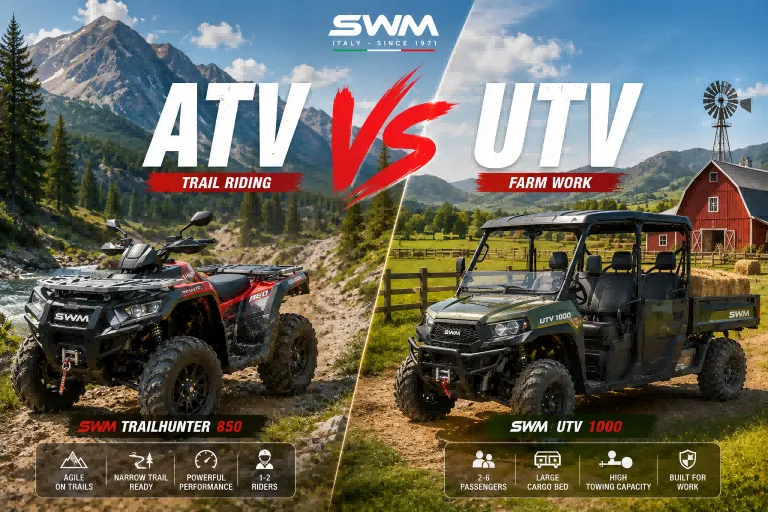
For riders and buyers, the most fundamental difference comes down to this: An ATV is a quad bike you "ride," while a UTV is a mini off-road vehicle you "drive."
UTV vs ATV: Appearance Differences
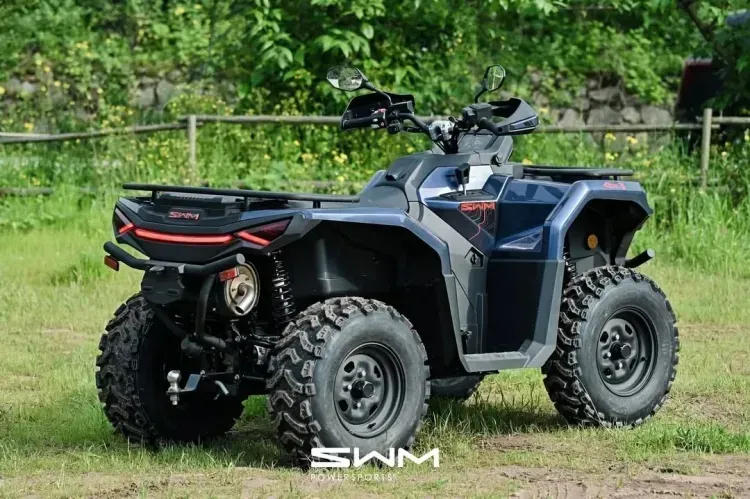
ATV (All-Terrain Vehicle / Quad Bike)
Open Structure: Completely open-air design with no roof, no doors, and no protective roll cage.
Straddle Seating: You straddle the seat with your legs on either side, just like riding a motorcycle or bicycle.
Handlebar Steering: Controlled using handlebars—you twist the throttle (or press a thumb throttle) and pull handbrake levers (on some models), just like a motorcycle.
Compact Footprint: Narrow body (typically around 48 inches / 1.2 meters wide), usually featuring simple metal racks on the front and rear.
Cargo Capacity: Primarily limited to front/rear utility racks with restricted carrying capacity, often requiring a small trailer for extra loads.
UTV (Utility Task Vehicle / Side-by-Side)
Roll Cage Structure: Built with a steel tubular roll cage frame. Options exist for doors, windshields, or fully enclosed cabs.
Automotive Seating: Features bucket or bench seats where two or more passengers sit side-by-side with seatbelts.
Car-Style Controls: Equipped with a traditional steering wheel, gas pedal, brake pedal, and gear shifter at the driver's seat.
Rear Cargo Bed: Features a pickup-style rear dump bed capable of hauling more gear, dumping materials, or towing heavier trailers.
Riding Experience Differences: How Do You Operate Them?
Dimension | ATV (Ridden like a motorcycle) | UTV (Driven like a truck) |
Riding Posture | Straddled seat. Requires frequent body weight shifting (leaning into turns) to maintain balance. | Seated posture. You sit securely using seatbelts, relying on the vehicle's suspension and body stability for off-roading. |
Steering & Throttle | Handlebars held by hand, pressing the thumb throttle (or twisting) with the right hand, and hand brakes. | Uses a steering wheel, gas pedal, and brake pedal (Zero learning curve for car drivers). |
Riding Thrill | Strong "rider-to-vehicle" connection, requires riding technique, nimble and exciting handling. | Safe and comfortable, feels like driving a mini off-road truck or dune buggy; anyone who drives a car can jump right in. |
Safety Protection | High risk of being crushed under the vehicle during a rollover; relies entirely on protective gear (helmet, body armor). | Protected by a roll cage and seatbelts; advanced models offer airbags or fully enclosed cabs. |
Use Case Differences: What Are They Built For?
Buying an ATV is best for:
Solo agility & speed: Perfect for navigating dense forest paths, tight mountain trails, and quick drifts where wider UTVs cannot fit. Lightweight and compact, making it far more agile on narrow, winding trails. Possesses strong sport and recreation attributes, offering an exciting ride like an "upgraded quad bike."
Solo or dual exploration: Built primarily for 1 person (occasionally 2-up models), ideal for solo trail riding, mudding, or dunes.
Budget-friendly ownership: Lower purchase cost and compact footprint—fits directly into a standard pickup truck bed without needing an extra trailer.
Buying a UTV is best for:
Group or family outings: Seats 2, 4, or 6 people, allowing everyone to travel and chat together. The wide body and long wheelbase provide superior high-speed and cornering stability, though it requires wider trails where an ATV might fit but a UTV cannot.
Heavy-duty work & farm utility: Positioned as a "workhorse + recreation" vehicle. The rear cargo bed hauls logs, hay, gravel, hunting gear, or farm tools, offering immense towing capacity for trailers or snowplows.
All-weather comfort: Can be fitted with roofs, full windshields, doors, and heaters for long-distance driving with minimal fatigue.
Transport Requirements: Wider body (50–72 inches / 1.4–1.8 meters) means it requires a dedicated utility trailer for transport, demanding more storage space and towing equipment.
UTV vs ATV: Street Legality Differences
UTVs can easily be converted into street-legal vehicles and driven on public roads, whereas ATVs are almost universally banned from paved roads by state laws.
ATV (Quad Bike): Street Banned
Street Legality Status: 99% of ATVs cannot be registered and are strictly prohibited on public roads. Most leave the factory with only a "non-road vehicle/off-road only" certificate that fails motor vehicle registration standards. A tiny minority meeting strict state requirements (equipped with catalytic converters, compliant emissions, and safety lighting) may attempt motorcycle licensing in rare jurisdictions, but policies are extremely strict.
UTV (Side-by-Side): Drive Like a Regular Car Once Registered
Street Legality Status: 100% unable to obtain standard passenger car or standard motorcycle plates directly out of the box. Although equipped with a steering wheel and seatbelts, its frame structure, crash safety ratings, and emission standards do not meet passenger car regulations, and no dedicated "UTV motor vehicle" license plate category exists nationally without street-legal conversion.
UTV vs ATV: Mandatory Insurance Differences
The mandatory insurance type required for both is identical (Liability Insurance). However, UTVs are far more likely to be legally or contractually mandated to carry insurance, and premium costs are higher.
Legal Mandate: Whenever your UTV (or rare ATV) applies for street-legal registration to ride on public roads, or enters public lands such as state parks or national forests (Public Trails), state law mandates Liability Insurance.
Contractual Mandate: If the vehicle is financed or leased through a lender, the lender contractually mandates Full Coverage (Collision & Comprehensive).
Exemption Conditions: If paid in full and operated strictly on a private farm or private land, insurance is not legally mandatory.
Dimension | ATV (Quad Bike) | UTV (Side-by-Side) |
Mandatory Coverage Frequency | Low (rarely street-legal; lower demand for public park access). | High (frequently street-legalized, financed, or used in public parks). |
Average Cost | Cheaper (approx. $100 – $300 / year) | More expensive (approx. $300 – $800+ / year) |
Cost Factors | Lower purchase price ($6k–$12k); usually single-rider, resulting in lower claim payouts. | High purchase price ($15k–$35k+); high horsepower; carries 2–6 passengers, creating high medical liability risks during accidents. |
Passenger Liability | Rarely needed (primarily single-rider focus). | Usually mandated or strongly recommended (to cover riding family and friends). |
-
Jul 30 2026
learn more
 Do You Have to Pay Sales Tax on a UTV?
Do You Have to Pay Sales Tax on a UTV?
Do You Have to Pay Sales Tax on a UTV?
-
Jul 29 2026
learn more
 what is utv vs atv?
what is utv vs atv?
what is utv vs atv?
-
Jul 28 2026
learn more
 ATV vs UTV vs RTV: 8 Key Differences to Choose the Right Vehicle
ATV vs UTV vs RTV: 8 Key Differences to Choose the Right Vehicle
ATV vs UTV vs RTV: 8 Key Differences to Choose the Right Vehicle
-
Jul 27 2026
learn more
 Why Farmers Choose Utility Quad Bikes for Everyday Farm Work
Why Farmers Choose Utility Quad Bikes for Everyday Farm Work
Why Farmers Choose Utility Quad Bikes for Everyday Farm Work