What Does ATV Insurance Cover in the USA 2026?
Jun 22 2026
In the U.S., as the performance of high-displacement All-Terrain Vehicles (ATVs) and Side-by-Sides (UTVs) continues to upgrade, the only insurance coverage legally mandated by law is Third-Party Liability Insurance. The government and state laws do not force you to pay for your own vehicle's damages, but you absolutely cannot walk away after injuring someone else or damaging public property in public spaces. Therefore, the so-called "mandatory ATV insurance" refers 100% to third-party liability insurance—it does not cover your own vehicle or yourself, but only covers the "third party" who gets injured or the "public/private property" that gets damaged due to your fault.
l Mandatory Coverage: Third-Party Liability Insurance, mainly consisting of: Bodily Injury Liability and Property Damage Liability.
l Non-Mandatory Coverage (Optional): Vehicle and Property Protection (Collision Coverage + Comprehensive Coverage) and Optional Rider Add-ons for modern off-road enthusiasts (such as Roadside Assistance / Wilderness Rescue, Custom Parts & Equipment (CPE) Coverage, etc.).

Mandatory Coverage: Third-Party Liability Insurance
Does the mandatory "Third-Party Liability Insurance" vary by state?
Yes. ATV insurance mandates are highly decentralized; there is no uniform federal law across the United States.
l Statutory Mandate: Most states require liability insurance the moment a vehicle leaves private property and enters public trails, state parks, or public roads.
l Lender Mandate (Commercial Full Coverage): Even if certain states (e.g., Colorado, Ohio) do not legally mandate liability insurance, if your ATV/UTV is financed or leased, financial institutions nationwide will contractually require you to carry Full Coverage (Liability + Collision + Comprehensive) until the loan is fully paid off.
State Name | Statutory Mandatory Coverage Name | When is it [Mandatory]? | Core Insurance Content and Coverage | 2026 Statutory Minimum Limits |
Pennsylvania | Compulsory ATV Liability Insurance (per PA § 7730 law) | Mandatory as soon as you leave private property. | As long as the vehicle requires registration and leaves the owner's private land, holding insurance is 100% mandatory. • Bodily Injury (BI): Covers ambulance, surgery, and hospitalization costs for other riders or pedestrians due to your fault. • Property Damage (PD): Covers damages to other racing vehicles, campsite RVs, or state park fences hit by you. | • Per person injury limit: $15,000 • Per accident total injury limit: $30,000 • Property damage limit: $5,000 |
New York | Mandatory Off-Highway Vehicle Liability | Mandatory for registration and off-roading. | Mandatory when registering an ATV with the New York State DMV and when riding on any public land/trails in New York. • Bodily Injury (BI): Coverage is the same as above, with a focus on covering the other party's medical expenses during a head-on collision on designated trails.
• Property Damage (PD): Focuses on covering damages to public property and vegetation within national/state parks. | • Per person injury limit: $25,000 • Per accident total injury limit: $50,000 • Property damage limit: $10,000 |
Arizona | OHV / Street-Legal Liability Insurance | Mandatory when entering publicly maintained roads or applying for a street-legal license plate. | Not mandatory in pure backcountry deserts; becomes mandatory once entering government-maintained highways or applying for a Street-Legal license plate. • Bodily Injury (BI): Covers third-party injuries on standard trails as well as public streets. • Property Damage (PD): Covers damages to public facilities on the road (utility poles, road signs, etc.).
• Guest Passenger BI: Mandatorily includes injuries to passengers sitting in your vehicle's rear or side seats. | • Per person injury limit: $15,000 • Per accident total injury limit: $30,000 • Property damage limit: $10,000 |
Idaho | Restricted Vehicle Liability Insurance (per IC § 67-7122 law) | Mandatory when entering public lands, state, or federal roads. | Insurance must be carried on the vehicle on any public trail, national forest road, or county road managed by the Idaho Department of Parks and Recreation (IDPR). • Bodily Injury (BI): Covers all personal collisions within public nature reserves. • Property Damage (PD): Special coverage: If sparks from your ATV exhaust pipe trigger a forest fire, it covers the massive administrative costs of firefighting and suppression. | • Per person injury limit: $25,000 • Per accident total injury limit: $50,000 • Property damage limit: $15,000 |
Texas | OHV Public Trail Liability Coverage | Location-triggered mandate (National/State Parks). | Texas law completely waives mandates on private land. However, whenever visiting public off-road parks, Park Rangers will strictly check insurance cards at the entrance. • Bodily Injury (BI): Specifically covers third-party bodily injuries within public trails and off-road mud parks. • Property Damage (PD): Specifically covers damages to other riders' expensive UTVs/race vehicles in mud parks. | Varies by the regulations of each off-road park, usually matching the standard auto minimum limit of 30/60/25. |
Colorado | None (Not governed by the Motor Vehicle Insurance Act) | Completely voluntary by law. | Colorado law considers OHVs as non-licensed vehicles that do not fall under standard motor vehicle laws. Riding within the state does not legally require insurance (shifting risk to commercial insurance or self-retention). | Not applicable (No mandatory statutory content, riders buy commercial Inland Marine insurance or bear the risk themselves). No minimum limit requirements. |
What is the coverage scope of Third-Party Liability Insurance?
l Bodily Injury Liability: When you are at fault in an accident, this covers the medical expenses, surgery bills, ambulance fees, and legal defense costs of other riders, pedestrians, or passengers riding on your back seat/side seat who were injured by you.
l Property Damage Liability: Covers any property damage caused by you, such as wrecking someone else's high-end UTV, smashing a campsite tent, or knocking down public fences and signs in a park.
Can you ride on any public road after purchasing mandatory insurance?
Absolutely not. Insurance is only one of the prerequisites for riding on public roads, but it does not grant you "legal right-of-way." Therefore, ATVs cannot run wild on public roads like cars.
Which roads are absolutely prohibited?
l Interstate Highways and Federal Highways
l Urban Centers and busy metropolitan main streets
Which roads are "legal" or "conditionally permitted"?
In 2026, about 20 states across the U.S. (such as Arizona, Utah, Montana, South Dakota, Idaho, etc.) allow ATVs to operate on specific public ordinary roads (mostly County Roads or rural highways), but they must meet the following strict "Street-Legal" modification requirements and display a motor vehicle license plate:
l Even in states where road use is permitted, there are usually speed restrictions (for example, operation is only allowed on roads with a speed limit below 35 mph or 45 mph).
l Furthermore, local county or city ordinances hold supreme veto power. If a local town explicitly prohibits them, you will still receive a ticket for driving on the road, even if the state government allows it.
If you purchase no insurance at all (including liability), which roads can you use?
If you are in a completely "uninsured" state, your usable operating space is compressed to the extreme. Touching any public road is illegal: Even if it is just to cross an empty gravel road to get from Section A to Section B of your own farm, once caught by the police, fines for driving a motor vehicle without insurance range from $500 to $2,000.
The only legally permissible areas: Completely private property (such as your own farm, ranch, or estate) and private enclosed off-road tracks (where commercial general liability insurance already covers attendees, and riders are not forced to carry personal insurance).
In 2026, riding on your own farm without insurance is legal, but if a friend visits your house, rides your ATV, rolls over, and breaks a leg, your Homeowners Insurance will highly likely deny coverage due to the "Motor Vehicle Exclusion" clause. This means your friend can sue you directly, forcing you to pay for tens of thousands of dollars in American medical bills out of your personal assets. For safety's sake, even if you never leave your own property, a basic Liability policy is the absolute safety baseline for off-roading.
Non-Mandatory Coverage (Optional Add-ons)
Except for the legally mandated third-party liability insurance, all other coverages are optional. The following are the main categories, functions, scopes, and purchase necessities provided by major U.S. insurance companies (such as Progressive, GEICO) in 2026:
1. Collision Coverage
Function & Scope: Pays to repair or replace your own ATV after a collision. Whether you hit a tree, a rock, collide with another rider, or experience a rollover (the most common accident in off-roading), it pays regardless of fault.
Necessity Rating: 85% (For new vehicles / high-value vehicles) | 20% (For old, used vehicles).
2. Comprehensive Coverage
Function & Scope: Covers non-collision accidental damage to your vehicle. ATVs are high-theft assets. It covers: theft from a garage/campsite, vandalism, wildfire destruction, flood/hail natural disasters, and animal strikes (such as hitting a deer) on trails.
Necessity Rating: 90%
3. Custom Parts & Equipment (CPE) Coverage
Function & Scope: Standard policies only pay out based on the factory OEM configuration. This specific coverage protects expensive aftermarket accessories you add later, such as professional winches, aftermarket roll cages/bumpers, LED light bars, snowplows, or sound systems.
Necessity Rating: 70% (For heavily modified riders) | 0% (For completely stock vehicles).
4. Medical Payments (MedPay)
Function & Scope: Directly reimburses medical bills and emergency ambulance fees for you and your passengers, regardless of who is at fault for the accident.
Necessity Rating: 50%
5. Roadside Assistance / Backcountry Rescue
Function & Scope: When a vehicle suffers a severe breakdown deep in the woods far from public roads (such as a snapped belt, blown tire, or broken axle), standard auto towing cannot enter. This coverage reimburses the costs of hiring a specialized off-road recovery vehicle (such as specialized utility trailers/tow rigs).
Necessity Rating: 65% (Essential for riders who frequently go on deep, long-distance backcountry expeditions).
6. Uninsured Motorist Coverage
Function & Scope: If an irresponsible rider on the trail crashes into you or wrecks your vehicle but carries no mandatory insurance or flees the scene (hit-and-run), this coverage steps in to compensate you on behalf of the missing insurance company.
Necessity Rating: 60%
-
Aug 25 2026
learn more
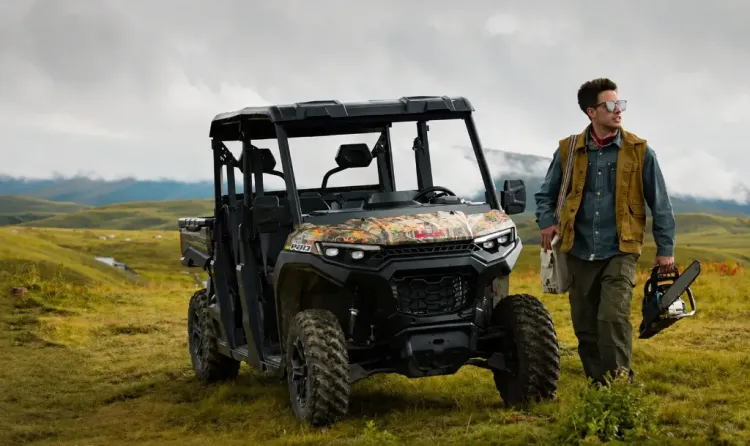 UTV Safety: 12 Essential Rules for Every Rider
UTV Safety: 12 Essential Rules for Every Rider
UTV Safety: 12 Essential Rules for Every Rider
-
Aug 24 2026
learn more
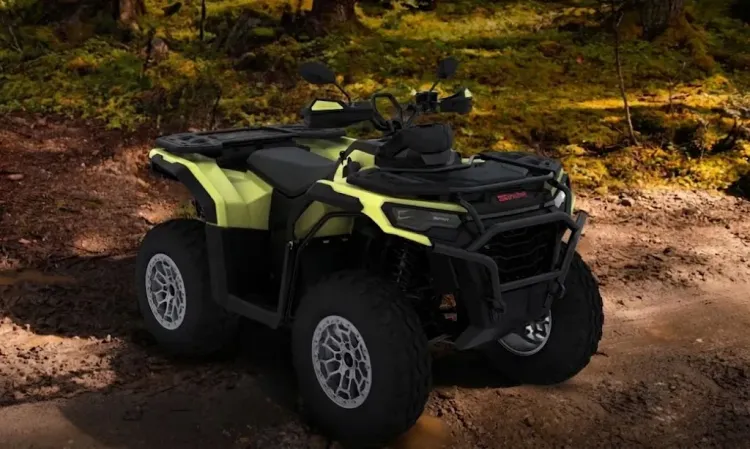 ATV Hunting: 9 Tips for a Safer, Smarter Hunt
ATV Hunting: 9 Tips for a Safer, Smarter Hunt
ATV Hunting: 9 Tips for a Safer, Smarter Hunt
-
Aug 20 2026
learn more
 ATV Beginner’s Guide: Start Your Off-Road Journey with the SWM Trailhunter 580
ATV Beginner’s Guide: Start Your Off-Road Journey with the SWM Trailhunter 580
ATV Beginner’s Guide: Start Your Off-Road Journey with the SWM Trailhunter 580
-
Aug 20 2026
learn more
 Hybrid UTV Explained: Benefits, Smart Hybrid Technology
Hybrid UTV Explained: Benefits, Smart Hybrid Technology
Hybrid UTV Explained: Benefits, Smart Hybrid Technology