How 4WD Utility ATVs & UTVs Improve Farm Productivity
Jul 30 2026

Modern agriculture is increasingly emphasizing high efficiency, low cost, and all-weather operation capabilities. For farmers, in addition to large agricultural machinery such as tractors, a reliable four-wheel drive (4WD) Utility ATV or Side-by-Side (UTV) is also becoming a reliable assistant for daily work.
Whether it's inspecting pastures, transporting tools, pulling small trailers, or navigating muddy roads after rain, the four-wheel drive system can provide greater traction and passing ability, helping vehicles maintain stable operation in complex terrains and reducing downtime caused by road conditions.
So, how does 4WD actually help improve farm production efficiency? Which farm tasks best demonstrate its advantages? This article will provide you with a detailed explanation.
Why is a 4WD More Necessary on Farms?
The farming environment is far more complex than regular roads. Throughout the year, vehicles may encounter various terrains and weather conditions, such as:
After rain, muddy roads
Slippery grassland
Gravel road
Slopes and hills
Forest paths
Winter snow or icy areas
If only two-wheel drive vehicles are relied upon, they are prone to skidding, getting stuck, or even being unable to move forward on slippery or soft ground. This not only affects work efficiency but may also delay the daily management of the farm.
In contrast, 4WD can distribute power to all four wheels, providing better traction when the tire grip is insufficient, allowing the vehicle to pass through complex terrains more easily and ensuring the continuous progress of farm work.
How 4WD Works in Farm Utility Vehicles
4WD system is the core power distribution technology for multi-functional farm vehicles. It differs from the traditional designs that only drive the rear wheels or the front wheels. Instead, it can transmit power to all four wheels according to the needs, achieving the best traction effect. In practical farm applications, common modes include switchable 2WD/4WD mode, differential lock, and the low-speed high-torque LO gear.
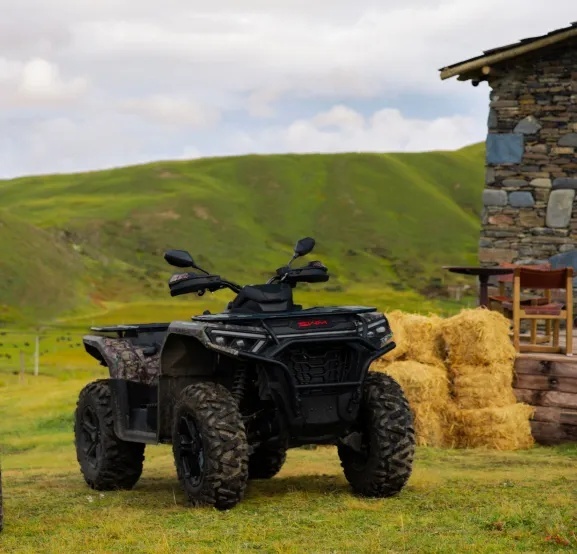
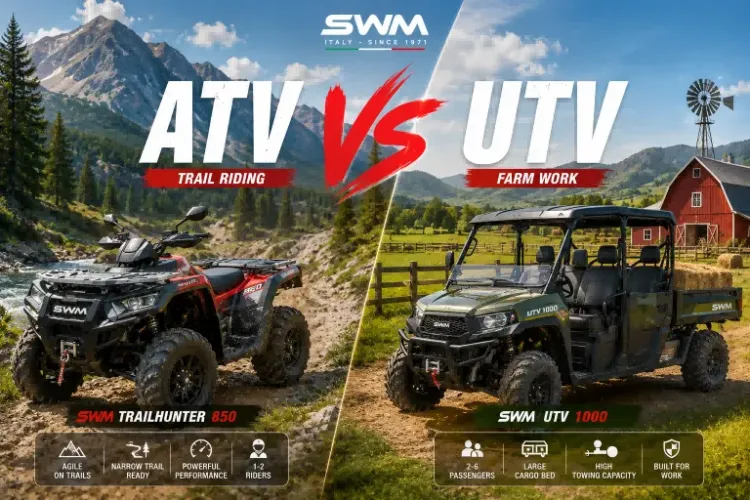
For UTVs, the 4WD combined with the steering wheel and multi-seat design is particularly suitable for combined tasks of carrying people and goods; while ATVs, with their handle control and flexible maneuverability, excel in narrow field ridges or orchards. Modern 4WD systems often integrate intelligent sensors, which can automatically optimize power distribution based on vehicle speed, wheel speed differences, and road resistance, allowing the vehicle to achieve greater traction without increasing excessive energy consumption.
This design enables multi-functional vehicles to thrive in the farm environment: whether it is equipped with spraying equipment for crop protection or towing trailers to transport harvested goods, 4WD can provide stable and reliable power support.
How 4WD Improves Everyday Farm Productivity
Better Traction on Muddy and Soft Ground
The farm roads do not always remain dry and smooth. Especially during the rainy season or after irrigation, muddy and slippery surfaces are very common.
4WD can effectively reduce tire slippage, enhance the vehicle's ability to pass through muddy, grassy and soft soil areas, reduce the risk of getting stuck, and allow the driver to complete the day's work as planned.
For users who need to patrol large farms every day, this means less waiting and higher work efficiency.
Easier Access to Remote Areas
Large farms often cover vast areas, including pastures, hillsides, woodlands, and remote fenced areas.
These locations typically have narrow roads and complex terrain, making it difficult for heavy machinery to access, while ordinary two-wheel-drive vehicles may be limited by insufficient traction.
Utility ATVs or UTVs equipped with four-wheel-drive systems can more easily traverse complex terrain, allowing staff to quickly reach designated areas and reducing inspection time.
Greater Stability When Carrying Supplies
The farm needs to transport various supplies every day, such as:
Feed
Tools and equipment
Fence materials
Irrigation accessories
Fertilizers and seeds
When vehicles carry heavy loads, 4WD can enhance vehicle stability, especially when driving on slopes or on slippery roads, making it easier to maintain smooth progress and reducing transportation disruptions caused by tire slipping.
Improved Confidence When Towing
Many farms will use ATVs or UTVs to tow small trailers for transportation:
Hay
Feed
Water tank
Garden equipment
Farm tools
During the dragging process, the vehicle not only needs sufficient power but also stable grip ability.
The four-wheel drive system can help the vehicle start, turn and climb more smoothly. It can also maintain good traction performance on muddy or gravel roads, improving transportation efficiency.
Fewer Weather-Related Interruptions
Farm work cannot always wait for sunny days. Whether it's inspecting livestock on rainy days or transporting feed in winter, vehicles need to maintain reliable operation.
Compared to two-wheel drive models, 4WD can better adapt to the complex road conditions brought about by adverse weather, making farm work more continuous and reducing downtime caused by weather conditions.
Which Farm Jobs Best Showcase The Advantages of a 4WD?
The four-wheel drive system can cover almost all daily tasks on the farm, including:
Livestock Management
Quickly inspect the ranch, check the health of the livestock, and transport feed and water supply equipment.
Fence Inspection
Long-distance inspection of fences to check for damage and promptly complete repair work.
Irrigation System Inspection
Quickly reach each irrigation point to check if the pipes, valves, and water supply facilities are operating normally.
Transportation of Tools and Equipment
Use shelves or trailers to transport maintenance tools, spare parts, and agricultural equipment to reduce manual handling.
Farm Maintenance
Includes road maintenance, vegetation trimming, garbage removal, and daily facility inspections.
Winter Operations
Transporting materials, inspecting the ranch, or cooperating with snow shovels to clear roads in snowy or icy environments to improve winter operation efficiency.
What Upgrades Maximise the Advantages of a 4WD?
The four-wheel drive system is not the only factor determining the performance of a vehicle. Excellent agricultural Utility ATVs or UTVs usually also come with the following configurations:
High ground clearance to enhance the vehicle's ability to navigate through complex terrains.
Independent suspension system to improve the comfort and stability on rough roads.
Electric power steering (EPS) to reduce fatigue during long drives and enhance low-speed maneuverability.
High-grip off-road tires to further enhance the vehicle's traction on muddy and gravel surfaces.
Sufficient towing and loading capacity to meet the needs of transporting materials and towing equipment.
These configurations work together to enable the four-wheel drive system to achieve greater value in various farm environments.
How to Choose the Right 4WD Utility Vehicle for Your Farm
The operational needs of different farms are not the same. When selecting a Utility ATV or Side-by-Side vehicle, consider the following factors comprehensively:
Farm size and terrain conditions
Daily hauling and towing requirements
Year-round operation needs
Vehicle reliability and ease of maintenance
Ride comfort and safety features
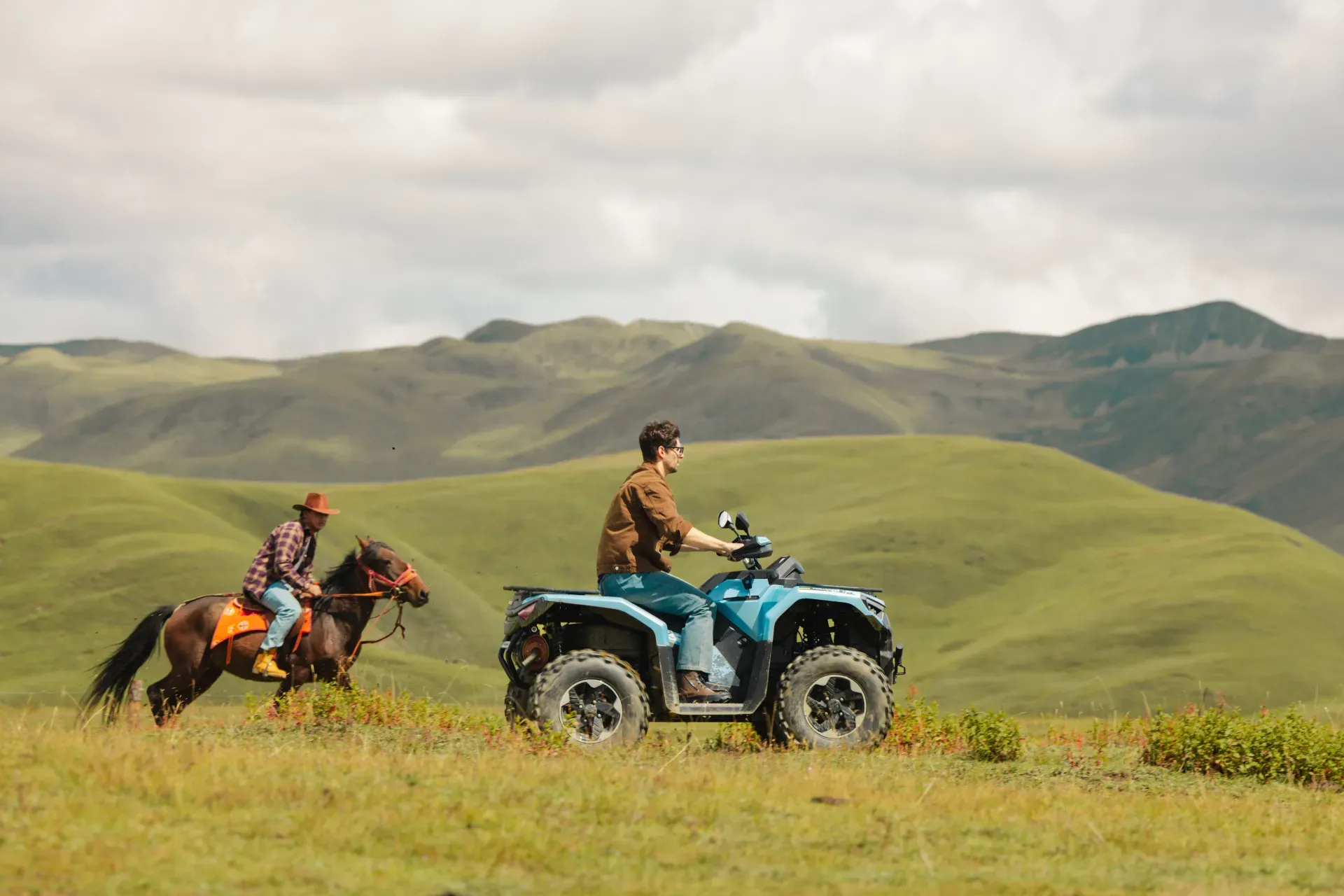
The four-wheel drive Utility ATV and Side-by-Side series of SWM POWERSPORTS are specifically designed for agricultural and outdoor operations, balancing traction, maneuverability and durability. They enable users to easily handle various work scenarios such as inspection, transportation, towing and complex terrains, providing more efficient and reliable operation solutions for modern farms.
Conclusion
Four-wheel drive is far more than an off-road feature—it is a practical tool that helps improve productivity across a wide range of agricultural applications.
By delivering better traction, improved stability, and greater access to difficult terrain, 4WD Utility ATVs and UTVs allow farmers to work more efficiently in all seasons while reducing downtime caused by poor ground conditions.
For farms that regularly operate on uneven terrain, transport supplies, or tow equipment, investing in a reliable 4WD utility vehicle can deliver long-term value through improved efficiency, safer operation, and greater day-to-day productivity.
-
Jul 30 2026
learn more
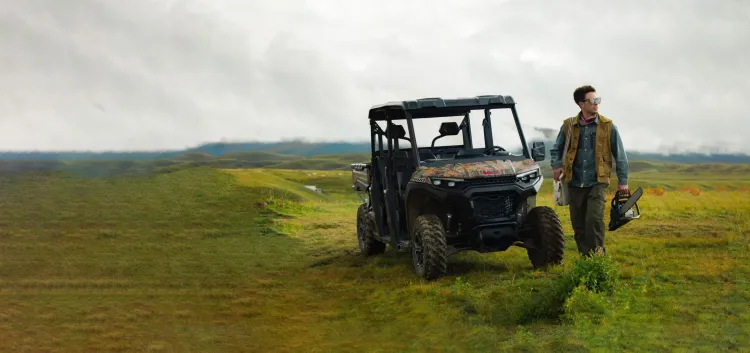 How 4WD Utility ATVs & UTVs Improve Farm Productivity
How 4WD Utility ATVs & UTVs Improve Farm Productivity
How 4WD Utility ATVs & UTVs Improve Farm Productivity
-
Jul 30 2026
learn more
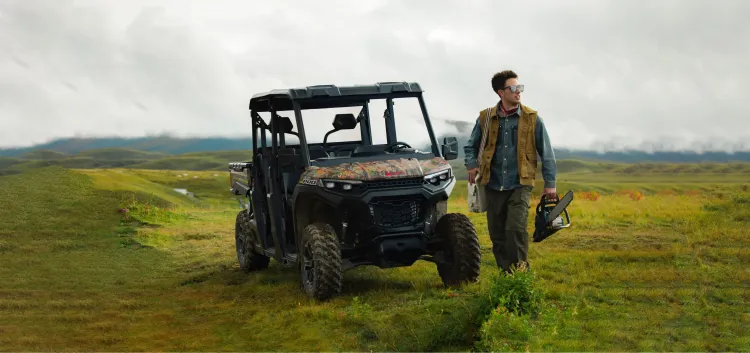 Do You Have to Pay Sales Tax on a UTV?
Do You Have to Pay Sales Tax on a UTV?
Do You Have to Pay Sales Tax on a UTV?
-
Jul 29 2026
learn more
 what is utv vs atv?
what is utv vs atv?
what is utv vs atv?
-
Jul 28 2026
learn more
 ATV vs UTV vs RTV: 8 Key Differences to Choose the Right Vehicle
ATV vs UTV vs RTV: 8 Key Differences to Choose the Right Vehicle
ATV vs UTV vs RTV: 8 Key Differences to Choose the Right Vehicle