7 Different Types of ATVs: How to Choose the Right Quad
Jun 25 2026
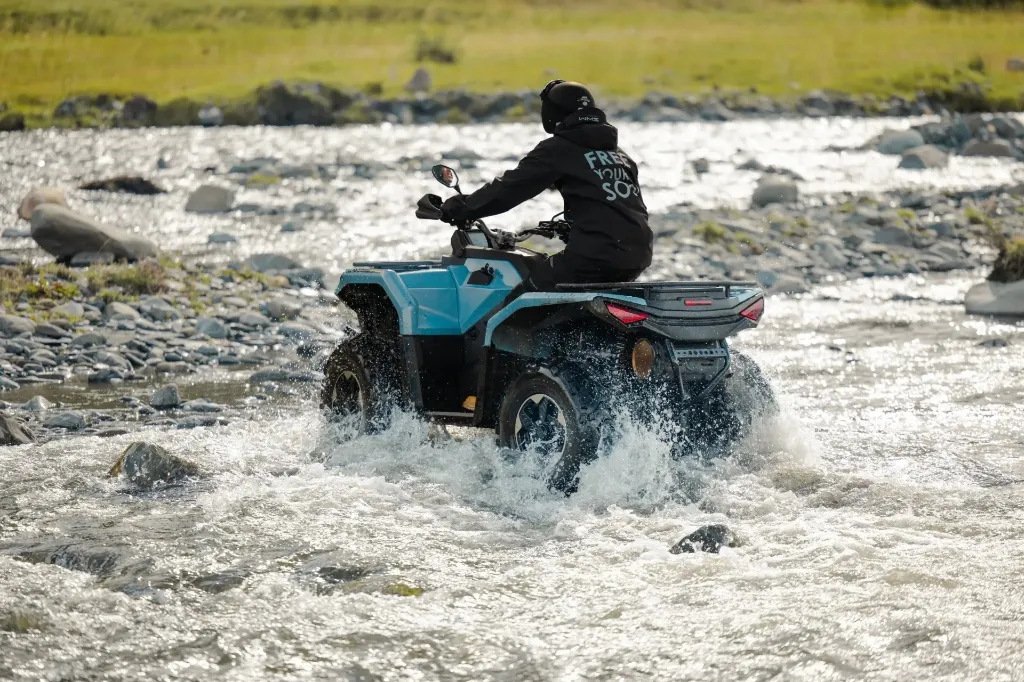
Let's be honest. The market today is absolutely packed with different types of atvs. And when you start shopping for a quad, you will quickly realize they're not all the same. Not even close.
Some are built like miniature tanks, ready to haul firewood and plow snow until the cows come home. Others are lightweight speed demons, designed to catch air over dirt jumps and slide through desert sand like they're on rails. And then you've got the little ones, the machines made specifically so your kid can learn to ride without giving you a heart attack. Pick the wrong one, and you are basically flushing your hard-earned cash down the drain. You will end up with a machine that simply can't do what you need it to do. That sucks.
This guide breaks down 7 of the most common types of atv you will find out there. No fluff. No jargon soup. Just plain talk to help you figure out which ride actually belongs in your garage.
What Are the 4 Main Types of ATVs?
Alright, let's start with the four main ones. You will spot these everywhere – on farms, out on the trails, and sitting on dealer lots. Most buyers end up choosing one of these four because they handle pretty much everything you would ever need an ATV for, whether it is hauling hay on a Tuesday or ripping trails on a Sunday.
1. Utility ATVs
These things are the workhorses. The blue-collar heroes. You know when someone says, “I just need a quad to get stuff done”? Yeah, this is exactly the machine they are talking about.
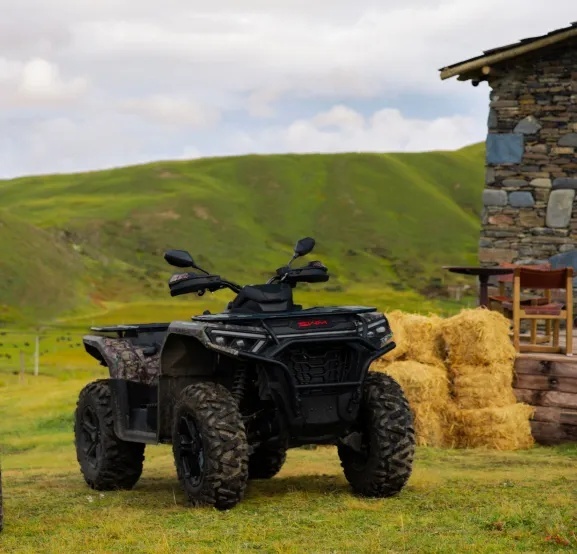
Utility ATVs are boxy, tough, and covered in thick plastic fenders that do not mind a few dings. Look at the front and back – you will see heavy‑duty steel cargo racks bolted right on. Those are for strapping down your toolboxes, your hunting gear, bags of feed, or even a chainsaw if you are heading into the woods. In short, these things are built to carry weight, period.
What makes them tick: The real magic is the selectable 4x4 (Four-Wheel Drive) system. Get stuck in deep mud or a snowdrift? Hit a button, and all four wheels start clawing for traction. The transmission is a fully automatic CVT. That means you never have to worry about a clutch pedal or stalling out. Then there is the independent rear suspension, which the nerds call IRS. That thing is an absolute lifesaver when you are picking your way over rocks and tangled roots. Honestly, it smooths out the bumps so well you would hardly believe you are sitting on a machine that tips the scales like a small car.
Where they shine: Farm work. Hauling hay. Hunting trips deep in the woods. Clearing snow off your driveway. And towing heavy Towing trailers without breaking a sweat. If you need a tool, not a toy, this is it.
2. Sport ATVs
Now we are talking about pure fun. Pure adrenaline. Sport ATVs are built for riders who want to go fast, catch air, and slide around corners with a grin on their face.
These machines look aggressive. Sharp plastic, low-slung bodies, and way less bulk than a utility quad. They are lighter, nimbler, and way more responsive.
What makes them tick: Most sport quads run on 2x4 (Rear-Wheel Drive). Why? Because it keeps the weight down and the speed up. No heavy front differential to drag around. A lot of them come with a Manual clutch and a foot shifter, just like a dirt bike. You are in total control of the power band. And instead of a heavy driveshaft, they use Chain drives to send power to the rear wheel. It is simple, efficient, and easy to modify.
Where they shine: Ripping around muddy motocross tracks. Launching off tabletops and catching big air. Drifting across sand dunes. This is your weekend toy, plain and simple.
3. Youth ATVs
Alright, now let's talk about the younger crowd. Youth ATVs are basically smaller quads with tiny engines. They are built for kids and beginners who are just getting started, usually ages 6 to 15. And speed? That is not the goal here. Power? Not really. It is all about learning the ropes safely. They are about learning the ropes in a safe, controlled way.
Here is the deal with these machines. They are packed with safety stuff, and honestly, that is what lets parents sleep a little better at night. Take the Throttle limiter, for example. It is basically a screw, plain and simple. That screw stops the throttle from opening up all the way. So no full-throttle lunges. No sudden surprises when your kid twists the grip. And there is a Remote shut-off switch or a tether cord. If junior gets into trouble, you yank the cord or hit the remote, and the engine dies immediately. Total kill switch.
Where they shine: Teaching kids how to balance, steer, and handle off-road conditions without putting them on a 500-pound monster.
4. Side-by-Sides / UTVs
Look, they are not really quads in the strict sense. But they still belong to the bigger ATV family, and honestly, they have earned a place on this list.
Most folks just call them UTVs, which is short for Utility Task Vehicles. Or you might hear SxS tossed around. The big difference, though, comes down to how you drive them. You are not straddling a seat and twisting a throttle like a bike. Instead, you get a proper bucket seat, you grab a Steering wheel, and you press gas and brake pedals. It feels just like driving a car, really. And there is a whole range of types of utvs out there, from work-focused to pure recreation.
They come with a full roll cage, seat belts, and an automotive-style cockpit – feels pretty car-like inside. Seating varies by model, but you can fit anywhere from 2 to 6 people. And the rear Dump bed? That thing is a godsend for hauling gravel, feed, or any heavy gear. These machines are no joke. You will find them in search-and-rescue operations, on military bases, and on large-scale commercial farms doing real work.
Where they shine: Towing unbelievably heavy loads. Taking the whole family out for a trail ride. Professional industrial work where a quad just is not big enough.
3 Special ATV Types
Beyond the four mainstays, manufacturers have cooked up three more specialized breeds. These are for riders with very specific needs, whether that is insane speed, ultimate versatility, or fuel choice.
1. High-Performance Quads (The Ultimate Speed Machines)
Imagine a utility quad. Now imagine someone at the factory dropped a massive V-Twin engine into it. We are talking 850cc to 1000cc monsters that push close to 90 horsepower.
That is the high-performance category. These things combine the mud-slinging, trail-tackling capability of a Utility ATV with the terrifying straight-line speed of a Sport ATV. They come with high-end, adjustable gas shocks that can handle the massive impacts of hitting whoops at 80+ MPH. This is not a beginner machine. This is for experts who know what they are doing.
2. Crossover / Multi-Purpose ATVs (Half Work, Half Play)
Have you ever heard a rider say, “I need to haul firewood on Saturday morning, but I want to tear up the trails with my buddies on Sunday afternoon”?
That is exactly why the crossover was born. These quads keep the cargo racks and the selectable 4x4 system you need for work. But the Chassis and suspension are tuned for a smoother, sportier ride on the trails. They are lighter than a pure utility machine, and the power delivery feels more responsive. They are the ultimate Swiss Army knife. Jack of all trades, master of none, but they do everything well enough to keep most riders happy.
3. 3-Wheel, 6-Wheel, and 8-Wheel ATVs
Not all ATVs have four wheels. Shocking, right?
3-Wheelers: These were huge back in the 1970s and 80s. You will mostly see them as vintage collectibles now because they had a nasty habit of tipping over. Safety concerns pretty much killed them off.
6x6 and 8x8 ATVs: Now we are talking extreme industrial machines. When you have six or eight wheels turning, you distribute the weight of the vehicle across a much larger footprint. That means you can drive across Arctic tundra, swampy marshland, and deep, soupy bogs that would swallow a standard 4x4 whole. Swamps are no match for these beasts. And their load capacity is roughly double what you get from a normal quad.
Quick Comparison: ATV Vehicle Types and Sizes Chart
Here is the cheat sheet. Do not overthink the numbers – just skim down the columns and see which row makes you nod your head. All the key specs are here, but we kept it loose so it does not read like a user manual.
ATV Type | Wheels | Engine Size (cc) | What It's Actually Made For | Top Speed (mph) | What It Drinks |
Youth ATV | 4 | 50 – 125 | Kids and total beginners learning the basics. Safe, slow, and parent‑approved. | 15 – 30 | Gas or electric. (Electric is great if you have annoyed neighbors.) |
Sport ATV | 4 | 250 – 700 | Ripping trails, hitting dunes, and catching air. Pure weekend fun. | 50 – 80 | Gas only. No substitutes. |
Utility ATV | 4 | 400 – 800 | Farm chores. Hauling hay, dragging logs, pushing snow. Real work, not play. | 45 – 65 | Gas or diesel. Pick whichever gives you more grunt. |
High‑Performance | 4 | 850 – 1000 | Extreme mud pits and expert‑level trails. For riders who know what they are doing. | 75 – 95+ | Gas only. And it drinks a lot of it. |
Multi‑Purpose / Crossover | 4 | 500 – 700 | A bit of work on Saturday, a bit of trail riding on Sunday. The honest compromise. | 50 – 70 | Gas only. Simple and reliable. |
6x6 / 8x8 ATVs | 6 or 8 | 700 – 1000 | Crawling through swamps and hauling stupid‑heavy loads. The tank of the group. | 30 – 45 | Gas or diesel. Torque matters more than speed here. |
Side‑by‑Side (UTV) | 4 | 500 – 1000+ | Bringing the whole crew along, plus a ton of gear in the dump bed. Serious hauling. | 50 – 85 | Gas, diesel, or electric. Your call. |
3 Easy Steps to Choose Your Perfect ATV Type
Picking the right machine does not have to be a brain surgery. Just walk through these three simple questions, and you will narrow down the field fast.
Step 1: Look at Your Age and Experience
Be honest with yourself here. If the rider is under 16 years old, stick to the Youth ATVs with engines smaller than 125cc. No exceptions.
If you are an adult beginner, do not, and I repeat, do not buy a manual clutch or a massive engine. Starting out as an adult? Look for something in the 300cc to 500cc range. You want a fully automatic transmission. A Utility or Crossover model is the way to go. That will give you enough power for hills and light mud. But it won't be too aggressive when you open up the throttle.
The 450cc Sport quads and the 1000cc High-Performance machines? They are better for experienced riders. Those bikes demand a skill level that is more like a vertical cliff than a gentle incline.
Step 2: Check Your Terrain
Where are you actually going to ride? Be specific.
Flat dirt trails and sand dunes: Grab a Sport ATV. They are light, agile, and love to drift.
Deep mud, rocky mountain trails, and snow: You absolutely need selectable 4x4 drive system and high ground clearance. A Utility or High-Performance ATV is the only smart choice here.
Swamps and soft, marshy ground: You should seriously consider a 6x6 ATV. Otherwise, you are going to spend your whole afternoon getting unstuck instead of riding.
Step 3: Ask: "Am I Working or Playing?"
This is the million-dollar question.
100% for work: Buy a Utility ATV or a Side-by-Side. You need the Towing capacity and the rack space. Period.
100% for fun: Buy a Sport ATV. You will save a ton of money on maintenance because there is no complex 4x4 Gearboxes to break. Less stuff to go wrong means more time riding.
Half work, half play: Buy a Crossover / Multi-Purpose ATV. It does both jobs well enough that you won't feel like you are driving a tractor when you hit the fun trails. It is the compromise that actually works.
Conclusion: Which of These Different Types of ATV is for You?
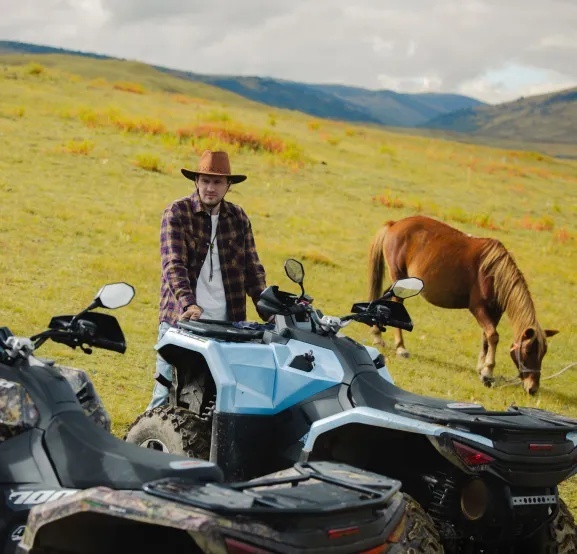
At the end of the day, picking between all these different types of atv comes down to three things. Your budget. Your experience level. And your honest assessment of what you will actually use the machine for.
If you need a tool to manage your land, get a Utility machine. If you want an adrenaline rush and crave speed, look at the Sport quads. If you have kids, get them a Youth model and teach them right. If you need to haul the whole family, go Side-by-Side.
Still not sure which quad fits your outdoor lifestyle? Check out the full SWM lineup today. Or just call up one of their vehicle experts. They will ask you the right questions and point you toward a machine that actually fits your life, not just your budget.
-
Jun 25 2026
learn more
 7 Different Types of ATVs: How to Choose the Right Quad
7 Different Types of ATVs: How to Choose the Right Quad
7 Different Types of ATVs: How to Choose the Right Quad
-
Jun 18 2026
learn more
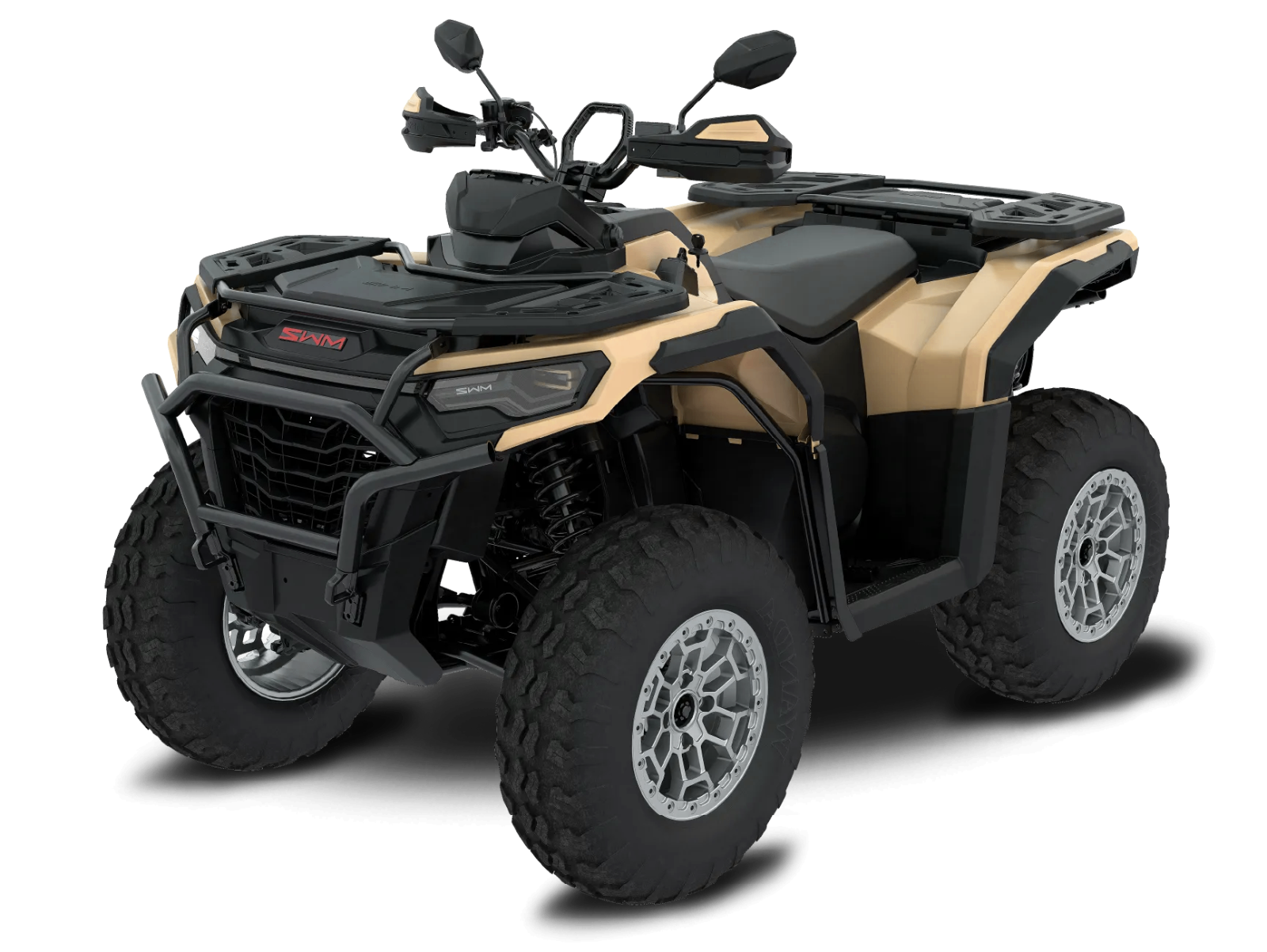 What is the top speed of the SWM Trailhunter 1000?
What is the top speed of the SWM Trailhunter 1000?
What is the top speed of the SWM Trailhunter 1000?
-
Jun 17 2026
learn more
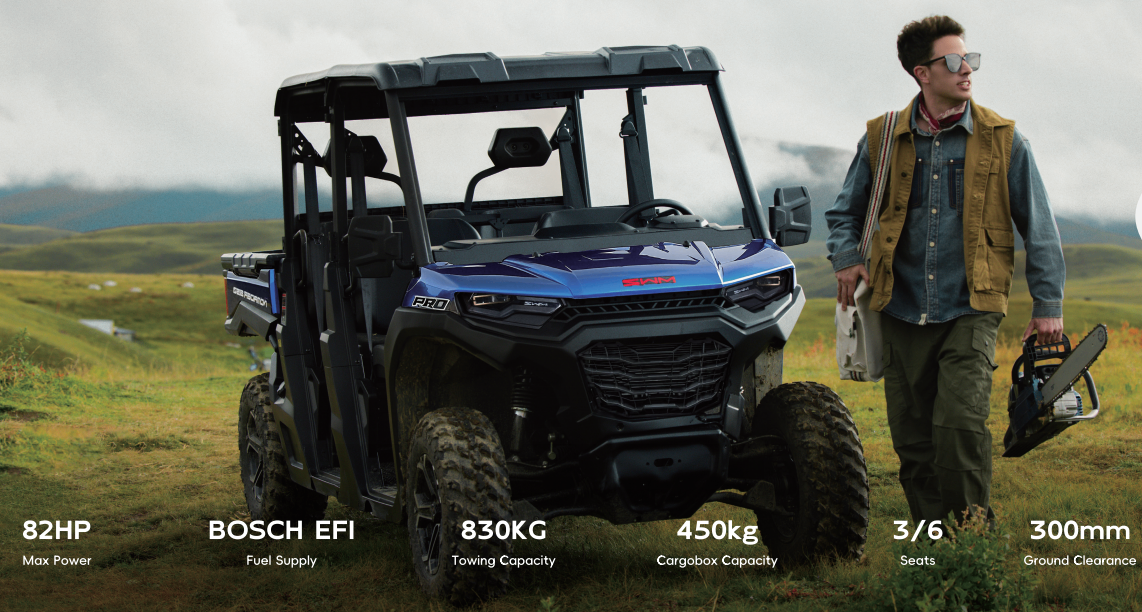 How Much Horsepower Does the 850cc V-Twin Produce?
How Much Horsepower Does the 850cc V-Twin Produce?
How Much Horsepower Does the 850cc V-Twin Produce?
-
Jun 23 2026
learn more
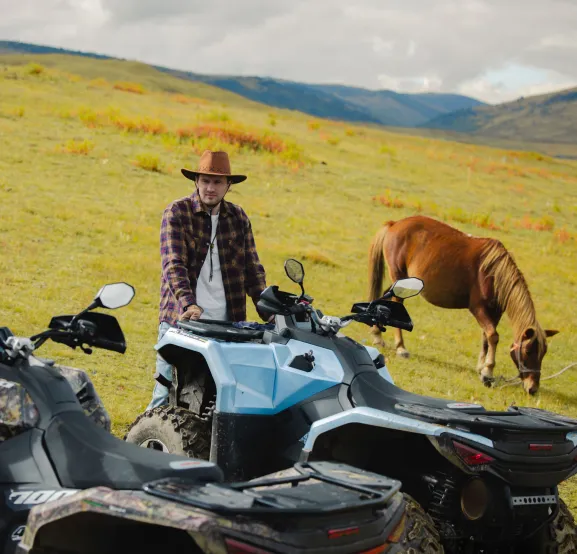 Can SWM ATV Handle Mud and Snow?
Can SWM ATV Handle Mud and Snow?
Can SWM ATV Handle Mud and Snow?