5 Main Different Types of UTVs: How to Pick the Best One for Your Needs
Jun 16 2026
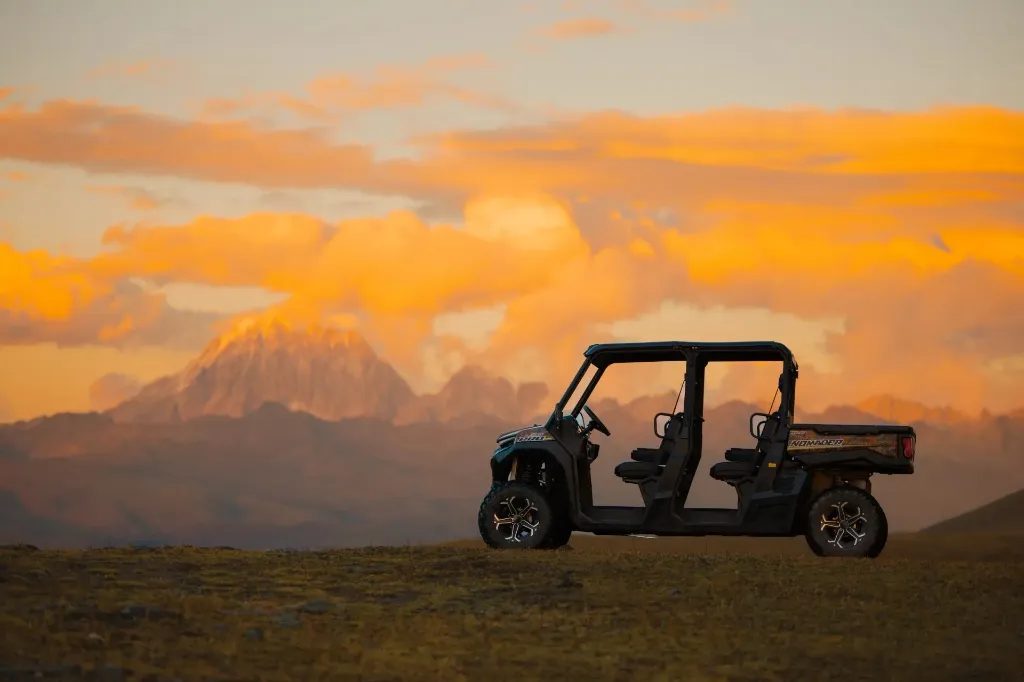
Alright, so you’re looking at side-by-sides. Not just any, but the one that actually makes sense for your work, your land, your back. And here’s the catch. The 5 main different types of UTVs aren't just labels a marketing team dreamed up. They represent real, gritty engineering choices. Torque versus horsepower. Payload versus ride comfort. Durability versus speed. Get it wrong, and you’ll feel it every single day, either in repair bills or in pure frustration. So let's walk through each of these different types of UTVs, and by the time we're done, you'll know exactly which one fits your life. No fluff, just the stuff that matters.
The 5 Main Types of UTVs Explained
Funny thing. Two UTVs can sit side by side in a showroom and look almost identical from ten feet away. But crawl underneath, check the suspension arms, pop the CVT cover, and you’ll see they’re built for completely opposite worlds. Let’s go through them, one at a time, like we’re standing in the shop.
1. Utility UTVs (Built for Heavy Lifting)
These are the mules. No pretending otherwise. A Utility UTV exists for one reason: to haul heavy stuff, constantly, without complaining. The engine is all about Torque – low-end grunt that pulls a loaded trailer up a muddy incline without screaming. The frame is thicker, the suspension is stiffer (to stop that annoying body roll when the bed is full), and the cargo box is noticeably deeper than what you'll find on anything sporty.
Picture a cattle farm, a construction site, a warehouse yard. These things spend their lives starting, stopping, bouncing over ruts, dragging heavy loads. And from the guys I've talked to, the real money-saver is reliability. Fewer breakdowns, less downtime, and basic maintenance you can do with a socket set.
If your daily routine involves hauling north of 600 kg or towing close to 900 kg, this is your starting point. Not glamorous, but it'll outwork you.
2. Sport UTVs (Built for Speed & Adventure)
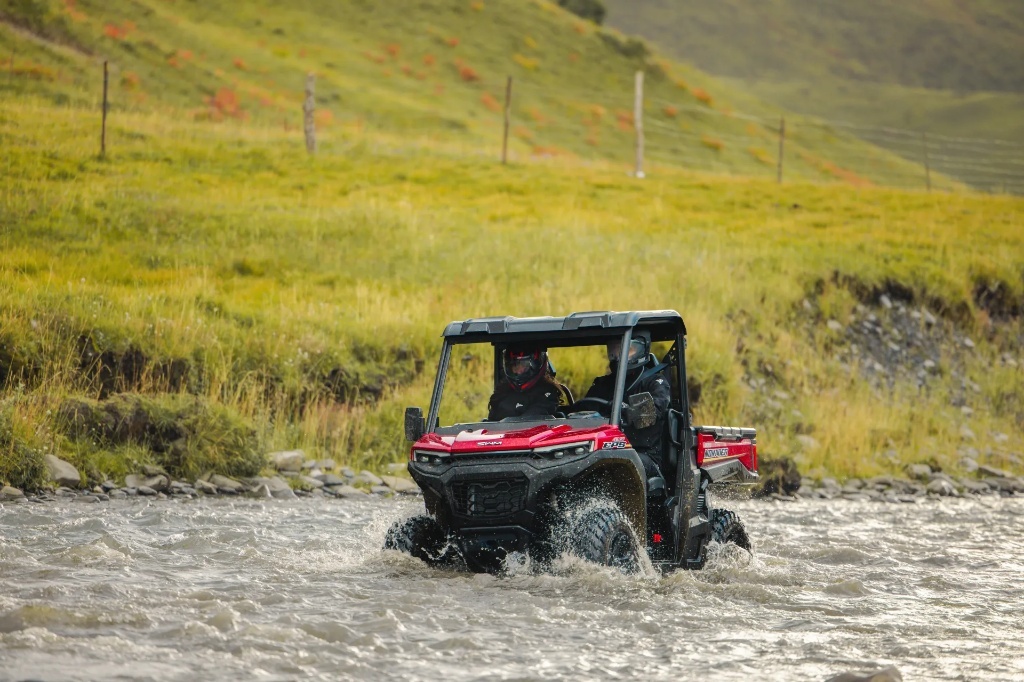
Now flip the coin. A Sport UTV is pure adrenaline. Speed, carving turns, catching air – that's its language. The powertrain is set up for Horsepower and instant throttle response. Mash the pedal and it launches. The suspension is a whole different animal too: long travel, adjustable shocks, built to soak up whoops and landings at high speed without bottoming out.
Performance Specs: Just to give you a number, most of these push over 80 horsepower. Suspension travel? Often 14 inches or more. That’s what keeps the tires glued to the ground when you're flying across desert washes or threading through tight forest trails.
When it works best: If you’re on a patrol crew that needs to cover miles in a hurry, or you're racing against the clock, the extra performance of a Sport UTV is a real edge. It's built for speed, end of story.
3. Recreation UTVs (The All-Rounders)
This one's the middle child, and honestly, for a lot of folks it's the sweet spot. A Recreation UTV tries to balance weekend fun with light weekday chores. The suspension is softer than a Sport but not as bone-jarring as a Utility. The bed holds a decent amount – usually 300 to 500 kg – and the engine gives you enough muscle for everyday tasks, but it won't win any drag races.
Perfect for checking fences, hauling hunting gear, shuttling supplies to a campsite, or giving tours around a resort. And they put more thought into the cabin: better sound deadening, more cupholders, comfier seats.
The Decision Factor: Here's a good rule. If more than half your usage is general-purpose stuff, and you don't need extreme towing or race-ready suspension, a Recreation UTV saves you money. You're not paying for capability you'll never use.
4. Crossover UTVs (The Versatile Performers)
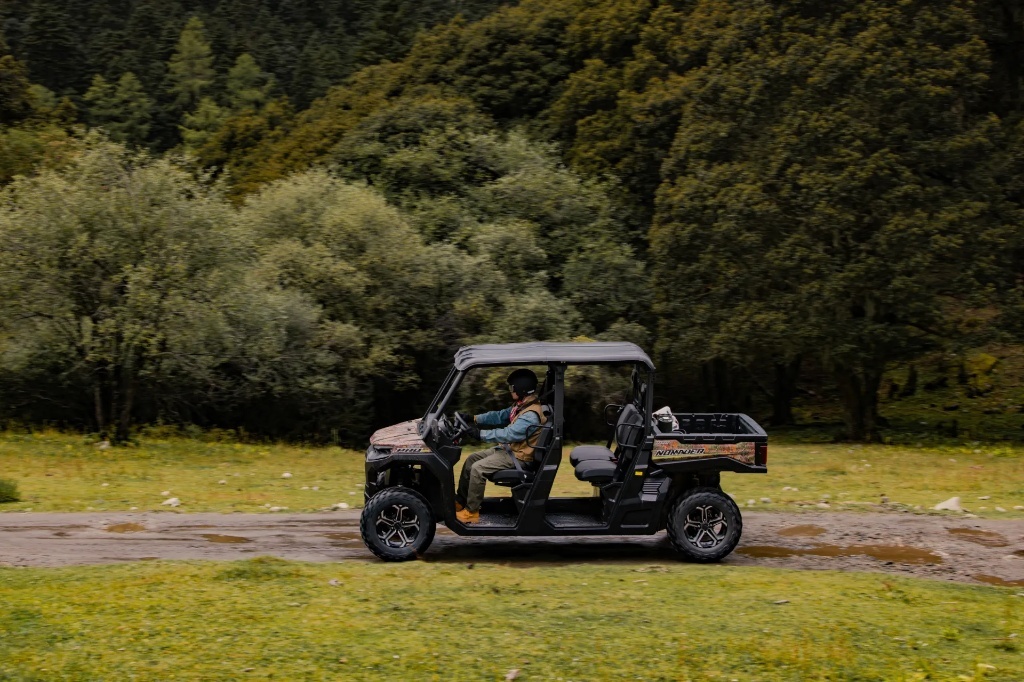
This is the new breed, and it's gaining fans fast. A Crossover UTV is what happens when engineers look at the gap between Utility and Sport and say, "Why not both?" They use high-strength steel and lighter materials to keep the frame strong but not pig-heavy. Payload stays up there – often around 600 kg – but the suspension geometry borrows from sportier designs, giving you sharper damping. The engine tuning gives you low-end torque for hauling, but also lets you rev higher when you need to move.
Commercial crews love these. Think pipeline inspectors, geological survey teams, utility maintenance. They need to carry heavy gear, sure. But they also need to get between remote sites quickly. A Crossover can cover maybe 80% of those mixed-use situations. That means you don't have to buy two different vehicles for your fleet.
Our take: If your weekly calendar has both regular supply runs and frequent cross-country driving, look at the performance-to-payload ratio of a Crossover. The combined math often beats single-purpose models for overall efficiency.
5. Youth UTVs (Safety-Focused Learning)
Last one, and it's a whole different animal. The Youth UTV category isn't about power at all. It's about control and safety, pure and simple. Now, these little rigs aren't about speed or hauling. They're about giving younger drivers a safe place to figure out the basics.
The big selling point? The Speed Limiter. A supervisor just dials in a max speed, and that's it, no worries about them taking off. And they come standard with roll cages, five-point harnesses, and side nets – all of which meet safety certifications, by the way. Some models go a step further and add GEO-Fencing. That's a GPS thing: you draw a virtual boundary on a map, and if the UTV crosses it, you get an alert. Or the engine just shuts off. Either way, you stay in control.
Where do you see these? Training schools, summer camps, and big farms where the next generation is getting behind the wheel. Honestly, it's a smart way to build confidence and skill, without putting new drivers in any real danger.
Comparison Chart: Which UTV Type Fits Your Lifestyle?
Let me put the numbers side by side for you. This table gives a quick snapshot of each UTV type.
UTV Type | Main Use Case | Suspension Feel | Typical Payload / Towing | Seats | Best For |
Utility | Heavy hauling, grounds maintenance | Stiffer, resists body roll | ≥ 600 kg / Towing ≥ 900 kg | 2 | Farms, construction, warehouses |
Sport | High-speed off-road, racing | Long-travel, progressive damping | ≤ 250 kg (light-duty design) | 2 | Racing, extreme terrain patrol |
Recreation | Mixed-use daily tasks | Medium travel, comfort-focused | 300-500 kg / Towing 600 kg | 2-4 | Families, mixed-use property owners |
Crossover | Cargo + mobility | Sporty geometry, load-capable | 500-700 kg / Towing 800 kg | 2 | Surveying, maintenance, mixed fleets |
Youth | Training, first-time drivers | Basic setup, stable | Very low (≤ 100 kg) | 2 | Training orgs, youth camps |
4 Simple Steps to Find Your Perfect Ride
Okay, you've got the breakdown. Now how do you actually pick one? Instead of guessing, walk through these four steps. They'll keep you honest about what you really need.
Step 1: Map out your workload
Think about a typical year. How much time do you spend hauling heavy stuff – over 300 kg? What about average miles per trip? Now, about the terrain – is it soft dirt, hard-packed gravel, or some nasty mix of both? That matters.
Here's a quick rule of thumb. If heavy hauling takes up more than 60% of your work time, you should be looking at a Utility or a Crossover. But if most of your driving is just moving people and gear quickly over long distances, a Sport UTV makes more sense.
Step 2: Who's coming with you, and what are you bringing
You riding solo most days? Or do you regularly have passengers and a bunch of gear? If you need more than two seats, check out the Crew variants – some Crossover and Recreation models offer them. Just keep one thing in mind: a longer wheelbase gives you more cabin space, but it also makes the turning radius wider. So you gain room inside, but you lose a bit of tight-spot maneuverability. Trade-off.
Step 3: Look at the long-term costs.
Sticker price is only part of the story. You've got to factor in fuel or electricity, service intervals, and the cost of wear items like tires and brake pads. One thing people often overlook is the CVT transmission. That belt hates heat. If you work it hard, make sure the model you choose has an upgraded cooling system for the CVT housing. That belt will last a lot longer.
Step 4: Take a test drive (the right way).
Don't just take a lap around the dealer lot. Try to test the UTV with weight in the bed that simulates your normal load. Pay attention to how the EPS (Electric Power Steering) feels. Does the assist level change naturally as you speed up? How's the braking distance with a full load versus empty? And watch how the suspension compresses and rebounds over bumps. That tells you a lot about stability on your property.
FAQ
Q1: What's the difference between a UTV and an ATV? Which one should I buy?
They're totally different animals.
Controls: UTV uses a steering wheel and pedals, like a car. ATV uses handlebars and body weight.
Safety: UTVs come with roll cage and seatbelts. ATVs don't.
Cargo: UTV has a built-in bed, usually 300 kg or more. ATVs have almost no cargo space.
Best Use: UTVs for farm work, construction, teams. ATVs for solo recreation and racing.
Q2: Is UTV maintenance complicated? What should I pay attention to?
Not hard, but three things get overlooked all the time:
Keep the CVT housing clean. Dust and mud get in, and if you let it build up, the belt slips or snaps.
Wash the radiator and undercarriage after heavy use. Leftover sand and mud cause wear and overheating.
Check the bolts regularly. Off-road vibration loosens suspension and chassis bolts faster than you think. A quick check saves breakdowns.
Conclusion
So, there it is. Picking the right UTV really comes down to your specific numbers: payload, terrain, passengers, and maintenance budget. The five types we covered – Utility, Sport, Recreation, Crossover, and Youth – each represent a clear engineering solution. There's no "best" for everyone, just the best for your situation.
-
Sep 20 2026
learn more
 How to Read ATV Tire Size: 27×9-14 Explained
How to Read ATV Tire Size: 27×9-14 Explained
How to Read ATV Tire Size: 27×9-14 Explained
-
Sep 17 2026
learn more
 ATV Trail Riding vs Hunting: How to Choose the Right ATV
ATV Trail Riding vs Hunting: How to Choose the Right ATV
ATV Trail Riding vs Hunting: How to Choose the Right ATV
-
Sep 16 2026
learn more
 What Size UTV Do I Need? 5 Steps to Choose the Right One for You
What Size UTV Do I Need? 5 Steps to Choose the Right One for You
What Size UTV Do I Need? 5 Steps to Choose the Right One for You
-
Sep 15 2026
learn more
 How to Test a Stator on ATV: 4 Tests to Diagnose It
How to Test a Stator on ATV: 4 Tests to Diagnose It
How to Test a Stator on ATV: 4 Tests to Diagnose It