Common Towing Mistakes Every ATV & UTV Owner Should Avoid
Jul 20 2026
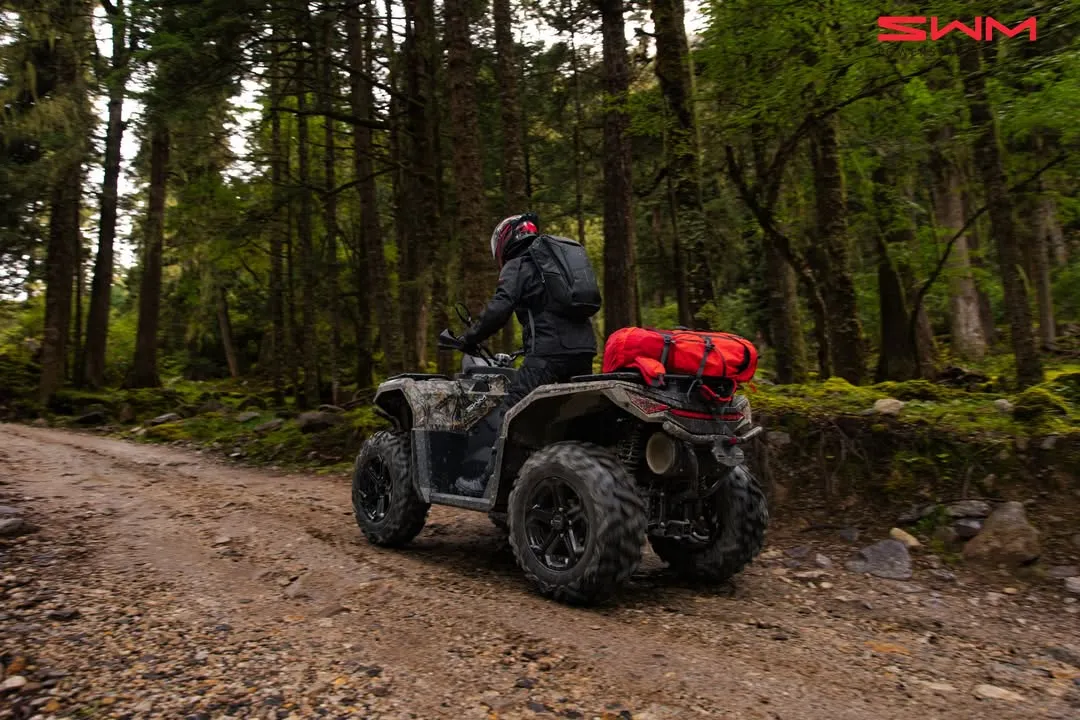
Transporting your ATV or UTV safely to the off-road area is an essential part of every outdoor adventure. However, many owners unknowingly make serious towing mistakes that can lead to costly damage, safety hazards, and even accidents. Whether you are towing a single ATV for weekend riding or transporting a heavy UTV on the highway, understanding these common pitfalls can help you save time, money, and avoid trouble.
Why is Proper ATV and UTV Towing so Important?
Toing can significantly increase weight, alter vehicle dynamics and extend braking distance. Ignoring best practices may lead to trailer swaying, component failures or loss of control. Being prepared not only protects your investment but also ensures compliance and allows you to focus on enjoying the riding experience.
Let's take a look at the mistakes that must be avoided.
Mistake #1: Exceeding the Rated Towing Capacity
This is the most common and also the most dangerous problem.
Many users believe that as long as the engine has sufficient power, it can handle heavier loads.
In fact, the rated towing capacity of a vehicle is not only related to the engine, but is also influenced by factors such as the braking system, chassis structure, suspension, transmission system, and the strength of the frame.
Exceeding the manufacturer's recommended pulling weight may result in:
Difficulty in starting
Significant increase in braking distance
Insufficient power on uphill
Increased risk of losing control on downhill
Early wear of vehicle components
Before transporting, it is essential to always verify the total weight of the trailer and the goods to ensure it does not exceed the vehicle's permitted limit.
Mistake #2: Ignoring the Trailer's Total Weight
When many people calculate the weight, they only consider the goods being transported, but forget that the trailer itself also has weight.
For example, transportation:
Building materials
Wood
Tools and equipment Water tank
Agricultural supplies
What really needs to be calculated is:
The weight of the trailer + the weight of the cargo + the weight of the attachments = the actual towing weight
If the weight of the trailer is ignored, even if there is not much cargo, it may still exceed the vehicle's safety limit.
Mistake #3: Improper Load Distribution
Many of the dragging problems are not due to the excessive weight, but rather the incorrect placement of the goods.
For example:
The heavy objects were all pressing on the rear of the trailer.
The center of gravity was skewed to one side.
The goods were not securely fastened.
These situations are likely to cause:
Trailer swaying from side to side
Decreased cornering stability
Vehicle drifting during braking
Abnormal stress on trailer connection points
The correct method is to place the goods evenly and secure them with straps to prevent any movement during transportation.
Mistake #4: Driving Too Fast While Towing
When in the dragging state, the weight and inertia of the vehicle will increase.
If you continue to drive at your usual speed, the following problems are likely to occur:
Turning too sharply
Insufficient braking distance
Loss of vehicle traction
Increased sway of the trailer
Especially in the following terrains:
Mud ground
Sand ground
Paved gravel road
Forest path
Ramp
All drivers should appropriately reduce their speed, slow down in advance and maintain a smooth driving style.
Mistake #5: Using the Wrong Hitch or Coupling System
Although the trailer hitch is just a small component, it directly affects the safety of the entire towing system.
Common questions include:
The ball head size does not match.
The connector is not fully locked.
The safety pin is missing.
No inspection of wear conditions was conducted after long-term use.
Before each towing operation, it is necessary to ensure that the connectors are securely installed and to check for any cracks, looseness or severe wear.
Mistake #6: Neglecting Tire Pressure and Tire Condition
Many users regularly maintain their engines, but rarely check their tires.
In fact, the condition of the tires directly affects the stability of the drag.
The following aspects need to be carefully checked:
Is the tire pressure normal?
Is the tire tread severely worn?
Are there any aging cracks?
Is the wear of the left and right tires consistent?
Low tire pressure not only increases fuel consumption, but also affects the vehicle's steering and braking performance.
Mistake #7: Underestimating Terrain Challenges
The pulling capacity announced by the manufacturer is usually obtained through tests on smooth roads.
But in real working environments, one often encounters:
Steep slope
Deep mud
Sandy ground
Rocky road
Snow accumulation
These complex terrains will increase the burden on the engine and the transmission system.
Therefore, in harsh environments, the towing weight should be appropriately reduced, and the four-wheel drive system and low gear should be fully utilized to enhance the vehicle's traction and stability.
Mistake #8: Skipping Pre-Tow Safety Inspections
Many of the malfunctions can actually be avoided before departure.
It is recommended to develop the habit of checking before each towing operation:
✓ Check if the trailer connector is locked
✓ Whether the safety pin is installed properly
✓ Whether the goods are firmly fixed
✓ Whether the tire pressure is normal
✓ Whether the braking system is working properly
✓ Check if there are any abnormalities with the suspension
✓ Check if the trailer lights (if applicable) are functioning properly
A few minutes of inspection can often prevent a serious accident.
Choosing ATV UTV for Dragging Tasks: Utility Above Peak Parameters
Many users, when purchasing vehicles, often only focus on the maximum towing capacity.
In fact, for users who have been working on farms, ranches, forestry, construction sites or property maintenance for a long time, what is more worthy of attention is the overall performance of the vehicle, including:
Sufficient low-speed torque
Four-wheel drive system (4WD)
Differential lock
High-strength frame
Independent suspension system
Good braking performance
Sufficient ground clearance
Stable steering system
Wide cargo box space
An ATV or UTV that combines power, traction, handling and durability is often better able to meet the long-term and high-frequency work requirements than one that solely focuses on higher towing parameters.
If your daily work involves transporting equipment, delivering agricultural supplies, towing vehicles or traversing complex terrains, it is recommended to choose a Utility ATV or Side-by-Side that is specifically designed for heavy loads and harsh conditions. These vehicles can ensure safety while enhancing the overall operational efficiency.
Conclusion
The dragging capability is an important advantage of ATVs and UTVs. However, what truly determines the transportation efficiency and safety is not merely the parameters themselves, but the correct usage method.
By avoiding overloading, properly distributing the weight of the goods, adjusting driving methods according to the terrain, and developing good vehicle inspection habits, most towing accidents can be prevented in advance.
When choosing an ATV or UTV, do not merely focus on the largest towing capacity. Instead, you should comprehensively consider the power system, four-wheel drive performance, suspension, braking, and overall reliability. Select the model that truly suits your working environment. This not only enhances the efficiency of daily operations but also ensures that the vehicle maintains stable and reliable performance over the coming years.
-
Jul 20 2026
learn more
 Common Towing Mistakes Every ATV & UTV Owner Should Avoid
Common Towing Mistakes Every ATV & UTV Owner Should Avoid
Common Towing Mistakes Every ATV & UTV Owner Should Avoid
-
Jul 21 2026
learn more
 Why Are UTVs So Expensive? 10 Reasons Side-by-Sides Cost More
Why Are UTVs So Expensive? 10 Reasons Side-by-Sides Cost More
Why Are UTVs So Expensive? 10 Reasons Side-by-Sides Cost More
-
Jul 18 2026
learn more
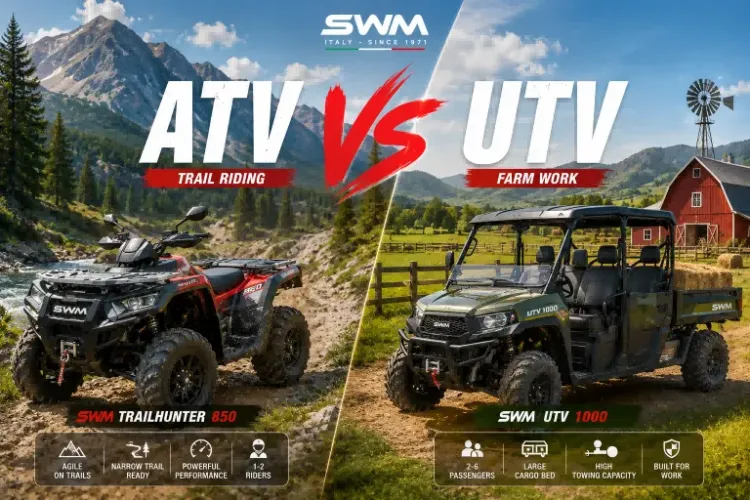 ATV vs UTV: Which Is Better for Trail Riding vs Farm Work?
ATV vs UTV: Which Is Better for Trail Riding vs Farm Work?
ATV vs UTV: Which Is Better for Trail Riding vs Farm Work?
-
Jul 16 2026
learn more
 How Many Passengers Can Safely Fit in a Side-by-Side?
How Many Passengers Can Safely Fit in a Side-by-Side?
How Many Passengers Can Safely Fit in a Side-by-Side?