How Wide Is a UTV? 7 Key Facts Buyers Should Know
Aug 10 2026
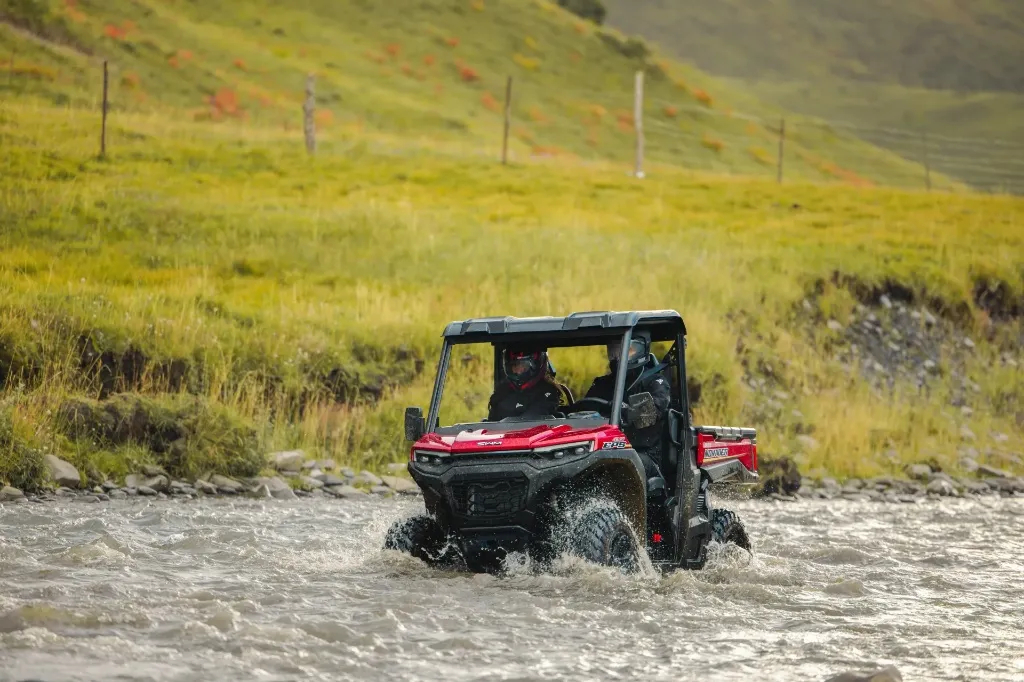
Let’s cut right to it. How wide is a UTV? Most full-size models? They run between 60 and 72 inches. The narrow ones, built for tight trails? Those sit closer to 50 inches. That’s about 1.52 to 1.83 meters for the bigger machines, if that helps. But here’s the thing. Width isn’t just a number you glance at. It changes everything. Where you can ride. How stable the thing feels. Whether you can even get it into your garage.
A wider UTV gives you a broader track. That pays off when you’re flying across open desert or bouncing over rocky ground. Narrower? You slip through gaps that would stop a wider rig cold. So if you’re shopping, knowing UTV width is your first real filter. It helps you figure out what actually fits your work, your trails, your weekends.
This guide walks you through average sizes, what determines width, how to compare, and even how to measure before you buy. Let’s get into it.
How Wide Is a UTV? Average Width and Size Guide
What Is the Standard Width of a UTV?
Full-size machines? Usually 60 to 72 inches.
Narrow trail models? Around 50 inches.
But the off-road world doesn’t have one rigid “standard.” These ranges grew out of real-world riding and different design goals.
When manufacturers measure width, they go from the widest point on the left side to the widest on the right. Most of the time, that means the outer edges of the tires. What actually pushes that number up or down? A few key hardware pieces:
Suspension design – Longer travel usually needs a wider stance. Otherwise, you get tippy on rough stuff.
Tire size – Wider tires and deeper treads physically take up more space side to side.
Wheel offset – Where the wheel mounts relative to the hub changes the distance between left and right tires.
Vehicle purpose – Work machines lean toward stability under heavy loads. Sportier ones chase cornering grip.
UTV Width Range Overview
Look at what’s on the market today. You can split most UTVs into three general buckets:
UTV Width Category | Typical Width | Common Use |
50-inch class | Around 50 inches | Narrow trails, tight riding areas |
60-64-inch class | Around 60-64 inches | Recreation, utility work, mixed riding |
72-inch class | Around 70-72 inches | Performance riding, open terrain |
Now, a quick warning. Wider isn’t always better.
Go too wide, and some trails will simply say “no.”
Go too narrow, and you might feel under-supported on side slopes.
It’s about matching the machine to your world.
What Does UTV Width Mean?
UTV width is just this: the total distance from the outside edge of one tire to the outside edge of the opposite tire.
Sounds simple. But that one number hits three very real things:
Trail access – Will you actually fit through those tight, tree-lined paths you want to ride?
Transport and storage – Can you roll it onto your existing trailer? Will it clear your garage door?
Ride feel – How planted does it feel when the trail gets choppy or tilted?
One heads-up. Factory specs are based on the stock setup.
Swap in bigger tires or different wheels later? Your actual side-by-side width changes.
So when you plan your trailer or storage, leave a little extra room. Always.
Common UTV Width Categories: 50-Inch, 60-64-Inch, and 72-Inch Models Explained
50-Inch UTV: Best for Narrow Trails
A 50-inch UTV exists for one reason: maximum maneuverability in tight spaces.
Think forest trails with trees packed close. Rocky mountain passes where every inch counts. That 50-inch body takes a ton of stress off the driver. It’s also easier to load onto a smaller trailer. Easier to squeeze into a cramped shed.
But there’s a trade-off. On high-speed turns or side hills, you’ll notice the difference. The narrower stance just doesn’t give you the same lateral support as a wider rig.
60-64-Inch UTV: The Practical Choice for Most Riders
This is the sweet spot. 60 to 64 inches. Why? Because it balances trail capability, everyday stability, and usability better than any other range. You get a more planted chassis than a 50-incher. More cabin space. More cargo room.
Yet it still handles the vast majority of common off-road routes without drama.
For farm chores, hauling supplies, or weekend exploring, this width just works.
If you want to see what different UTVs actually do in real life, take a peek at this guide on different UTV uses. It might help you connect width to your actual jobs.
72-Inch UTV: Enhanced Stability for Open Terrain
A 72-inch UTV is all about stability and control. Especially in wide-open or demanding terrain.
Desert runs. Dunes. Open fields. That’s where this machine shines.
What works well:
The wider track spreads the weight over a broader footprint. Better lateral balance. Plus, engineers have more room for sophisticated suspension layouts. So you get better composure at speed over unpredictable ground.
What to consider:
You’ll struggle in narrow woodland trails. And you’ll almost certainly need a wider, purpose-built trailer. This chassis is meant for open spaces, not twisty backwoods.
64-Inch vs 72-Inch UTV: Which Width Should You Choose?
Here’s the short version.
A 64-inch UTV is usually the better choice if you want a blend of trail access and stability.
A 72-inch UTV is for riders who put maximum control and performance above everything else.
A lot of people get stuck between these two. Let’s lay them side by side:
Comparison Feature | 64-Inch Class UTV | 72-Inch Class UTV |
Trail Access | Mixed routes, traditional forest trails, farm lanes | Open areas, sandy environments, performance-oriented terrain |
Handling & Stability | Good stability with a balanced feel | Wider track gives planted, confidence-inspiring control |
Maneuverability | Tighter turning radius, more agile | Needs extra room for turning and backing up |
Transportation | Works with standard utility trailers | Usually requires a wider flatbed trailer |
Pick 64 inches if:
You need one machine for farm checks, hauling, and occasional weekend rides. It’s a great all-rounder.
Pick 72 inches if:
You spend most of your time in open country. You really value high-speed composure. And you’ve got the trailer and storage to handle a wider rig.
Why UTV Width Matters for Trail Riding and Off-Road Performance
UTV width isn’t just a spec. It changes your whole experience.
Here’s what that actually means on the ground:
Trail access – Some riding areas post width limits. Know your machine’s width before you go, or you might end up turned away. That’s why many riders check local rules before they commit to a new UTV.
Side-to-side stability – On off-camber hills or bumpy stretches, a wider track spreads the center of gravity. That translates to a more supported, less nervous feel behind the wheel.
Turning and maneuverability – A narrower body usually means a tighter turning radius. That’s huge in dense forests or switchback-heavy trails.
What Factors Affect UTV Width?
It’s not just the chassis. Tires, suspension, wheels, and even the vehicle’s job all leave their mark.
Let’s break down the main hardware pieces:
Tire size and spec – Taller, wider tires or aggressive treads push the outer edges further out.
Suspension architecture – Control arm length and suspension layout directly set the distance between the wheels.
Wheel offset – Change the offset, and the wheels move in or out. If you adjust this, double-check that the steering and driveline are happy with the new setup.
Vehicle purpose – Work models balance wheelbase and track width for load hauling. Sport machines lean into width for cornering muscle.
How to Measure UTV Width Before Buying
The most accurate way? Measure from the outside edge of one tire to the outside edge of the other.
Do this before you buy. It saves you from nasty surprises when you try to haul or store the machine.
Find the widest point – Park on level ground with proper tire pressure. Measure the absolute distance between the outermost sidewall bulges on left and right.
Account for load and condition – Cargo weight and suspension sag change the actual space you need. Factor in your typical load for a realistic number.
Check your physical space
Trailer width: Make sure the deck is wide enough, with room left for tie-down straps.
Storage access: Measure the narrowest part of your garage door, shed opening, or gate.
And while you’re at it, regular maintenance helps too. Proper tire pressure and suspension preload keep the ride height and stance close to factory spec. Check out these regular UTV maintenance tips for more.
How to Choose the Right UTV Width for Your Riding Needs
The right width depends on your trails, your tasks, and what you value more – maneuverability or stability.
It also helps to know the different types of UTVs out there. This overview of different types of UTVs can give you more context.
Go 50 inches if:
Your regular routes are narrow mountain trails, dense forests, or areas with strict width limits.
You love tight turning and want an easier time with transport and storage.
Go 60-64 inches if:
You split time between work duties, hauling, and weekend recreation.
You want one width that handles most situations without compromise. This range is seriously versatile.
Go 72 inches if:
You ride mostly in desert, sand, or wide-open spaces where high-speed stability matters most.
You have plenty of storage room and a trailer that fits a wider machine.
Final Thoughts: How Wide Is a UTV for Your Needs?
So, how wide is a UTV for you?
It comes down to where you ride, how you use the machine, and which trade-off you’re willing to make.
l Narrower models give you better access to tight spots.
l Wider ones deliver a more planted, confident feel in open terrain.
There’s no single right answer – just the right answer for you.
If something feels off with your chassis or ride quality later, here’s a handy list of common UTV troubleshooting tips for a quick check.
And if you’re still weighing your options, SWM offers UTVs across different use cases – work, recreation, and everything in between. Match your width choice to your actual needs, not just what looks good on paper.
-
Aug 10 2026
learn more
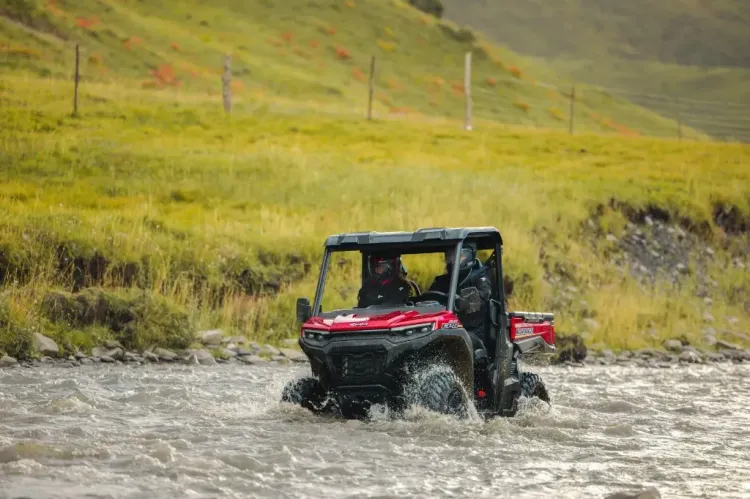 How Wide Is a UTV? 7 Key Facts Buyers Should Know
How Wide Is a UTV? 7 Key Facts Buyers Should Know
How Wide Is a UTV? 7 Key Facts Buyers Should Know
-
Aug 08 2026
learn more
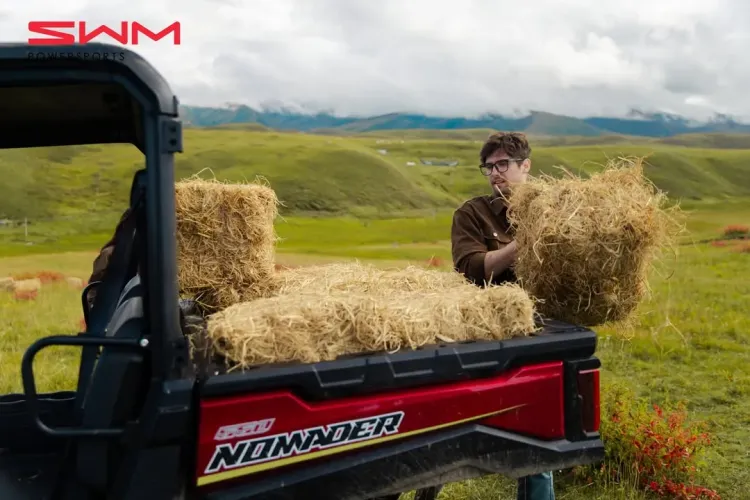 How Much Does a 4-Seater Side-by-Side Weigh?
How Much Does a 4-Seater Side-by-Side Weigh?
How Much Does a 4-Seater Side-by-Side Weigh?
-
Aug 06 2026
learn more
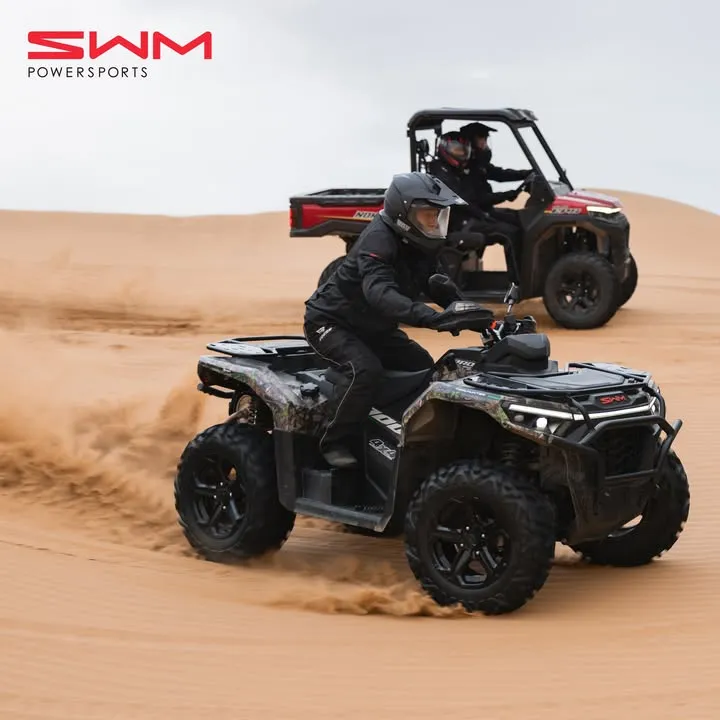 Can a Child Ride in a UTV in Wisconsin?
Can a Child Ride in a UTV in Wisconsin?
Can a Child Ride in a UTV in Wisconsin?
-
Aug 04 2026
learn more
 How Much Does an ATV Weigh? 7 Facts Buyers Should Know
How Much Does an ATV Weigh? 7 Facts Buyers Should Know
How Much Does an ATV Weigh? 7 Facts Buyers Should Know