UTV Uses: 10 Practical Ways to Get More Out of Your Side-by-Side
Jun 17 2026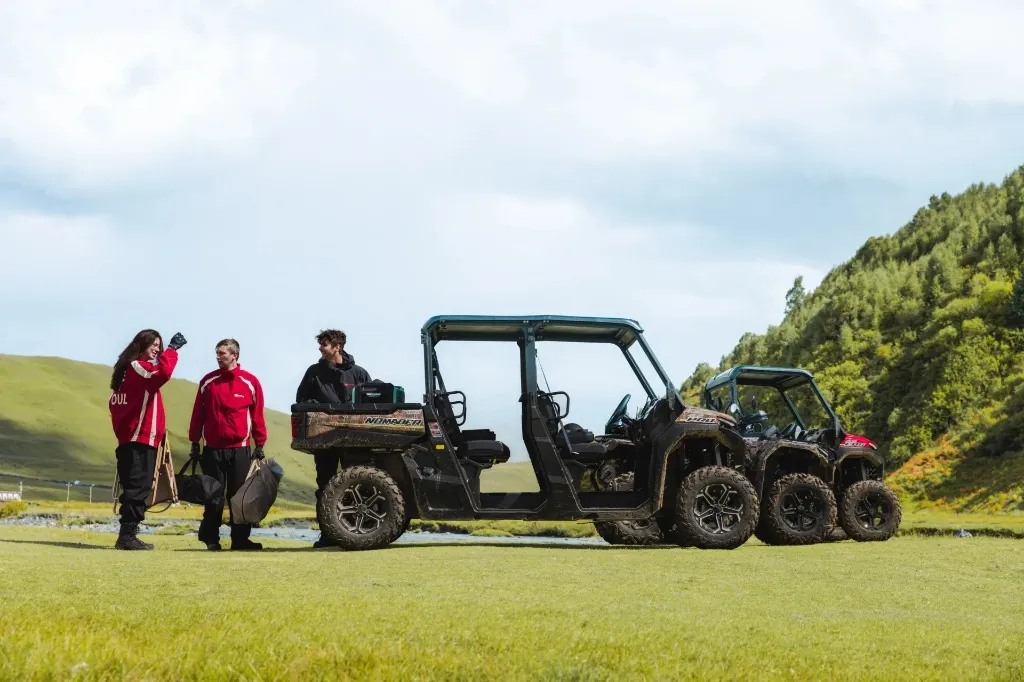
Whether you need it for farm chores or weekend adventures, really understanding all the possible UTV uses can turn this machine into the hardest-working asset you own. A UTV isn't just a ride. It's a multitool for your workday and your downtime. The thing is, a lot of owners only tap into maybe 10 percent of what their side-by-side can actually do. That's a missed opportunity. This guide will walk you through the full potential of your steel companion, so it becomes a true helper on the job and a reliable partner for fun.
Why You Need a Versatile UTV
So why would you even need a versatile UTV? Let's be honest. Nobody wants to shell out for a work truck and then drop another pile of cash on a toy just for the weekends. A solid UTV? It gives you the pulling power for heavy jobs and the smooth suspension to make trail riding actually enjoyable. It's the bridge between getting work done and having fun. And that's exactly why it's a smart buy—it pays you back in productivity and enjoyment.
Let's talk money for a second. A mid-size compact tractor can easily run you over $30,000. A fully capable UTV? Often a third of that price. Here's the thing—a good UTV can take care of maybe 80% of the daily hauling and light chores around an average farm. It turns way tighter than a tractor, it's not as heavy as a truck, and it fits into all those tight spots where the big stuff simply won't go. So it's not just a machine. It's a real time-saver that makes you more productive, whether you're looking after a small orchard or running a thousand acres of row crops.
10 Practical UTV Uses
1. Farm Work and Land Management
On the farm, a UTV is pure productivity. Hauling hay, moving tools, or navigating rough crop fields, it outshines larger equipment every time. Take one Ohio farmer I know. He used to check his far-off cornfields in a Ford F-250, burning fuel and compacting his soil along the way. After switching to a UTV, he covered twice as much ground each day, and his soil compaction issues nearly disappeared.
Setup tip: Adding a front bumper and skid plates is money well spent. When you're bouncing through fields, you'll hit dirt mounds and hidden rocks. Those guards protect your frame and vital parts, saving you from expensive repairs down the road.
2. Heavy-Duty Cargo Hauling
With serious load capacity, your UTV becomes a mini work truck for moving building materials, lumber, or seed bags around the property.
Pay attention to the Payload Capacity spec. Payload Capacity basically tells you the heaviest load your UTV can safely haul. Put simply, it's how strong the thing is. Take SWM—a bunch of their models can carry over 1,000 pounds. That's like ten 50-pound bags of seed in a single run. Another nice perk? The bed sits lower than a pickup bed. So when you're wrestling heavy stuff in and out, your back doesn't take a beating. And you're less likely to drop or crack things, which is a big deal when you're moving bricks or cement pallets.
3. Snow Plowing and Clearing
Winter shows up with a foot of snow and your driveway's buried? Just bolt a plow to the front of your UTV and you're done in minutes. No more killing your back with a shovel for hours on end.
The setup's pretty straightforward. You mount the front bracket that fits your model, then hook up a winch—hydraulic or electric, either works—to lift and drop the blade. One thing people miss? Let some air out of the tires. Dropping to around 5 to 7 psi makes a huge difference when you're pushing through packed snow and ice. Or swap to winter snow tires. A pressure around 5 to 7 psi gives you excellent traction on packed snow and ice.
4. Precision Crop Monitoring
Load up some specialized gear, and your UTV becomes a high-tech assistant for crop scouting and pest control. This is modern farming in action.
And it's not just driving around looking at plants. Pair your UTV with GPS mapping tools. As you drive, the system logs spots where crops are underperforming. That data turns into a "prescription map" that guides variable-rate fertilization or targeted spraying. No more guesswork or blanket treatments. You apply inputs only where they're needed, saving money and reducing waste.
5. Job Site Inspection
On construction sites or large industrial parks, a UTV moves workers and small gear around quickly, making inspection rounds way more efficient.
For jobs where you hop on and off constantly, half doors are a game changer. They're much easier than full cab doors. And you'll want a high-output alternator to keep your onboard computer, portable lights, and radios powered up all day long. That way, you're never left in the dark or out of communication.
6. Hunting and Outdoor Transport
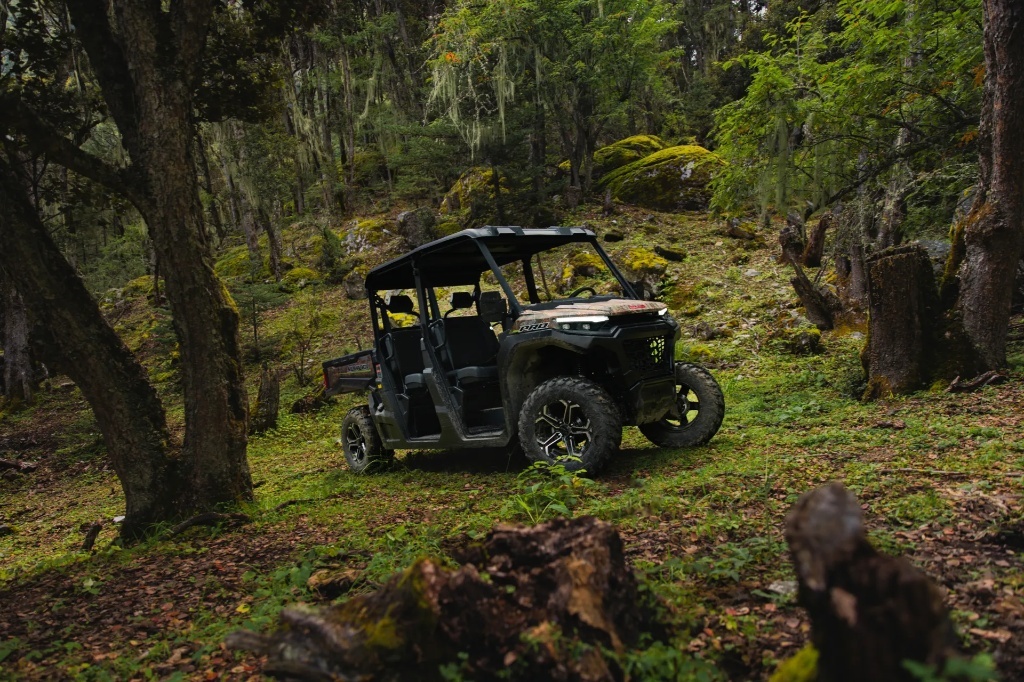
Hunters love UTVs, and for good reason. They get you deep into the backcountry and haul your gear and harvest back out without breaking a sweat.
One of the most loved features is silent mode. Electric or hybrid UTVs can creep up on game without a sound. Gas models can be fitted with muffled exhaust kits to cut noise levels. And don't forget overhead gun racks and a cooler in the cargo bed. Those are standard kit for any serious hunter.
7. Search and Rescue Support
In rough backcountry, a UTV's go-anywhere capability makes it a lifesaver for emergency response teams.
Ground Clearance is the make-or-break spec here. That's the distance between the lowest point of your chassis and the ground. Here's where that Ground Clearance number really matters. A few models give you more than 12 inches between the chassis and the ground. That's enough to climb right over fallen trees and deep ruts without getting hung up. Toss a winch up front and a hitch in the back, and now you're talking rescue mode—pulling stuck vehicles out of ditches or getting injured people out of spots where a full-size truck wouldn't even fit.
8. Trail Maintenance
Trail work is one of those jobs where a UTV really shines. You've got paths that wash out, branches that come down after a storm, campground roads that turn into a mess. Big trucks tear everything up, but a UTV? It just fits. It turns sharp, doesn't chew up the ground, and gets in and out without making things worse.
Want to know what works great? Hook a chipper to the back. Go find all the dead trees that fell over the winter, cut 'em up, feed 'em through, and spread those chips right back where you need them. They soak up rainwater so the trail doesn't turn into mud, and they give you traction so nobody's slipping around. Do that once or twice a year and you won't have to deal with mud pits or washed-out sections.
9. Off-Grid Camping Logistics
When you're heading into the wild for a few days, your UTV is the ultimate supply runner. It hauls all your camp gear to spots where even a 4x4 pickup can't follow.
A lot of campers now add a portable power station to the cargo bed. That lets you run electric blankets, charge cameras, and top up drones while you're miles from the nearest outlet. Think of it as a giant, mobile power bank that keeps the comforts of home alive in the wilderness.
10. Rural Property Commuting
On sprawling rural properties, a UTV is the best way to get around. It saves time, saves energy, and it's actually fun.
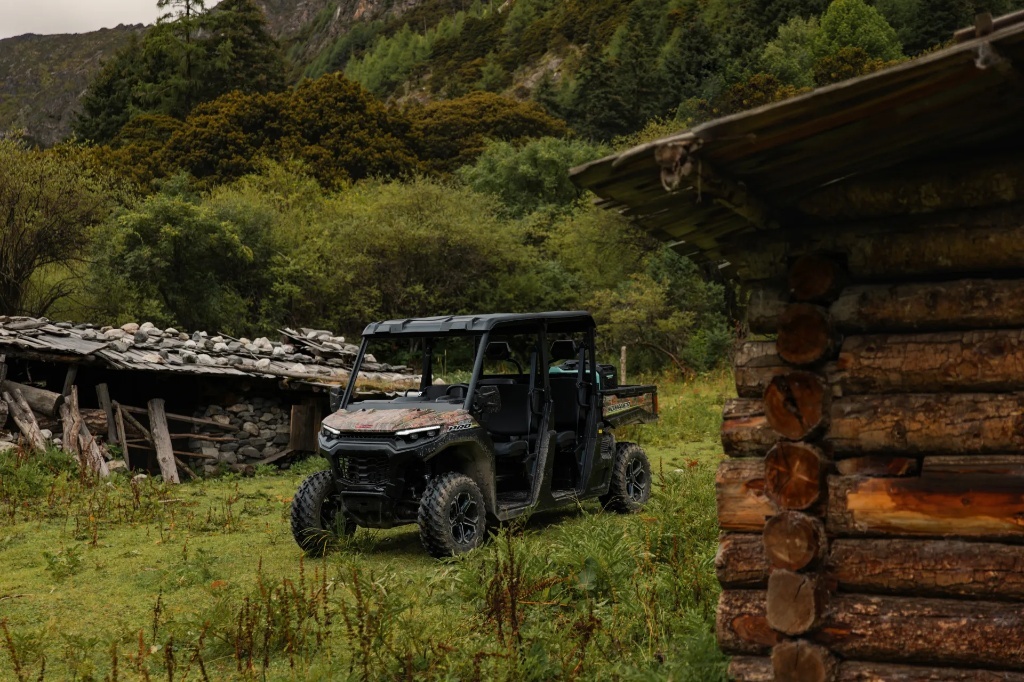
Here's a term worth knowing: Independent Rear Suspension. I can throw around terms like Independent Rear Suspension all day, but here's what it actually means for you. You're bombing down a washboard gravel road, and instead of getting your teeth rattled loose, each rear wheel just does its own thing. One goes up over a rock, the other drops into a hole, and the chassis stays relatively flat. Old-school solid axles? They jerk the whole rear end sideways over every bump. This setup just glides over it. You'll feel the difference in the first hundred yards.
Power and Attachment Needs by Scenario (Comparison Table)
Use Case | Recommended Engine Type | Must-Have Attachments / Upgrades | Key Performance Specs |
Heavy Hauling | Diesel / High-Torque Gas | Heavy-duty hitch, bed liner | Towing capacity, payload |
Farm / Ranch | Gas / Diesel | Front bumper, skid plates, sprayer | Ground clearance, maneuverability |
Snow Work | Gas (with heated grips) | Plow blade, winch, snow tires or chains | Traction, cold-start reliability |
Off-Road / Fun | High-Performance Gas | Winch, LED light bar, half doors | Suspension travel, approach/departure angles |
Hunting / Camping | Hybrid / Quiet-Exhaust Gas | Gun rack / storage box, winch, spare tire carrier | Range, noise level |
How to Outfit Your UTV
Getting the most out of your UTV isn't just about the machine itself. You've got to set it up right. Start by picking the right chassis for your main use. If you're doing heavy work, go with a Utility model. If speed and jumps are your thing, lean toward a Sport model.
Here's the breakdown:
Utility UTVs are built for load carrying and towing. Their suspension is tuned softer to handle weight and give a stable ride. Think of them as the workhorse of the farm or job site.
Sport UTVs come with beefier suspension and higher clearance. Sport models are built for speed. You can fly down trails, hit bumps and catch air, and the suspension just soaks it up. They're a whole different animal compared to the utility machines.
Now, whichever way you go, don't cheap out on attachments. Hitches, plow blades, spray rigs—those are what turn your UTV from a ride into a tool. Skip 'em and you're basically showing up to a job with your hands in your pockets.
One more thing that's worth doing. Grab an OBD Bluetooth dongle, plug it in, and pair it with an app on your phone. You can keep an eye on battery voltage, coolant temp, all that stuff in real time. Catch a problem before it leaves you sitting on the side of a trail with no cell service.
Key Maintenance Tips for Longevity
Want your UTV to last for years and years? It's not hard. Just stay on top of a few routine habits.
Clean the CVT housing. You've probably heard the term CVT thrown around. It stands for Continuously Variable Transmission, but all you really need to know is this—it works just like the belt drive on a scooter. Two pulleys, a belt between 'em, that's how power gets from the engine to the wheels.
Problem is, that housing isn't sealed up tight. Dirt and sand find their way in, and once they do, they start eating away at the belt. Next thing you know, you're climbing a steep hill and the belt slips. Power's gone, you're rolling backward, not a good time.
Easy fix though. Blow the housing out with compressed air now and then. Takes two minutes and saves you from replacing a shredded belt on the trail. Wash the undercarriage after heavy work days. Mud and chemical residue eat away at metal over time. A quick spray-down prevents corrosion and keeps moving parts happy.
And those suspension bolts? Check 'em. Hit 'em with the torque wrench after any serious off-road session. All that jarring and bouncing can back them right out, and you don't want a bolt letting go when you're halfway down a steep hill.
Something feels off? Don't call the dealer right away. Take a look at the UTV Troubleshooting Guide —most of the time it's a fuse or a spark plug and you're back in action in ten minutes. Saves you a tow bill, and honestly, you'll know your machine a whole lot better once you start poking around under the hood yourself.
Conclusion: Making the Most of Your Ride
Once you really understand these UTV uses, you'll see how this machine boosts your daily work and opens up new adventures on your days off. The true value of a UTV isn't about owning it. It's about how you put it to work. If you get the chance, take one for a test drive. Feel the steering response and the suspension damping for yourself. Those are the things no spec sheet can fully capture, but your hands and back will know the difference right away.
-
Jun 17 2026
learn more
 UTV Uses: 10 Practical Ways to Get More Out of Your Side-by-Side
UTV Uses: 10 Practical Ways to Get More Out of Your Side-by-Side
UTV Uses: 10 Practical Ways to Get More Out of Your Side-by-Side
-
Jun 16 2026
learn more
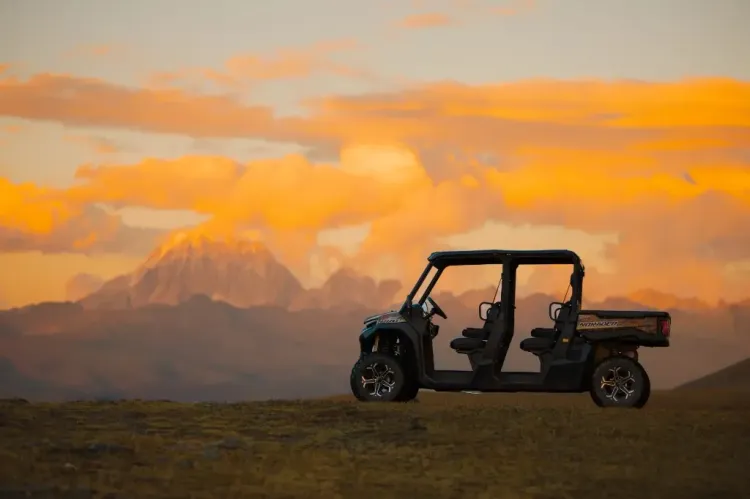 5 Main Different Types of UTVs: How to Pick the Best One for Your Needs
5 Main Different Types of UTVs: How to Pick the Best One for Your Needs
5 Main Different Types of UTVs: How to Pick the Best One for Your Needs
-
Jun 12 2026
learn more
 What Makes an ATV Good Off-Road?
What Makes an ATV Good Off-Road?
What Makes an ATV Good Off-Road?
-
Jun 10 2026
learn more
 Side-by-Side Buying Guide: How to Choose the Best UTV for Work and Play
Side-by-Side Buying Guide: How to Choose the Best UTV for Work and Play
Side-by-Side Buying Guide: How to Choose the Best UTV for Work and Play