Can You Drive a UTV on Public Roads
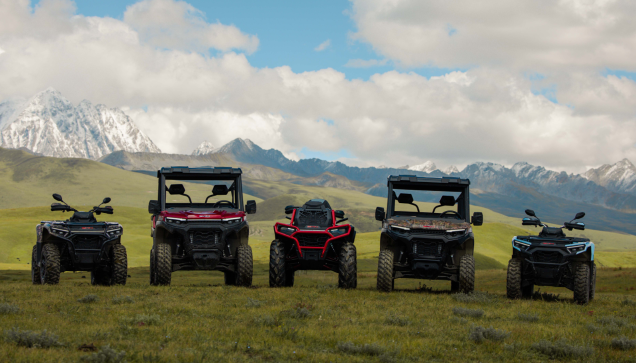
The short answer: yes — in many states and select European countries, UTVs can legally be driven on public roads. But the rules are highly location-specific, and no production UTV is street legal straight from the factory. Whether you are buying your first Side-by-Side or looking to maximize how you use the one you already own, understanding the legal landscape before you ride is essential.
This guide provides a comprehensive breakdown of UTV road-use regulations across the United States and Europe, covering what "street legal" actually requires, which jurisdictions permit road use and under what conditions, and what modifications your vehicle will need.
What Is a UTV?
A UTV — Utility Terrain Vehicle — is a purpose-built off-road machine also widely referred to as a Side-by-Side (SxS). Distinct from an ATV in both design and capability, a UTV features a steering wheel, foot pedals, and side-by-side seating within an enclosed or semi-enclosed cab, typically reinforced with a roll cage for occupant protection.
The category spans an exceptionally wide range of applications: agricultural and ranch operations, construction site logistics, recreational trail riding, and competitive off-road racing.
It is precisely this versatility that makes the road-use question so common among buyers. For many owners, the ability to drive directly to a trail or between work sites — without the time and cost of trailering — represents a meaningful practical advantage.
What Does "Street Legal" Mean for a UTV?
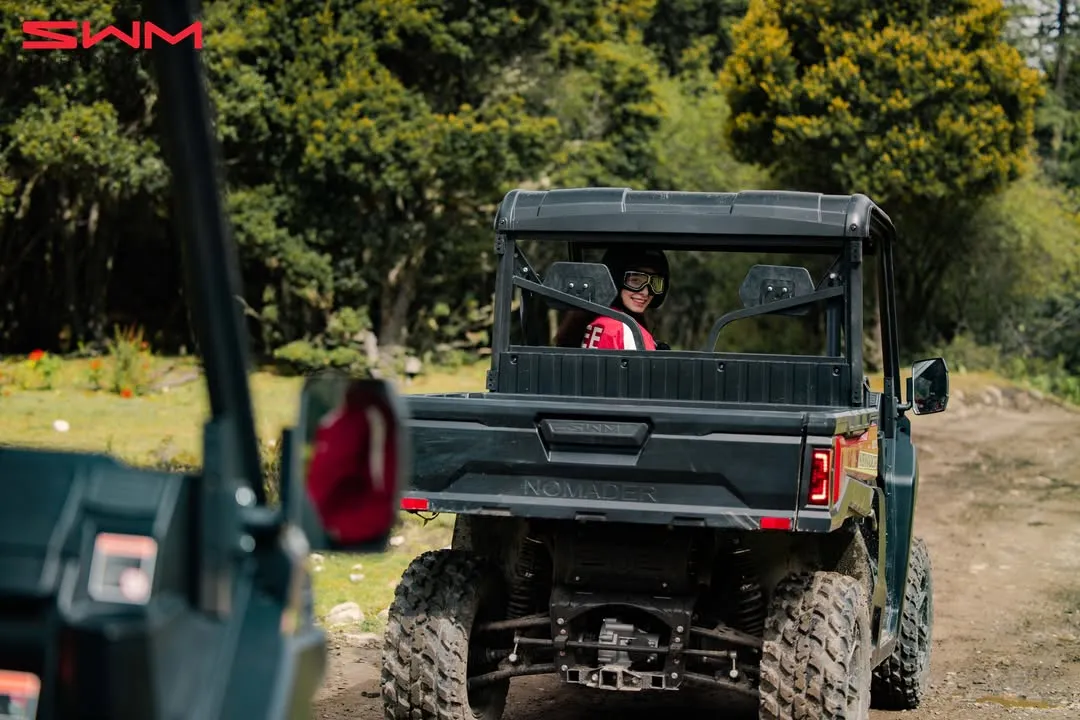
"Street legal" refers to a vehicle that meets all applicable safety equipment, registration, and operator licensing requirements established by local law for operation on public roads.
For UTVs, this distinction is critical. Virtually no production UTV is manufactured to street-legal specification. Even in jurisdictions that permit UTV road use, the vehicle must first be equipped with road-specific safety hardware and formally registered before it may legally be driven on public roads. Possessing a driver's license and a registered vehicle is necessary, but not sufficient — the vehicle itself must meet the technical standards set by the relevant authority.
Requirements vary from place to place, but the core principle remains the same: UTVs must have the same basic safety features as other road vehicles.
United States: State-by-State Regulations
There is no federal statute governing UTV operation on public roads in the United States. Regulatory authority rests entirely with individual states — and in many cases, individual counties and municipalities. The result is a fragmented legal environment in which identical vehicles carry different legal statuses depending solely on geography.
States That Permit UTV Road Use
Approximately twenty states have established clear legal pathways for UTV road use. The most permissive jurisdictions include Alaska, Arizona, Idaho, Montana, North Dakota, Oklahoma, South Dakota, Utah, and Wyoming, where properly registered UTVs may operate on most city streets and county roads with minimal restriction.
States With Conditional or Limited Road Access
A significant number of states take a tiered approach: state law does not establish a general right to operate UTVs on public roads, but delegates authority to counties and municipalities to enact local ordinances permitting use on specific road types.
Colorado illustrates both the opportunity and the complexity of this model. No statewide DMV pathway exists for UTV street-legal registration, yet many counties and incorporated towns have passed local ordinances opening designated roads to UTVs. Colorado's 2021 House Bill 21-1138 also clarified that out-of-state registration does not confer road-use rights within Colorado — a point of frequent confusion for out-of-state visitors. Riders must verify the specific rules for each jurisdiction they intend to travel through.
States With Significant Restrictions
California, New York, and Delaware, among others, maintain strict limitations on UTV road use. In these states, no general registration pathway exists for UTVs as road vehicles, and out-of-state street-legal registration does not automatically permit road operation. UTV owners in these jurisdictions who wish to access off-road areas will typically need to trailer their vehicles.
Operator and Registration Requirements
Across all states that permit UTV road use, the following requirements are broadly consistent:
A valid state driver's license
Official vehicle registration with displayed license plates
Liability insurance meeting state minimums
Some states impose additional conditions. Arizona, effective January 2025, requires UTV owners to complete a mandatory online OHV safety course — covering traffic law compliance, environmental responsibility, and equipment standards — prior to initial registration or renewal.
Universal Road-Use Restrictions
Regardless of state, certain restrictions apply universally where UTVs are permitted on roads:
| Restriction | Detail |
| Interstate highways | Prohibited in all states without exception |
| Speed limits | Typically capped at 35–45 mph, regardless of posted road speed |
| Road types | Generally limited to county roads and undivided two-lane highways |
| Night operation | Some states require additional lighting equipment or restrict nighttime use entirely |
Europe: Type Approval and Homologation
The European regulatory framework operates on a fundamentally different model from the United States. Rather than fifty independent state legislatures, the EU has established a centralized type-approval (homologation) system that provides a consistent legal pathway across member states. The framework is unified at the EU level; enforcement and road-access specifics remain the responsibility of individual member states.
The EU Regulatory Framework
UTV road-legal status in the European Union is governed by two primary regulations:
Regulation (EU) 167/2013 — T-category: Applies to agricultural and forestry vehicles. Relevant to UTVs used in farming, land management, and related applications.
Regulation (EU) 168/2013 — L-category: Applies to light motor vehicles. Relevant to recreational, sport, and general-purpose Side-by-Sides.
These regulations establish binding technical standards covering construction safety, pass-by noise, and exhaust emissions. Assessment criteria include vehicle weight and dimensions, maximum speed, engine power output, noise levels, passenger capacity, seating and restraint systems, and the presence of required safety equipment including lighting, mirrors, and turn signals.
Operating a UTV on EU public roads without valid homologation can result in substantial fines and vehicle confiscation.
The Four Primary Homologation Pathways
| Certification | Road Legal? | Key Conditions |
Machinery Directive (MD) | No | No lighting kit, horn, or plate bracket; restricted to private land |
Tractor (T-category | Yes | Speed limited to 40 or 60 km/h; requires lighting kit, seatbelts, horn |
L7e (Heavy Quadricycle) | Yes | Power capped at 15 kW for SxS models; full road registration |
| EU Homologation | Yes (varies) | Specifications vary by vehicle type and intended market |
Machinery Directive (MD) certification is the baseline classification for non-road mobile machinery. MD-certified vehicles are not equipped with road lighting, horns, parking brake modules, or number plate infrastructure, and are expressly not approved for public road use. These vehicles are restricted to private land, agricultural operations, and construction sites.
Tractor (T-category) certification is the most widely used pathway for agricultural UTVs seeking road access. T-category vehicles may be fully road-registered and are equipped with a complete road lighting system, turn signals, horn, R16 seatbelts, and a trailer connector. Speed is restricted to 40 km/h (T1a) or 60 km/h (T1b); the installation of ABS removes the speed restriction while retaining the 85 dB pass-by noise limit.
L7e certification classifies UTVs as heavy quadricycles, enabling full road registration comparable to other motor vehicles. The primary limitation is a power ceiling of 15 kW for Side-by-Side models — a constraint that excludes most performance-oriented UTVs but makes the pathway viable for utility and lower-output models.
EU Homologation covers a broader range of vehicle types and specifications. Buyers should note that following Brexit, several manufacturers — including Polaris — announced a transition from EU homologation to MD certification for UK-market models. This change means those specific variants are no longer road-legal in the UK. Verifying the certification type at the point of purchase is essential.
United Kingdom: Post-Brexit Regulatory Framework
Following its departure from the European Union, the United Kingdom operates an independent vehicle approval system administered by the Driver and Vehicle Licensing Agency (DVLA) and the Vehicle Certification Agency (VCA).
To be legally driven on UK public roads, a UTV must:
Hold valid type approval (from TÜV, VCA, or equivalent authority)
Be registered with the DVLA and display front and rear number plates
Be taxed and, if more than three years old, hold a current MOT certificate
Be covered by valid third-party insurance
Operator requirements: Drivers must be at least 17 years of age and hold a full Category B (car) licence, or a Category B1 licence if originally issued before January 1997.
Emissions standard: Road-legal UTVs in the UK must comply with Euro 4 emissions standards, which requires fuel injection systems. Carburettor-equipped models are not eligible for road type approval under current rules.
Agricultural exemption: UTVs registered as Light Agricultural Vehicles are exempt from MOT requirements and certain vehicle excise duty obligations. This exemption ceases to apply the moment the vehicle is operated on a public road — including crossing a road between fields — at which point standard road regulations apply in full.
European Market Context
The European ATV and UTV market grew by 5.5% in 2024, with particularly strong growth recorded in Germany (+25.3%), Poland (+53.8%), and Spain (+36.8%). As the market expands, regulatory pressure to streamline road-access provisions is building — particularly with respect to electric UTV models, which offer inherent advantages in both emissions compliance and noise output under current and anticipated EU standards.
Summary
UTV road use is legally permissible in a significant and growing number of jurisdictions — but it requires the right vehicle specification, proper registration, and a clear understanding of the rules that apply to your specific location.
-
May 27 2026
learn more
 Can I Track My SWM ATV via GPS on My Phone?
Can I Track My SWM ATV via GPS on My Phone?
Can I Track My SWM ATV via GPS on My Phone?
-
May 25 2026
learn more
 ATV vs UTV: Which Off-Road Vehicle Is Right for You
ATV vs UTV: Which Off-Road Vehicle Is Right for You
ATV vs UTV: Which Off-Road Vehicle Is Right for You
-
May 27 2026
learn more
Can You Drive a UTV on Public Roads
Can You Drive a UTV on Public Roads