4WD vs. 2WD ATV: Which Is Better Off-Road?
Jul 16 2026
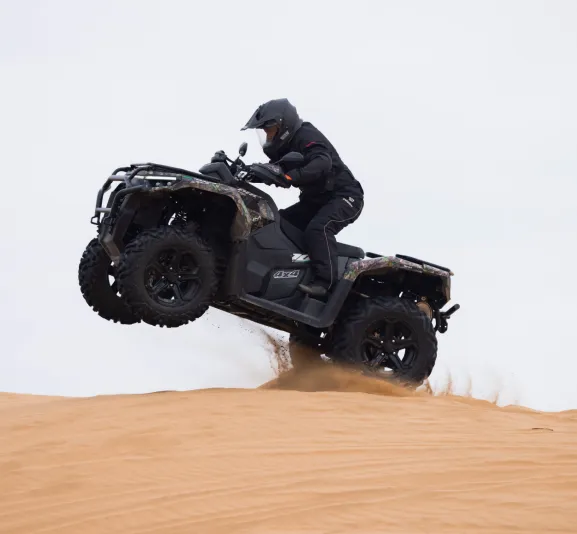
Not a lot of things match that raw excitement of looking straight down an open path, pinning the throttle, and feeling an All-Terrain Vehicle (ATV) kind of surge ahead under you. But before you can really conquer the untamed bits, there’s this basic mechanical call you have to make, like it changes the whole way your ATV rides, clings to the ground, and moves over the earth. That decision is picking your ATV drivetrain.
The back-and-forth about Two-Wheel Drive (2WD) vs Four-Wheel Drive (4WD) ATVs has been going on forever, like the whole sport’s been doing laps for years. It’s also kinda natural to think, “hey if more wheels are doing the driving, then it’s automatically a better deal,” but off-road life is almost never that straight line. The right pick doesn’t just set the amount of grip you get, it also decides how much money stays put in your wallet, how awkwardly heavy the machine feels when you’re carving through tight turns, and if you’re gonna spend your weekends drifting around dirt loops or working to wrestle logs out of some swamp.
Let's dive deep into the mechanical realities, performance metrics, and real-world trade-offs of 2WD versus 4WD ATVs to determine which one deserves a spot in your garage.
Understanding the Basics: 2WD vs. 4WD ATVs
To understand how these machines cope with off-road, we kind of need to look under the plastics, at the way they deliver power down to the ground.
What is a 2WD ATV?
A 2WD ATV sends 100% of its engine torque, pretty strictly to the rear axle. The front wheels really only have one job, steering. Since the front section does not need heavy differential gears driveshafts, or constant velocity (CV) joints, the 2WD versions can use a much lighter front chassis, overall.
This layout shows up a lot on sport ATVs. They tend to sit lower to the ground, and they use either a manual clutch or extremely responsive chain-drive setups. In general theyre engineered more for high-speed handling and quick maneuverability, rather than pure dragging strength or sheer pulling power.
What is a 4WD ATV?
A 4WD ATV distributes power to all four wheels simultaneously. When the rear wheels begin to slip, the front wheels bite into the terrain to pull the machine forward.
Modern 4WD quads are rarely locked into four-wheel drive permanently. Instead, they feature Selectable 4WD, allowing riders to switch back to 2WD via a handlebar switch when extra traction is unnecessary. Premium 4WD models also include a differential lock (diff-lock). When engaged, this mechanical mechanism forces both the left and right wheels on an axle to spin at the exact same speed, ensuring that a wheel suspended in mid-air doesn't steal all the engine's power away from the wheel that still has traction.
Off-Road Performance Comparison
Terrain is the ultimate equalizer. A drivetrain that feels flawless on a groomed trail can become an anchor in a muddy bog.
Mud, Deep Snow, and Sand
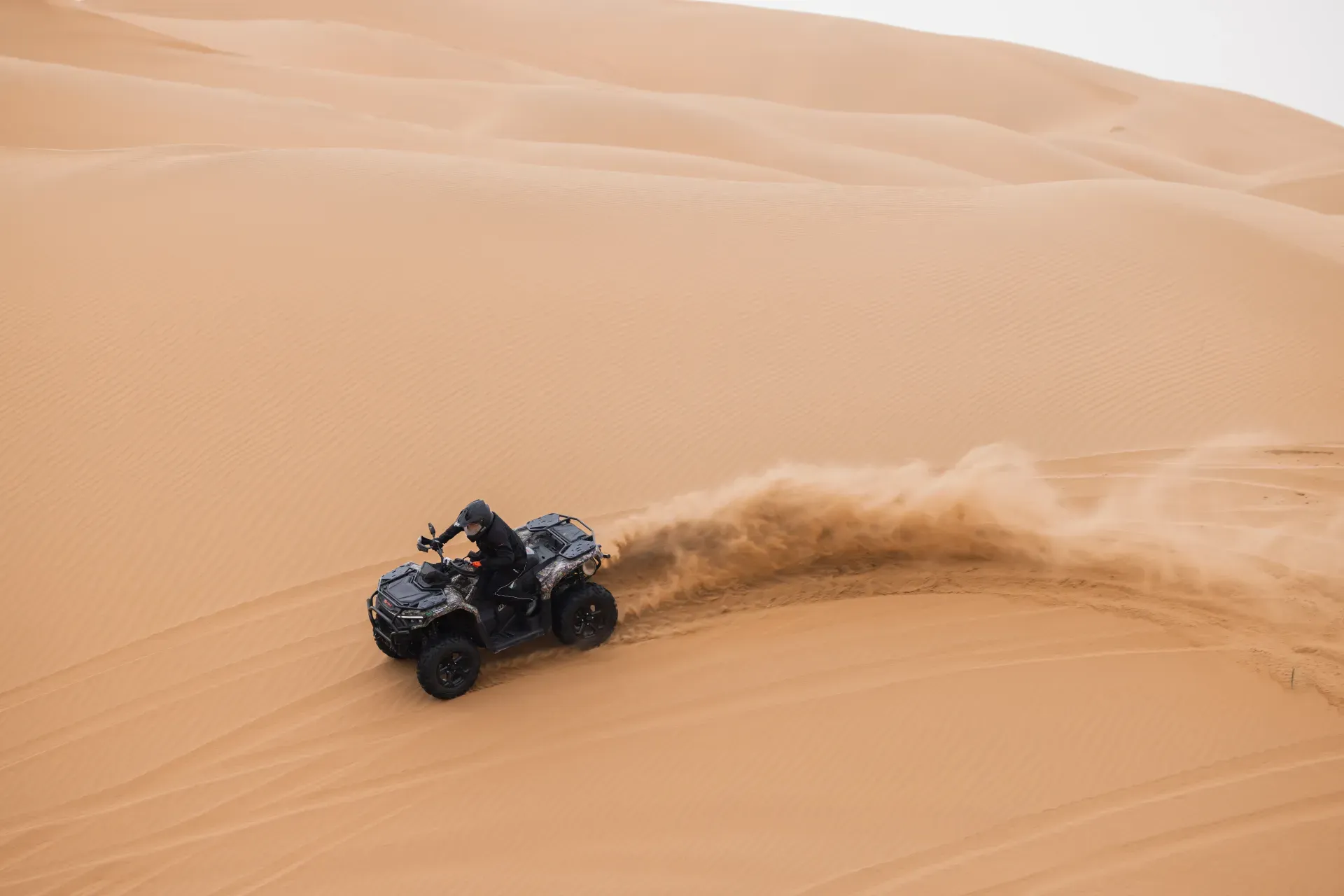
When the trail turns to soup, loose sand, or fresh powder snow, 4WD is the undisputed champion. In these environments, tires easily break traction and dig down rather than forward. A 2WD ATV relies entirely on its rear wheels pushing through the resistance of the dead weight in the front. Once the rear axle sinks past its skid plate, momentum stops.
A 4WD system changes the whole physics of what’s happening. Once the front wheels are powered, the machine kind of drags itself up and over bumps, instead of only pushing hard from the back, like a stubborn shove. The front tires then catch on solid ground right at the edge of a mud hole, which helps the vehicle avoid getting high-centered.
Rock Crawling and Steep Inclines
Climbing over boulders or making your way up loose, gritty mountain trails usually means slow, careful power delivery. If you try that on a 2WD ATV then the rear tires tend to spin out on loose shale, and the vehicle can lose its forward traction, real quick. And even worse, if the back wheels suddenly find grip while you’re on a steep incline the front end may rise up, which creates a serious flip hazard.
A 4WD ATV keeps the front end pulled firmly down against the incline. The front tires climb up the rock faces actively, spreading the workload across four contact patches instead of two. This makes technical rock crawling significantly safer and smoother.
Flat Trails and Hard-Packed Dirt
This is where the script flips. On fast, hard-packed dirt roads or wide-open forest trails, 2WD ATVs are an absolute blast.
Since the front wheels are unpowered, the steering feels insanely light and direct. You can really throw a 2WD setup into a corner, then snap the throttle , break the rear tires loose on purpose, and arc through the turn with almost millimeter precision. Meanwhile a 4WD ATV on the same track seems heavier and more reluctant, it takes extra effort to steer, and it kind of argues with the slide, because the front wheels keep trying to drag the whole thing back into a straight line.
Pros and Cons Breakdown
To help weigh your options, let's break down the practical pros and cons of each drivetrain option.
Two-Wheel Drive (2WD) ATVs | Four-Wheel Drive (4WD) ATVs |
Pros: Lower Cost (cheaper upfront, fewer parts), Lightweight & Nimble (effortless steering), High Speed Fun. | Pros: Go-Anywhere Versatility (mud, rocks, snow), Workhorse Capability (towing, plows), Confidence for Beginners. |
Cons: Limited Terrain (gets stuck easily), Low Utility Value (minimal towing), Climbing Risks. | Cons: Higher Expense (purchase & maintenance), Added Weight (harder to transport manually), Heavy Steering (without EPS). |
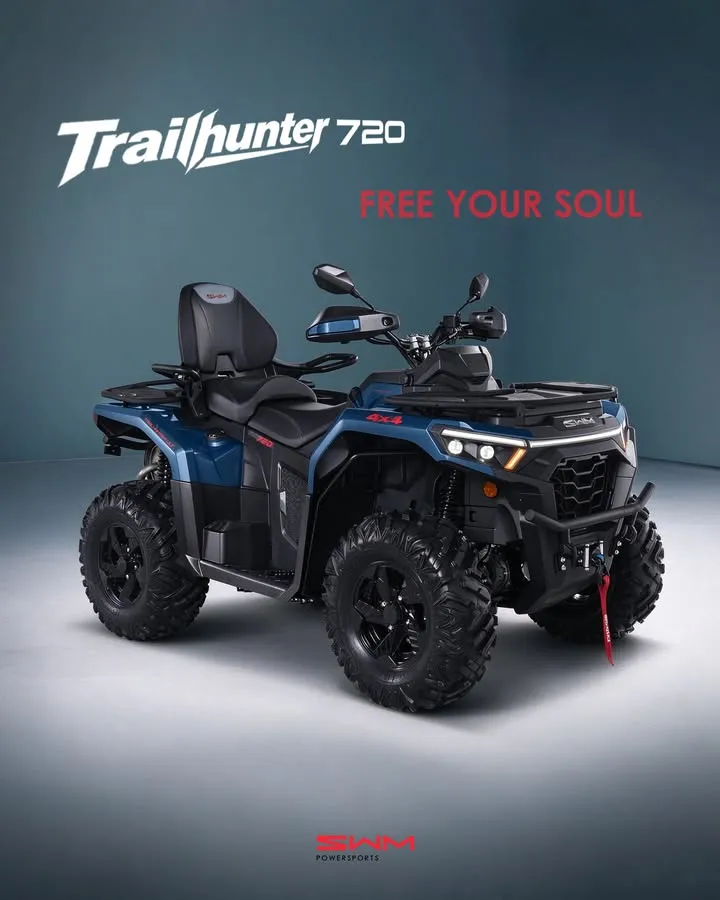
The SWM ATV TRAILHUNTER model series features an EPS system, solving the problem of heavy workload in the transformation of traditional 4WD vehicles.
Intended Use: Who Is Each Drivetrain For?
Your choice shouldn't be based on what looks cooler—it should be based squarely on your intended riding style and daily tasks.
Choose a 2WD ATV If:
l You live for sport riding: You want to jump, drift, race on tracks, or tear up wide, dry desert trails.
l You are budget-conscious: You want the lowest possible cost of ownership and don't want to worry about maintaining front differentials, CV boots, or complex electronic actuators.
l You ride managed trail networks: Your local riding parks feature groomed, hard-packed trails where mud is optional and deep water crossings are non-existent.
Choose a 4WD ATV If:
l You need a utility workhorse: You plan to use the ATV around a farm, homestead, or hunting property to haul firewood, pull trailers, or clear snow.
l You are an adventure explorer: You love heading out into backcountry wilderness trails without knowing whether you will encounter deep mud, fallen trees, or rocky creek beds.
l Safety and stability are priorities: You want a planted, stable platform that tracks straight through unpredictable ground conditions without getting easily deflected by rocks or ruts.
Final Verdict: The Selectable Sweet Spot
If you are hunting for pure adrenaline, closed-course racing, or high-speed trail drifting, a 2WD sport ATV offers a visceral, lightweight experience that a bulky utility quad simply cannot match. It forces you to become a better rider because you must master the art of using momentum and body weight to clear obstacles.
However, for the vast majority of off-road riders, a selectable 4WD ATV is the superior all-around choice.
Thanks to modern engineering, you no longer have to pick just one style of riding. By buying a machine with selectable 4WD, you get the best of both worlds.
All SWM ATV models offer selectable 2WD/4WD with front differential lock.
-
Oct 15 2026
learn more
 How UTVs Make Everyday Ranch Work Faster & Easier
How UTVs Make Everyday Ranch Work Faster & Easier
How UTVs Make Everyday Ranch Work Faster & Easier
-
Oct 14 2026
learn more
 What's the Difference Between an ATV and a UTV?
What's the Difference Between an ATV and a UTV?
What's the Difference Between an ATV and a UTV?
-
Oct 14 2026
learn more
 Should I Buy an ATV or UTV for My Farm?
Should I Buy an ATV or UTV for My Farm?
Should I Buy an ATV or UTV for My Farm?
-
Oct 14 2026
learn more
 What Are Good Alternatives for Side-by-Side (UTV) Vehicle Insurance in the US?
What Are Good Alternatives for Side-by-Side (UTV) Vehicle Insurance in the US?
What Are Good Alternatives for Side-by-Side (UTV) Vehicle Insurance in the US?