ATV Features: 12 Key Features Every Rider Should Know Before Buying
Jul 16 2026
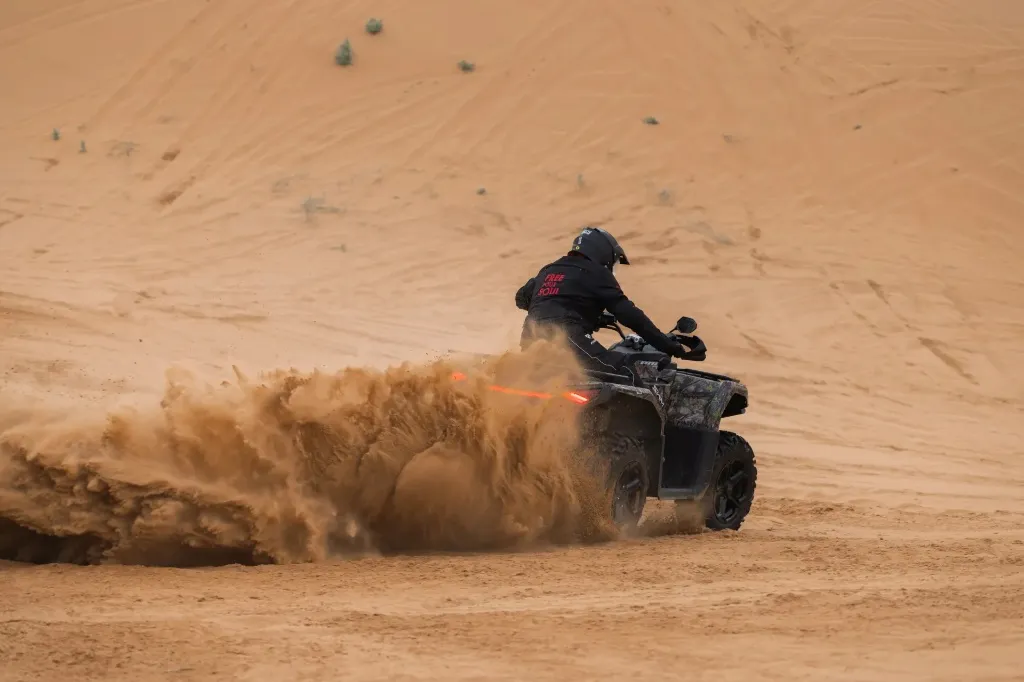
Shopping for an off-road vehicle? The first step in selecting one should be understanding atv features are essential to meeting your riding needs. From workhorses for farms or weekend trail machines, spec sheets can be daunting - many first-time buyers make mistakes like selecting too much power they cannot manage or too little ground clearance that leaves them stuck on rocks. This guide covers every key technical parameter while explaining what each part does and which features truly matter for your riding style.
What Is an ATV and Why Do Its Features Matter?
What Is an ATV?
Simply stated, an ATV (All-Terrain Vehicle) is an off-road vehicle designed specifically to handle rough conditions. Its basic design consists of four low-pressure wide tires, a straddle seat and handlebars for steering - ideal for traversing sandy, muddy, snowy or rocky trails when equipped with the appropriate setup.
What Are the Common Components Associated with Most ATV Models?
Though brands and price points may vary, most ATVs share an essential set of components which make judging build quality quickly easier. By knowing them well, ATV owners can more quickly make up their minds on quality versus quantity when it comes to making purchasing decisions.
Frame – high-strength steel tubing; it determines load capacity and impact resistance.
Wheels and Tires – Wide low-pressure tires offer excellent traction while attenuating any small bumps that may arise during travel.
Suspension – Springs and shock absorb the terrain while keeping tires on the ground.
Handlebars – typically featuring brake levers, throttle control levers and electronic switches.
Thumb Throttle – Press it with your thumb to prevent accidental throttle surges during rough rides.
Brakes – provide safe, manageable stopping power.
Headlights – essential for night, dawn, or foggy conditions.
Drivetrain – transfers engine power to wheels via chain or shaft.
Exhaust System – reduces noise and includes a spark arrestor to reduce the risk of fire in forest riding areas.
ATV vs Quad vs UTV: What Is the Difference?
These terms appear everywhere, but they mean different things.
ATV – the broad category: any four-wheeled off-road vehicle with straddle seat and handlebars.
Quad – a common informal term for an ATV, although some riders use it specifically for sport-style four-wheelers.
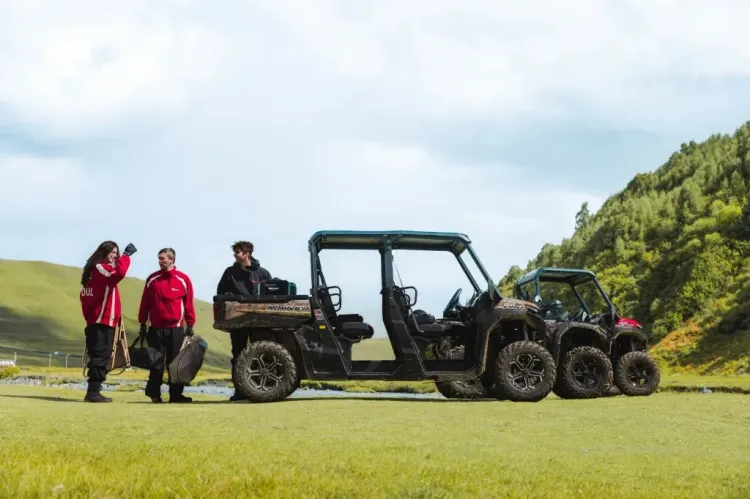
UTV – side-by-side vehicle with steering wheel, seats, roll cage, and cargo bed.
Feature | ATV | Quad | UTV |
Steering | Handlebar | Handlebar | Steering Wheel |
Seating | Straddle Seat | Straddle Seat | Side-by-side Seats |
Best For | Trail, Work, Recreation | Recreation Riding | Work & Multiple Riders |
Main Difference | Single rider control (often 4WD) | Sport-focused (often 2WD) | Passenger/cargo focused (roll cage) |
If you need heavy hauling or passenger capacity, a UTV makes more sense. For more details, see this comparing standard ATVs to UTVs guide.
How to Choose the Right ATV Types for Your Specific Needs
The market splits into four main categories based on design purpose.
1. Utility ATVs for Heavy Work and Hunting
These utility ATVs are heavy-duty workhorses equipped with sturdy racks, high ground clearance, standard four wheel drive (four-wheel drive - four wheel drive), tow hitches and tow pins designed specifically to tackle tough jobs such as hauling.
2. Sport ATVs for Racing & High-Speed Use
These ATVs are lightweight, streamlined vehicles designed for speed. Their long travel suspension allows for jumps while high speed handling makes them suitable for racetrack use. Many also utilize manual or semi-auto transmissions.
3. Recreation ATVs (Trail Riding and Family Adventures)
The best-selling middle ground. They combine utility practicality with sporty fun. Plush seats, two-up options, and comfortable ergonomics make them ideal for weekend trails.
4. Youth ATVs (Kids & Beginners)
Entry-level machines with 50cc–110cc engines, light weight, and safety features like speed limiters and tether switches.
12 Important ATV Features Every Rider Should Know
Not every machine needs all premium features. Your choice depends on how you ride. Run through these 12 components to judge any model accurately.
1. Engine Power and Size (CC Rating)
Engine displacement, measured in cubic centimeters (cc), indicates engine size.
90cc – 250cc – for kids and absolute beginners.
300cc – 500cc – a popular range for many adult riders because it balances power, control, and operating cost. Great for farm work, trails, and recreation, and easy to control.
700cc – 1000cc+ – high-performance machines for heavy towing, extreme mud, and experienced riders.
Choose an engine that matches your skill. For a deeper look, check select an appropriate engine size before you buy.
2. Four-Wheel Drive (4WD) and Differential Lock
2WD – rear wheels only. Light steering, good for hardpack or grass.
4WD – all wheels driven. Essential for steep climbs, rocks, deep snow.
Differential Lock - an invaluable ally when one wheel spins in the mud. By locking the differential and providing power to both wheels simultaneously, improving traction when one of them loses grip.
3. Suspension System and Ground Clearance
Independent Rear Suspension (IRS) allows each wheel to move independently for an improved riding experience on bumpy trails and reduced fatigue.
Solid Rear Axle - economical and robust design ideal for carrying heavy loads efficiently while offering smoother ride quality than their counterparts.
Ground Clearance – most utility/recreation ATVs offer about 10 inches or more. Don't go lower if you ride rough terrain.
4. Tires and Traction Control
All-Terrain – moderate tread, good for hardpack, gravel, grass, and long wear.
Mud Tires – deep, aggressive lugs that fling out thick mud.
Sand Tires – paddle-like tread on rear wheels for forward thrust in soft dunes.
5. Braking System (Hydraulic Disc Brakes)
Modern ATVs use hydraulic disc brakes. They dissipate heat better and maintain strong, linear stopping power even when wet or muddy, offering more consistent performance compared to old drum brakes.
6. Safety Equipment (Speed Limiters & Kill Switches)
Speed Limiter – a screw near the throttle that restricts max speed for beginners.
Engine Kill Switch – big red button on the handlebars for instant shutdown.
Tether Cord – clips to your wrist; if you fall off, it kills the engine to prevent runaway.
7. Transmission Type (CVT Automatic vs. Manual)
CVT Automatic – like an automatic car; no shifting, lets you focus on terrain.
Manual – foot shift and hand clutch; direct control, common on sport models.
8. Rider Comfort Upgrades (EPS Power Steering)
EPS (Electric Power Steering) is one of the best comfort upgrades. Without it, low-speed steering through rocks is a workout. With EPS, steering is lighter, and it reduces steering effort while minimizing feedback from rough terrain. Highly recommended for long rides.
9. Storage and Utility Cargo Racks
Utility and recreation models come with front/rear steel or composite racks with tie-down points. Also look for sealed, waterproof storage compartments for phones and GPS.
10. Cooling System (Air-Cooled vs. Liquid-Cooled)
Air-Cooled – simple and cheap, but can overheat during slow, heavy work in hot weather.
Liquid-Cooled – uses a radiator and fan to maintain stable engine temperature under all conditions. Preferred for high-performance and heavy loads.
11. Winch and Accessories Compatibility
A winch is essential for self-recovery in deep mud. Also, in snowy regions, it helps operate heavy-duty attachments for plowing heavy snow. Don't overlook this.
12. Digital Displays and Modern Electronics
A digital dashboard shows speed, RPM, coolant temperature, drive mode (2WD/4WD), fuel level, and trouble codes. Keeps you informed at a glance.
Which ATV Capabilities Matter Most for Different Riders?
No single setup fits all. Prioritize based on your primary use.
Beginner – focus on CVT auto, 300-500cc engine, and easy handling.
Farmer – must have 4WD, heavy-duty steel racks, and high towing capacity.
Hunter – quiet operation, large sealed storage, and durable suspension.
Trail Rider – prioritize IRS, deep-tread tires, and high ground clearance.
Snow Rider – need 4WD, a strong winch, and high-traction tires.
Recreation Rider – emphasize comfort suspension, ergonomic seat, and EPS.
How to Choose the Right ATV Features Before Buying
Follow these five steps for making an informed purchase within your budget.
Step 1: Understand Your Main Purpose (Work vs Play)
For maximum efficiency in farm transportation or snow removal, select Utility; otherwise if weekend recreation or sport are top of mind, Recreation may be more suitable.
Step 2: Choose the Right Engine Size (CC Match Your Experience)
For many adult beginners, a 350cc–450cc ATV can provide a good balance of power and control.
Step 3: Check Terrain Requirements (Mud, Sand, or Flat Trails)
Wetter terrain typically calls for four wheel drive and differential lock systems while hardpack grass may only require two.
Step 4: Compare Features Based On Your Budget
Understand what matters. While flashy wheels or Bluetooth may seem less important, don't overlook EPS technology; it makes everyday riding much more pleasurable!
Step 5: Consider Maintenance and Long-Term Use
Understand basic tasks like oil changes and air filter cleaning – they reduce long-term costs. Also check parts availability, warranty, and dealer support. For more, see maintaining your atv to extend its life.
Final Thoughts: Choose Your Setup Based on How You Ride
A great ATV doesn't need to be the most expensive or the biggest; rather, it should meet the specific needs of your terrain, work and skill level. Every feature should come together seamlessly so riding feels safe and natural; when looking at different models focus on matching features that best meet these requirements. SWM provides ATVs tailored specifically to different applications; choose one from their selection and ride confidently right from day one!
-
Jul 16 2026
learn more
 ATV Features: 12 Key Features Every Rider Should Know Before Buying
ATV Features: 12 Key Features Every Rider Should Know Before Buying
ATV Features: 12 Key Features Every Rider Should Know Before Buying
-
Jul 15 2026
learn more
 ATV & UTV Towing Capacity Explained: Choosing the Right Capacity
ATV & UTV Towing Capacity Explained: Choosing the Right Capacity
ATV & UTV Towing Capacity Explained: Choosing the Right Capacity
-
Jul 13 2026
learn more
 14 Off-Road Riding Essentials Every ATV & UTV Rider Needs
14 Off-Road Riding Essentials Every ATV & UTV Rider Needs
14 Off-Road Riding Essentials Every ATV & UTV Rider Needs
-
Jul 11 2026
learn more
 Is a UTV the Same as a Golf Cart?
Is a UTV the Same as a Golf Cart?
Is a UTV the Same as a Golf Cart?