ATV Payload Capacity Guide: What You Need to Know
Sep 09 2026
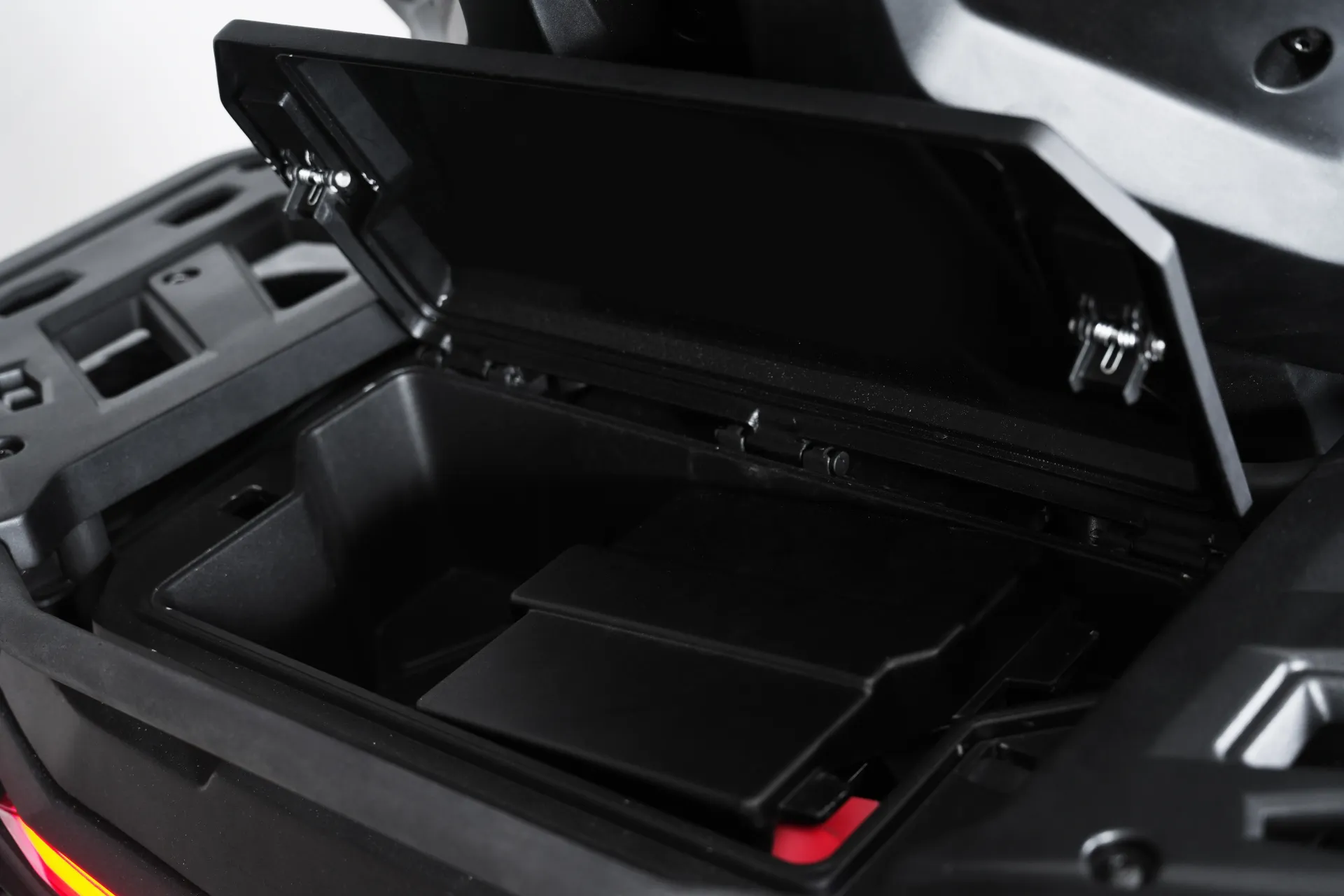
What is the actual payload capacity of an all-terrain vehicle (ATV)? The answer depends on more than just the weight of the cargo on the shelf. An ATV's payload capacity refers to the total weight the ATV is designed to carry, including the rider, cargo, accessories, and (if applicable) passengers. If you use an ATV for farming, hunting, site maintenance, off-road riding, or other purposes, understanding its payload capacity is crucial.
A higher payload capacity makes it easier for an ATV to transport tools, equipment, and supplies, but maximum payload isn't the only important parameter. Weight distribution, terrain type, the vehicle's suspension and braking systems, and the ATV's intended use all affect its performance under load.
What is ATV Payload?
ATV Payload refers to the total weight that the ATV is designed to carry. It includes:
Driver's weight
Passenger weight (if any)
All goods on a shelf or container
Temporary or permanent attachments
In simple terms, payload is the maximum combined limit of "people + goods + additional items".
Several related terms need to be clearly distinguished:
Curb Weight (Brake Weight): The weight of the vehicle itself plus necessary running fluids (fuel, engine oil, coolant, etc.), excluding any personnel and goods.
GVWR (Gross Vehicle Weight Rating): The maximum safe total weight of the vehicle as specified by the manufacturer, including the body, fluids, personnel and goods.
Calculation formula: Payload ≈ GVWR - Curb Weight.
In addition, it is necessary to pay attention to the independent weight limits of the front and rear shelves. Generally, it is recommended to distribute approximately one-third of the cargo weight to the front shelf and two-thirds to the rear shelf to maintain vehicle balance. The total payload is an overall limit and cannot be simply added together like the front and rear weight limits to be used at will.
It is also important to distinguish Payload from Towing Capacity. The former concerns what the vehicle can carry; the latter concerns what it can pull. When towing a trailer, tongue weight (the downward force on the hitch) is typically counted against the payload.
How Is ATV Payload Capacity Calculated?
The easiest way to understand the ATV Payload is:
Total Load = Rider Weight + Passenger Weight + Cargo Weight + Accessories Weight
Not all ATVs are designed to carry passengers, so the specifications and parameters provided by the specific model must be taken into account.
For example, an ATV used for farm work might need to carry:
Rider: 75 kg
Tools: 15 kg
Cargo on the rear rack: 30 kg
Cargo on the front rack: 20 kg
Attachments: 10 kg
Total weight:
75 + 15 + 30 + 20 + 10 = 150 kg
If the maximum payload capacity of this ATV is specified as 180 kg, then the current total load is still within the prescribed range.
The ATV's payload capacity should always be based on the rated parameters provided by the manufacturer for the specific model, rather than being estimated solely based on the engine displacement or vehicle size.
What Factors Affect ATV Payload Capacity?
Payload is not an isolated number; it is constrained by multiple factors:
Structural Design: Frame strength, material selection, wheelbase, and track layout directly determine the upper limit of the basic load capacity.
Suspension System: The stiffness and travel of springs and shock absorbers determine whether sufficient ground clearance and stability can be maintained under heavy loads.
Tires and Tire Pressure: Tire sidewall strength, tread pattern design, and correct inflation pressure significantly affect actual load capacity and grip. Insufficient tire pressure increases rolling resistance and the risk of tire blowout, while excessive pressure reduces comfort and grip.
Braking and Power: Under heavy loads, the braking system must be able to effectively decelerate, while power output affects the ability to climb hills and traverse mud and sand.
Operating Environment: The impact of flat, hard ground on usable load differs greatly from that on mud, sand, steep slopes, and highly bumpy roads. Under dynamic operating conditions, the actual safe load often needs to be lower than the static rating.
Load Characteristics: Solid cargo has a relatively fixed center of gravity, while liquid cargo (such as water tanks and oil drums) has a more mobile center of gravity, which has a greater impact on stability. The height at which goods are placed and their even distribution in all directions will affect the actual performance of a vehicle.
These factors collectively determine the gap between "paper data" and "actual usable capacity."
How Does Payload Affect ATV Performance?
Adding extra weight can alter the performance and handling of an ATV.
l Acceleration Performance
With increased total vehicle weight, the powertrain bears a greater load. Under heavy load, ATV acceleration may differ from when unloaded.
l Braking Performance
The extra weight increases the total mass the braking system needs to control. This is especially important on inclines and rough terrain.
l Handling
Properly distributing cargo helps maintain more stable and predictable handling. If cargo is concentrated on one side of the vehicle, or if weight distribution is uneven, it can affect steering and vehicle balance.
l Suspension System
A larger load increases the workload on the suspension system. Prolonged overloading can also place unnecessary stress on vehicle components.
l Fuel Consumption
Under certain usage conditions, a greater total vehicle weight means more energy is needed to maintain vehicle movement, potentially increasing fuel consumption.
The specific impact depends on the vehicle type, terrain, driving conditions, and cargo distribution.
How to Correctly Determine and Manage Payload
The first step in managing the payload is to accurately obtain the data.
Refer to the user manual or the vehicle identification plate to confirm the GVWR, curb weight, and the independent weight limits of the front and rear racks.
Get to know the drivers and passengers.
Weigh all the goods, accessories, and liquids that are planned to be loaded.
Sum up the weights and compare them with the rated payload. Reserve a certain safety margin (it is recommended to keep it at around 80% of the rated value when actually using it, especially in complex terrains).
When distributing the load, the following principles should be followed:
The front and rear should be roughly balanced (front light and rear heavy is common, but still needs to be adjusted according to specific weight limits).
The left and right sides should be as symmetrical as possible.
Try to lower the center of gravity, place heavy objects at the bottom and center.
Use straps or fixation devices to prevent the goods from shifting.
In the trailer towing scenario, the tongue weight also needs to be calculated separately to ensure that the total weight does not exceed the payload and towing limit.
During actual operation, it is recommended to conduct a short-distance low-speed test after loading to feel the steering, braking and suspension feedback. If necessary, adjustments can be made then.
ATV Payload for Different Applications
The required payload capacity of an ATV largely depends on its intended use.
Agriculture and daily operations: Frequent short-distance heavy loads emphasize sustained load stability and ease of loading and unloading.
Hunting and field operations: Single trips may involve large or concentrated loads (such as game and equipment), requiring a balance between mobility and single-load capacity.
Recreation and multi-day off-roading: The combined weight of the driver, passengers, camping supplies, and tools often approaches or exceeds the load of typical usage scenarios.
Construction sites and transport support: Higher demands are placed on the combination of gross vehicle weight and trailer usage, requiring attention to both payload and towing capacity.
Understanding your primary intended use allows for a more reasonable assessment of "adequate" standards, rather than blindly pursuing higher figures.
Conclusion
ATV payload is an important specification for anyone who uses an ATV beyond simple recreational riding. Payload refers to the total weight the ATV is designed to carry, including the rider, applicable passenger weight, cargo, and accessories.
To determine whether an ATV is suitable for your needs, consider how much weight you normally carry, how the vehicle will be used, and the terrain where you ride. Always calculate the total load and stay within the manufacturer's specified payload capacity.
-
Oct 23 2026
learn more
 Is a Side-by-Side Considered a Motor Vehicle in the US?
Is a Side-by-Side Considered a Motor Vehicle in the US?
Is a Side-by-Side Considered a Motor Vehicle in the US?
-
Oct 22 2026
learn more
 How Much Does a 4-Seater Side-by-Side Weigh for SWM UTV?
How Much Does a 4-Seater Side-by-Side Weigh for SWM UTV?
How Much Does a 4-Seater Side-by-Side Weigh for SWM UTV?
-
Oct 23 2026
learn more
 How to Plan a Weekend ATV Adventure
How to Plan a Weekend ATV Adventure
How to Plan a Weekend ATV Adventure
-
Oct 20 2026
learn more
 ATV vs UTV for Snow Plowing: 5 Key Differences
ATV vs UTV for Snow Plowing: 5 Key Differences
ATV vs UTV for Snow Plowing: 5 Key Differences