Is a Side-by-Side Considered a Motor Vehicle in the US?
Oct 23 2026
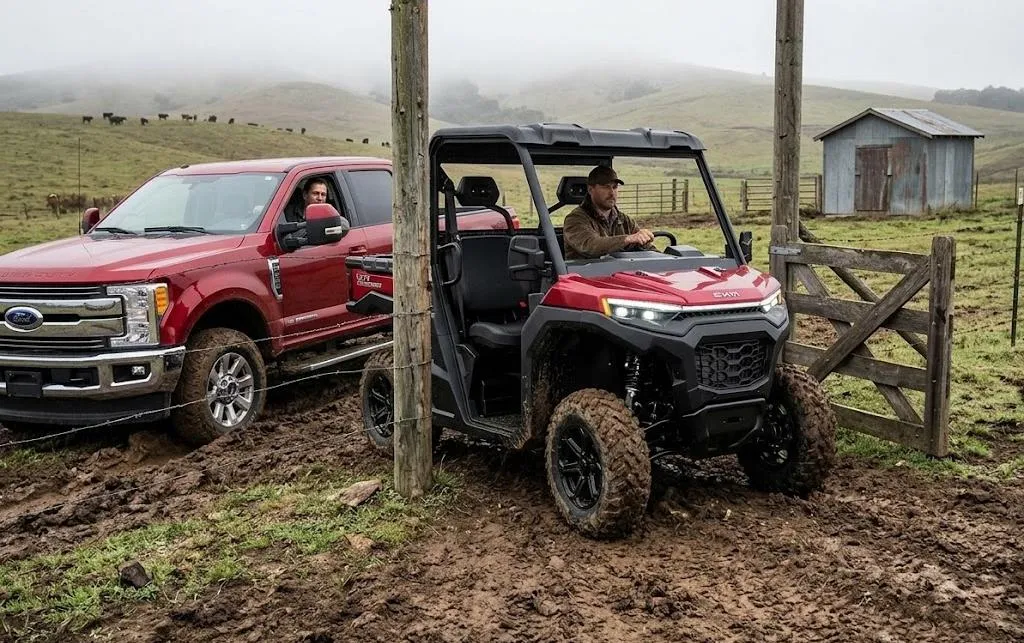
In the United States, a side-by-side (also known as a Utility Task Vehicle (SXS) or Recreational Off-Highway Vehicle (ROV)) is a motor vehicle (because it is powered by an engine or electric motor), but it usually falls under "off-highway motor vehicles (classified as an off-highway vehicle (OHV) or SXS/ROV)" and is not an automobile that is allowed on public roads by default; whether it can be driven on public roads depends on state laws and regulations as well as modifications/registration status.
On private land, off-road parks, forest trails, and farms: It is usually regulated as an OHV / SXS / ROV rather than a standard automobile.
On public roads: It can only be legally driven on the road if it meets state requirements—such as registration, insurance, driver's license, headlights, taillights, horn, mirrors, license plate, etc.; and it is generally prohibited on interstate highways.
Buying a vehicle, purchasing insurance, or signing a contract: You should look at the specific definitions in the documents; different states and insurance companies may refer to it as SXS, SxS, ROV, OHV, or off-road vehicle respectively.
State Classifications for Street-Legal SXSs
In the United States, regulations allowing side-by-side vehicles (SXS) to be modified for street use vary widely across states. Although federal highway law strictly prohibits driving SXSs on interstate highways nationwide, individual states control local road access through three main categories:
Group 1: Statewide Road Registration
These states offer a direct, statewide registration pathway that allows you to title, license, and drive a modified SXS on most secondary public roads:
Arizona (permits road registration using standard equipment)
Montana (allows registration for highway use without strict inspection/emissions requirements)
South Dakota (registers SXSs with an engine displacement over 200cc under motorcycle driver's license laws)
Utah (registers under specific street-legal all-terrain vehicle/utility vehicle regulations)
West Virginia (permits statewide multipurpose vehicle registration)
Wyoming (allows street registration for multipurpose vehicles)
Group 2: Restricted Statewide Road Access
These states allow SXS vehicles onto public roads without giving them full highway access—typically restricting SXSs to county roads, roads posted under 45–55 mph, or secondary highways:
Alaska (permitted on roads posted at 45 mph or below, except in major cities where prohibited)
Georgia (allows registered multipurpose off-road vehicles to be driven on county roads)
Idaho, Iowa, Kansas, Minnesota, Missouri, Nevada, North Carolina, North Dakota, Oklahoma, Tennessee, Washington
Group 3: Local Approval Only / Strictly Restricted
States like California, New York, Delaware, Connecticut, and Pennsylvania do not offer direct statewide road registration services. In these states:
SXSs (multipurpose off-road vehicles) are restricted to off-road trail riding, agricultural work, or brief road crossings.
Certain states (such as Texas, Ohio, Kentucky, New Mexico) only permit limited road use if local municipalities or counties explicitly pass ordinances to open specific roads.
Specific Street-Legal Equipment Requirements
To convert a factory-manufactured side-by-side vehicle into a street-legal vehicle, state laws typically require a street-legal conversion kit.
Essential Hardware Checklist
Component | Street Legal Standard / Requirement |
Headlights & Taillights | Fully functional low-beam/high-beam headlights and red taillights. |
Brake Lights | Must illuminate when the brake pedal is pressed down. |
Turn Signals | Amber front turn signals, and red or amber rear turn signals. |
Mirrors | Requires at least one rearview mirror and one driver-side mirror (many states require mirrors on both the left and right sides). |
Horn | Electric horn that can be heard from at least 200 feet away. |
DOT-Certified Tires | Standard off-road tires usually need to be replaced with highway/pavement tires that meet DOT standards. |
Windshield / Eye Protection | Full glass or polycarbonate windshield. (If a windshield is not installed, many states require wearing DOT-certified goggles or a helmet). |
License Plate Bracket & Light | Rear license plate bracket illuminated at night to display your DMV-issued license plate. |
Seatbelts & Parking Brake | Standard three-point seatbelt or seatbelt harness, and a mechanical parking brake. |
Administrative Requirements
Title & DMV Registration: The UTV must hold a valid state title or MCO (Manufacturer's Certificate of Origin) and be registered with the DMV as a street-legal vehicle or multipurpose vehicle.
Auto Liability Insurance: Off-road recreational insurance is insufficient to cover highway driving. Once the vehicle is registered and receives a license plate, you must purchase the minimum motor vehicle liability insurance required by your state.
-
Oct 23 2026
learn more
 Is a Side-by-Side Considered a Motor Vehicle in the US?
-
Oct 22 2026
learn more
 How Much Does a 4-Seater Side-by-Side Weigh for SWM UTV?
-
Oct 23 2026
learn more
 How to Plan a Weekend ATV Adventure
-
Oct 20 2026
learn more
 ATV vs UTV for Snow Plowing: 5 Key Differences