ATV Riding Tips for Beginners: Common Mistakes to Avoid
Nov 03 2026
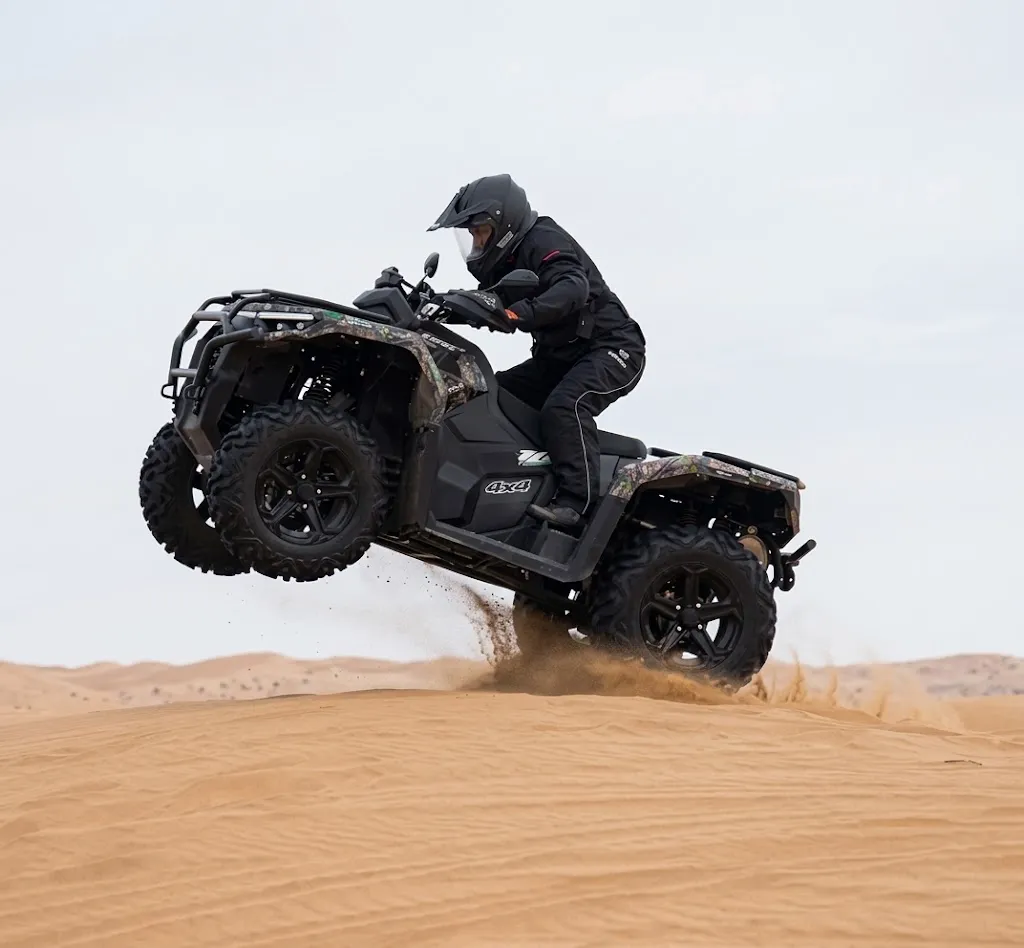
ATVs (all-terrain vehicles) bring a lot of fun and freedom to off-roading for many people, but for beginners, they are far more complicated than they seem to be "just sit down and drive". Unlike cars, ATVs are active riding vehicles - your body weight, direction of vision, subtle control of the accelerator and brakes, all directly determine whether the vehicle is stable. Many accidents are not caused by the machine itself, but by beginners making habitual mistakes in the five core operations of starting, turning, braking, speed control and vision management.
This guide focuses on the five core skills every new rider should master: starting, turning, braking, speed control, and vision management. By understanding the typical mistakes in each area and practicing the correct techniques, you can build confidence faster and ride more safely.
1. Starting: Smooth Throttle Control Is Essential
Common Mistakes
· Pull the accelerator all the way in with one motion, or suddenly give it a strong push. The result is usually that the front wheels lift instantly, the rear wheels skid, and the vehicle suddenly rushes forward or skids sideways.
· When starting, lean your body back or sit up stiffly, with the entire weight on the rear wheels, increasing the risk of the front wheels lifting.
· On soft soil, sandy ground or slippery roads, use the same accelerator force as on a flat and hard surface.
Correct Technique
Use gentle pressure when controlling the throttle, and imagine that there is an egg between the thumb and the lever, so that the pressure will not be too great to crush the egg. Put your bike in gear and make sure the automatic transmission is set to drive, or that your manual transmission is set to the appropriate gear. When beginning your ride, lean your body forward, keep your knees bent and hold on lightly to the handlebars.
Open the throttle slightly and increase pressure to see the response. Starting from an inclined position requires setting your transmission in a low gear. Leaning forward even more, maintain steady pressure on the throttle and avoid jerking or quick motions.
Practice Tip
In a flat, open area, repeatedly practice the sequence of "gently apply throttle—hold steady—gently ease off" until the movement becomes muscle memory.
2. Turning: Your Body Does More Work Than the Handlebars
Common Mistakes
· Just relying on the direction and remaining motionless, the body doesn't move at all, and even instinctively leans towards the outside of the curve. The inner wheels are prone to losing weight, and in severe cases, they can even tip over sideways.
· When braking suddenly or applying heavy brakes during the curve, it causes the front wheels to nosedive (lose grip) or the rear wheels to swerve.
· Fixing the gaze solely on the front wheels or the obstacles in front instead of looking in the desired direction.
· When feeling unstable, extending one foot outward to "support" - this is an extremely dangerous move as the foot is easily caught by the rear wheels.
Correct Technique
The turn is the result of the coordination of "body + eyes + direction". Before entering the curve, complete the main deceleration on the straight line; when entering the curve, the upper part of the body leans inward, the outer foot presses the peg (pedal) to apply pressure, and the inner knee approaches the fuel tank. The eyes always look towards the exit of the curve or the direction you want to go - where the eyes look, the car will naturally follow.
The greater the speed or the more acute the curve, the greater the body's inclination should be. If you feel the vehicle starting to lean to one side, lower your body further inward, press the accelerator slightly less, and if necessary, widen the curve.
Practice Tip
In an open area, set up traffic cones or markers to create a figure-eight course. Begin with a large radius and gradually tighten it, forcing yourself to coordinate your body position and gaze rather than relying solely on the handlebars to steer.
3. Braking: Progressive and Balanced Inputs
Common Mistakes
· When in panic, one might forcefully apply the front brake or the rear brake, causing the front wheel to lock and veer off, or the rear wheel to lock and swerve.
· Only accustomed to using the rear brake (a residual habit from car driving), with insufficient braking force and poor stability.
· In a curve or during downhill, suddenly applying the heavy brake, losing steering ability and even flipping over.
· Relying solely on the brakes for downhill travel, without using the engine braking system.
Correct Technique
Around 70% of an ATV’s stopping power is contained in the front brakes, and the rear brakes mostly act to hold the machine still. You shouldn't try to grab the brakes; the best technique is to smoothly and simultaneously engage both front and rear brakes. You want the bulk of your deceleration to take place in a straight line before entering a turn.
If you are traveling down a slope, engine braking is made available to you when you select a lower gear. Move to the rear of your machine to place your weight over the rear tires. Use the front and rear brakes, and lightly squeeze them in tandem to stop the ATV. You don't want to use all of your front braking strength.
Practice Tip
Practice progressive stops and threshold braking in a straight line on flat ground, then progress to controlled downhill braking using a combination of gears and brakes.
4. Speed Control: Match Speed to Conditions and Skill
Common Mistakes
· Immediately after starting, one rushes for speed and a "thrilling" feeling. Driving too fast on unfamiliar terrain, leaving oneself with insufficient reaction time.
· Not adjusting the speed dynamically according to the road conditions (muddy, gravel, uphill, downhill, blind spots in vision).
· Taking "how fast one can run" as the standard of progress, rather than "how well one can control the car stably".
Correct Technique
For a novice driver, the highest possible speed depends on one’s readiness to stop safely at any time. When driving through unknown roads, begin with a slow pace to get a good view of the surroundings, and when it becomes clear that there is an open path ahead, you can go fast. It is important to maintain the pace depending on your field of vision and car’s braking ability—the more you drive fast, the farther you need to see and the braking distance you should consider.
The real indicator of improvement is not higher speed numbers, but the ability to maneuver the car better at the same road conditions.
5. Vision Management: Look Where You Want to Go
Common Mistakes
· Fixating on the front tires or an obstacle immediately ahead (target fixation), which often steers the ATV toward the problem.
· Looking only a few feet ahead, reducing the ability to plan for upcoming turns or changes in terrain.
· Staring at a hazard instead of searching for an escape path.
Correct Technique
Your eyes lead the vehicle. On open or gentle trails, look 15–20 feet (approximately 5–6 meters) ahead. In more technical terrain, scan even farther. When approaching a turn, focus on the exit rather than the inside of the corner or any obstacle. Develop a continuous scanning pattern that moves from near to mid to far distance so you can anticipate rather than react.
Practice Tip
Choose a clear target point ahead (a tree, rock, or turn exit) and deliberately look at it first. Force your eyes to lead, then allow the ATV to follow.
Building Better Habits
These five areas are interconnected. Excessive throttle amplifies turning errors. Poor vision leads to late braking and incorrect speed choices. The most effective practice sequence is:
1. Flat open area – focus on smooth starts and stops.
2. Low-speed figure-eights – integrate body position and vision.
3. Gentle slopes – practice weight shifts and engine braking.
4. Mild technical terrain – combine all elements under controlled conditions.
Maintain an active riding posture at all times: knees slightly bent, elbows out, feet firmly on the pegs, and upper body free to move. Avoid sitting rigidly on the seat.
Formal hands-on training through a recognized program (such as those offered by the ATV Safety Institute) is strongly recommended before progressing to more challenging trails.
Final Thoughts
Most beginner challenges are not about advanced techniques. They are about replacing a few natural but ineffective habits—abrupt throttle, passive body position, abrupt braking, excessive speed, and short-range vision—with smoother, more deliberate ones. Master these fundamentals and you will ride with greater control, confidence, and enjoyment.
Ride within your current ability, keep practicing the basics, and the trails will open up safely over time.
-
Nov 03 2026
learn more
 ATV Riding Tips for Beginners: Common Mistakes to Avoid
-
Oct 30 2026
learn more
 ATV Off-Season Storage Checklist: How to Prepare Your ATV for Long-Term Storage
-
Oct 28 2026
learn more
 Why Hybrid UTVs Are Changing Farm and Trail Riding in 2026?
-
Oct 23 2026
learn more
 Is a Side-by-Side Considered a Motor Vehicle in the US?