How to Get Your ATV or UTV Unstuck: Recovery Tips for Mud, Sand & Tough Terrain
Aug 05 2026
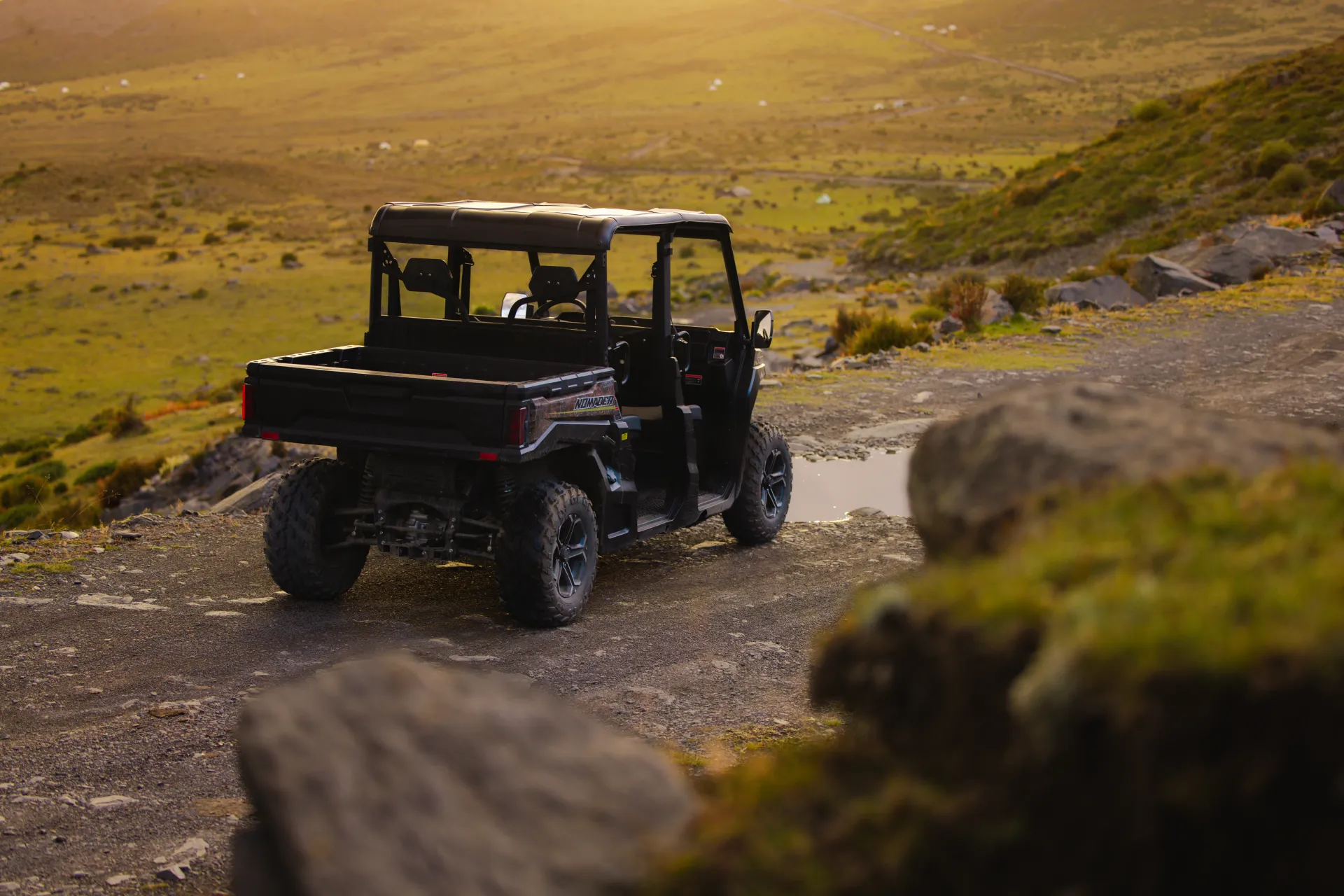
The greatest charm of off-road driving lies in conquering various complex terrains. However, for ATV (all-terrain vehicle) and UTV (multi-purpose off-road vehicle) drivers, getting stuck in the vehicle is almost a problem that everyone will encounter. Whether it's on muddy forest roads, soft sandy areas, snowy surfaces, or rough rocky sections, a wrong route choice or throttle operation can cause the vehicle to lose traction.
Most stuck situations are not terrifying. The real problem lies in the handling method. Lots of drivers notice that once the vehicle won’t go ahead, their first instinct is to just keep boosting the throttle. In practice this does not help much, it will only cause the tires to dig in even more, and that makes it harder to escape, plus it might end up harming the tires, the transmission system or even the chassis itself.
In this article, you are going to learn about the common reasons why ATVs and UTs get stuck, how to get out of this problem depending on the terrain, the needed rescue equipment, and how to avoid getting stuck again, thus giving you more confidence when driving off road.
What Should You Do First When You Get Stuck?
When a vehicle gets stuck, the most important thing is to remain calm.
If it is observed that the vehicle has stopped, one should not continue to press the accelerator pedal hard. Running in place will not allow you to escape from your problem, but it will lead the tires to dig deeper into the ground, causing the vehicle to sink more. The right way of doing things is to leave the vehicle and see what kind of an environment surrounds you –whether you are stuck in mud, sand, snow, or the vehicle is underwater up to its chassis. Also, see if the wheels still have traction.
If there are other vehicles traveling with you, you can discuss the rescue plan first; if you are alone on the off-road, prioritize your own safety and do not take dangerous actions just to get out of the predicament.
How to Recover Your ATV or UTV in Different Terrain
The methods for escaping from different terrains are not the same. Choosing the correct method can lead to twice the result with half the effort.
Getting out of mud
Mud is the most common vehicle-stuck situation encountered in off-road driving. If the vehicle is equipped with low-range four-wheel drive or a differential lock, it should be activated in advance and the throttle should be maintained at a slow and steady level. If the tires start to slip, the acceleration should be stopped immediately. Iron shovels can be used to clear the dirt in front of and behind the tires, and then the escape boards, wooden boards or stones can be placed to increase the friction. If there is another ATV or UTV traveling together, a tow rope can be used for towing; for deeper mud pits, using a winch to fix it to a tree or other solid anchor points for rescue is usually the safest and most efficient method.
Recovering from Deep Sand
Unlike mud, vehicles in sand usually get stuck due to the tires sinking into the ground and being unable to move forward. Reducing the tire pressure appropriately can increase the contact area between the tires and the ground, enhancing buoyancy. During driving, try to keep the vehicle moving in a straight line, avoid sharp turns and sudden braking, and maintain a stable power supply. Do not frequently change the throttle. If the vehicle completely stops, first reverse slowly along the original tire tracks, then search for a harder route again instead of continuing to spin forward.
Recovering in Snow and Ice
The major issue in snowy regions is that there may be ice layers underneath the snow. Prior to making any effort to free the vehicle from the snow trap, the packed snow from the area of the tires can be cleared and then you can try moving the vehicle by giving it some light pressure on the accelerator pedal.
Avoid slamming on the accelerator; otherwise, the tires are likely to keep slipping on the ice, further reducing the success rate of getting out.
Recovering on Rocky Trails
On rocky sections, vehicles may not lose traction due to insufficient grip; more commonly, the chassis gets stuck under the rocks. When it is discovered that the vehicle cannot move forward, one should first check if the chassis is stuck by the rocks, and then choose a new driving route based on the terrain. If necessary, some rocks can be removed, or a companion can stand outside the vehicle to direct and help the driver accurately control the position of the wheels to avoid damage to the suspension and chassis.
Essential Recovery Gear Every Rider Should Carry
Many stuck vehicles are not caused by overly complex terrain, but by improper operation which makes the problem worse and worse.
The most common mistake is constantly slamming on the accelerator, hoping to break through by relying on the engine power. In fact, this will only make the tires sink deeper. Some drivers also keep turning the steering wheel sharply while the vehicle is idling, which not only fails to increase traction but may also damage the steering system.
In addition, incorrect selection of the winch's fixed position, connecting the tow rope to an unstable position, and repeatedly trying different rescue methods without success can all cause vehicle damage.
If you fail to free the vehicle after several attempts, you should stop immediately, re-evaluate the situation, and if necessary, seek help from other vehicles or professional rescue services.
Common Recovery Mistakes to Avoid
Many stuck vehicles are not caused by overly complex terrain, but by improper operation that makes the problem worse.
The most common mistake is repeatedly slamming on the accelerator, hoping to break through by relying on the engine power. In fact, this will only make the tires sink deeper. Some drivers also keep turning the steering wheel sharply while the vehicle is idling, which not only fails to increase traction but may also damage the steering system.
Furthermore, wrong choice of the fixed point of the winch, the attachment of the tow rope to an insecure point, and repeated attempts to rescue without succeeding may result in damage to the vehicle.
If you fail to free the vehicle after several attempts, you should stop immediately, re-evaluate the situation, and if necessary, seek help from other vehicles or professional rescue services.
How to Avoid Getting Stuck Off-Road
Of course, no vehicle can ensure that it would not get stuck in the process, but careful driving behavior can greatly minimize this danger.
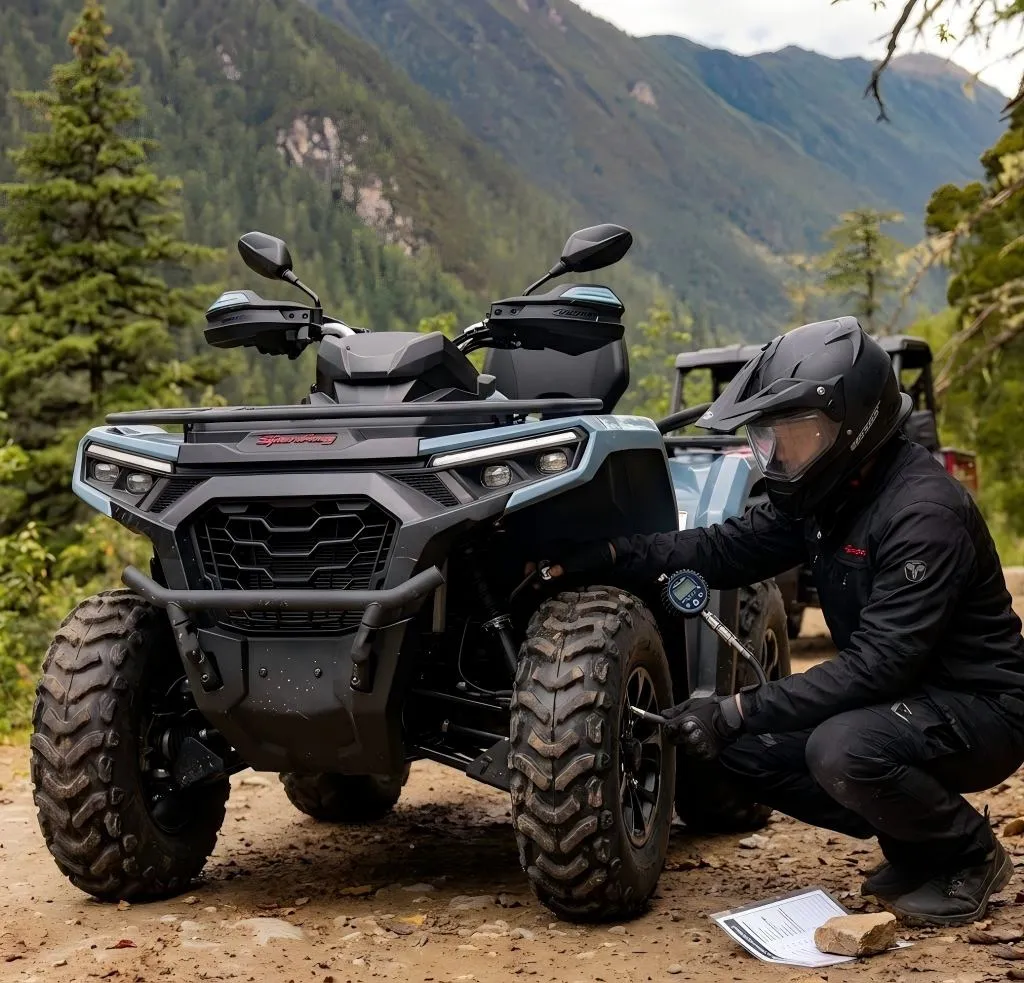
First of all, before starting the journey, it is necessary to be well aware of the road route and current weather conditions, especially in case there has been recent heavy rains or snowfalls. It is also important to be well prepared for choosing the right tires, depending on the terrain and to maintain the optimal tire pressure. In case of approaching the muddy or sandy area or uphill slope, one should turn on the four-wheel drive mode beforehand.
During driving, keep the throttle steady and maintain an appropriate speed, which is more effective than relying on high-speed acceleration. At the same time, try not to go off-road alone to remote areas and carry basic rescue equipment in the vehicle to handle emergencies quickly in case of emergency.
Conclusion
For every ATV and UTV driver, getting stuck is a possible situation that may occur during off-road driving. The real key is not to never get stuck, but to remain calm when problems arise, choose the correct methods to free the vehicle, and use the appropriate rescue equipment to quickly resume driving.
By mastering the techniques for getting out of trouble in different terrains, developing good driving habits, and combining with modern off-road configurations such as four-wheel drive systems, differential locks, high ground clearance, and EPS, you can not only enhance the vehicle's passability but also make each off-road adventure safer, more efficient, and more enjoyable.
-
Aug 05 2026
learn more
 How Much Does an ATV Weigh? 7 Facts Buyers Should Know
How Much Does an ATV Weigh? 7 Facts Buyers Should Know
How Much Does an ATV Weigh? 7 Facts Buyers Should Know
-
Aug 05 2026
learn more
 How to Get Your ATV or UTV Unstuck: Recovery Tips for Mud, Sand & Tough Terrain
How to Get Your ATV or UTV Unstuck: Recovery Tips for Mud, Sand & Tough Terrain
How to Get Your ATV or UTV Unstuck: Recovery Tips for Mud, Sand & Tough Terrain
-
Aug 03 2026
learn more
How Wide Is an ATV? 7 Things Buyers Should Know
How Wide Is an ATV? 7 Things Buyers Should Know
-
Jul 30 2026
learn more
 How 4WD Utility ATVs & UTVs Improve Farm Productivity
How 4WD Utility ATVs & UTVs Improve Farm Productivity
How 4WD Utility ATVs & UTVs Improve Farm Productivity