How to Prepare an ATV for Hunting Season
Sep 28 2026
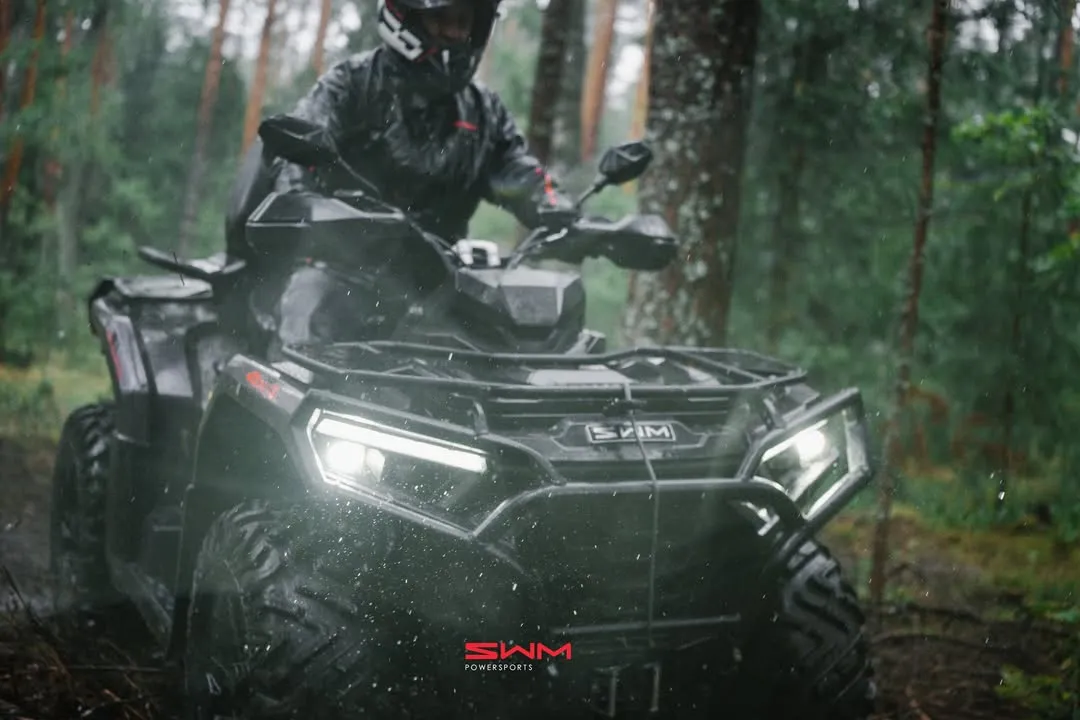
Before hunting season kicks off, most people start sorting out their hunting gear, planning routes, getting clothes and supplies ready—but the ATV itself often gets overlooked. The thing is, if you're planning to ride your SWM ATV into forests, mountains, mud, or remote hunting areas, vehicle condition and equipment setup matter just as much. A complete pre-trip prep isn't just "see if it starts"—it's about making sure your tires, brakes, suspension, 4WD system, lighting, fuel, and load capacity can all handle the actual terrain.
Bottom line: don't wait until you're out in the hunting area to find out your ATV has problems.
Start With a Thorough ATV Inspection
If your ATV hasn't seen much use over the past few months, it's a good idea to schedule a basic inspection before the season starts.
Check Tires and Tire Pressure
Tires are the only part of the ATV that actually touches the ground, and they're a critical foundation for off-road performance. First, check the tread for obvious wear, cracks, cuts, or foreign objects. Then confirm the tire pressure is within the range appropriate for your specific tires and vehicle.
If you're heading into mud, forest roads, gravel, or other unpaved surfaces, tire condition is especially important. Don't just check whether there's "still air in them"—abnormal tire pressure can also affect handling, traction, and vehicle stability.
Check the Engine and Fluids
If the ATV has been sitting for a while, focus on these:
Engine oil
Coolant
Brake fluid
Fuel system
Air filter
Also watch for any oil leaks, fluid leaks, or unusual smells.
Check Brakes, Steering, and Suspension
Before heading into the hunting area, it's best to do a short, low-speed test ride. Confirm brake response is normal, steering has no excessive play, and check the suspension system for leaks, unusual noises, or visible damage.
On an ATV, these systems directly affect your ability to control the vehicle on uneven terrain. Especially on descents, turns, or when navigating obstacles—stable braking and steering are crucial.
Prep Your ATV for the Hunting Terrain
The biggest difference between a hunting route and a regular road is that you can't really predict what the next stretch looks like. One minute it's a smooth forest road, and after the next turn it's mud, gravel, or a steep slope.
Know the Route Ahead of Time
Before you head out, research the terrain and route conditions of your hunting area. Knowing the route doesn't mean you have to avoid every difficult section—it means matching your vehicle's capability to the difficulty of the terrain.
Check the 4WD System
If your ATV has a 2WD/4WD system, confirm before the season that the 4WD function engages properly. On soft soil, mud, or uphill sections, using 4WD appropriately helps the ATV get better traction. Don't wait until you're actually stuck in mud to find out the 4WD system isn't working.
Mind Your Ground Clearance
Tree roots, rocks, and other obstacles are common on forest roads. When planning your route, factor in your ATV's ground clearance and try to avoid unnecessary contact between the underbody and obstacles.
Get Ready for Early Mornings and Low-Light Conditions
A lot of hunting activity starts at dawn, which means you might be riding your ATV before the sun's fully up. So lighting isn't a small detail you can just skip.
Before heading out, confirm your lights work properly and check for loose connections, flickering, or wiring damage. Fog, rain, tree cover, and forest shadows all mess with visibility. So beyond vehicle lighting, plan your route ahead and bring a flashlight or other backup lighting.
Pack Your Hunting Gear on the ATV Sensibly
One of the ATV's biggest advantages is mobility, but its storage space usually isn't as generous as a UTV's. So how you pack things is its own skill.
Depending on your ATV's setup, you can use front and rear racks, a cargo box, or rack bags to carry gear. Items like drinking water, rain gear, a first aid kit, tools, and other frequently used stuff should go in easy-to-reach spots.
At the same time, don't cram everything on just because you want to "bring a little extra." Excessive load or poor weight distribution can affect vehicle stability—especially avoid concentrating weight on one side or placing heavy items up too high. A simple rule: only bring what you actually need, and keep the load as stable and evenly distributed as possible.
Hunting trails won't always be smooth. Before you head out, check straps, tie-downs, and everything on the racks to make sure nothing comes loose while you're riding.
Choose the Right ATV Accessories for Your Hunting Needs
When setting up your ATV, you don't necessarily need to install a ton of accessories at once. A more practical approach is to choose based on your hunting style and actual route.
Winch: for handling tough terrain
Storage gear: to make the most of limited space
Auxiliary lighting: for low-light conditions
Other practical gear: depending on weather and route, consider handguards, protective equipment, weather protection, tool storage, additional cargo solutions
Check Fuel, Battery, and Range Before Departure
Don't plan a hunting trip based solely on your ATV's theoretical fuel economy. Real-world fuel consumption is affected by terrain, riding style, load, and ride time.
Plan Your Fuel Ahead
Before heading out, consider:
Estimated distance
Terrain conditions
Off-road time
Whether there are resupply points
Whether you need to carry extra fuel
Especially in remote areas—running out of fuel is way more of a hassle than it is on regular roads.
Check the Battery
If your ATV has extra lights, a winch, or other electronic accessories, battery condition deserves attention too.
For an ATV that's been sitting for a while, it's best to start it up and test it in advance—don't save the first start for the actual hunting day.
Take a Test Ride Before the Season Starts
Once everything is prepared, take your SWM ATV on a short test ride before the hunting season begins. This gives you a chance to check how the vehicle performs with your actual hunting gear loaded and identify anything that needs to be adjusted before the first trip.
Focus on checking:
Steering: Does it steer normally? Any excessive play?
Brakes: Is brake response normal?
Suspension: Any unusual noises or obvious issues over bumpy terrain?
4WD: Does the 4WD system engage properly?
Tires: Is traction and tire pressure normal?
Lights: Do headlights, brake lights, and auxiliary lights work?
Winch: If you have one installed, confirm it's operational.
Cargo: With all gear loaded, is the vehicle still easy to control?
That last point is especially easy to overlook. An ATV that feels fine empty can handle completely differently once it's loaded with gear. So it's best to simulate a load close to what you'd actually carry on a hunting trip.
Summary
Prepping your ATV for hunting season isn't just about taking it out for a quick look.
A truly complete prep considers vehicle condition, terrain, weather, gear, load, and recovery capability all at once.
An ATV that's truly ready for hunting needs to handle forest roads, mud, gravel, and other unpaved environments—while also having sensible storage and recovery setup.
Inspect the vehicle ahead of time, organize your gear, and do an actual test ride. You'll have a much clearer picture of how your ATV performs under real hunting conditions—and the whole hunt will go a lot smoother.
Explore SWM ATVs for Hunting and Outdoor Adventures
-
Sep 28 2026
learn more
 How to Prepare an ATV for Hunting Season
How to Prepare an ATV for Hunting Season
How to Prepare an ATV for Hunting Season
-
Sep 23 2026
learn more
 Best UTV Accessories for Hunting: Build the Right Hunting Setup
Best UTV Accessories for Hunting: Build the Right Hunting Setup
Best UTV Accessories for Hunting: Build the Right Hunting Setup
-
Sep 23 2026
learn more
 what is the best side by side utv for hunting?
what is the best side by side utv for hunting?
what is the best side by side utv for hunting?
-
Sep 21 2026
learn more
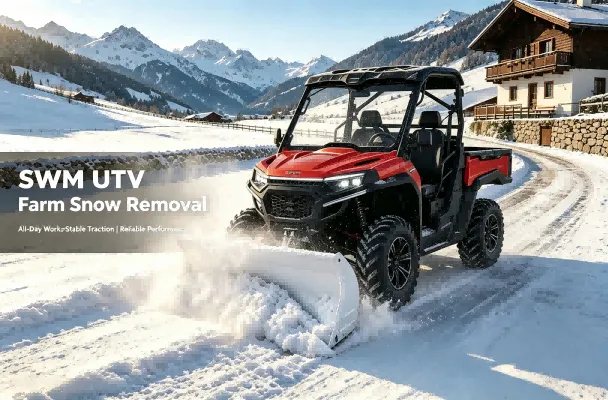 How Much Snow Can a UTV Side-by-Side Plow?
How Much Snow Can a UTV Side-by-Side Plow?
How Much Snow Can a UTV Side-by-Side Plow?