UTV Rollover: Causes, Risks, and How to Prevent It
Nov 10 2026
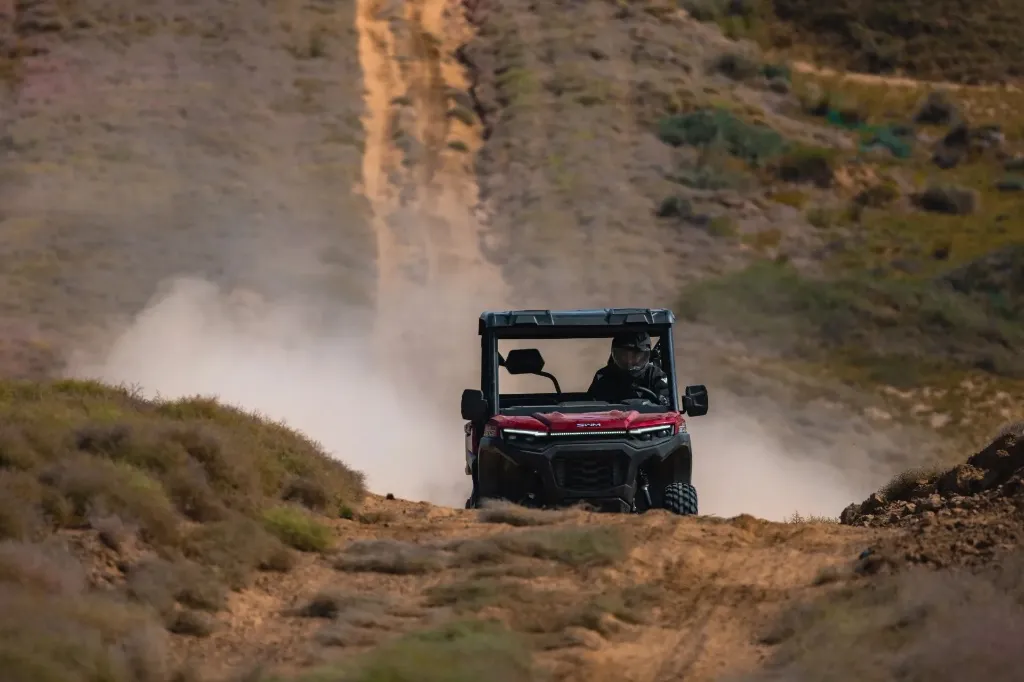
One of the biggest accident dangers that drivers need to pay attention to avoid in difficult off-road environments is the UTV rollover. Many people believe that rollovers only occur when a vehicle is speeding or travelling in harsh off-road conditions. But low speed driving doesn’t guarantee that a vehicle is entirely safe. However, if the vehicle is on an adverse slope, the wheel support is suddenly altered or the load distribution is wrong, the rollover can still occur.
If you want to reduce risk you need more than a few safety mantras memorised. Understanding how the vehicle’s physical design, center of gravity, suspension dynamics and exterior terrain conditions all work together is the key to reducing utv rollover danger. This article examines the causes, possible dangers, and practical methods for preventing rollovers of UTVs.
What Is a UTV Rollover?
So first, before we talk about prevention, we need to know what a utv rollover is. A rollover in terms of kinematics and description is when a vehicle has exceeded the stable range that a typical driving posture can sustain and the body overturns laterally or longitudinally. The primary forms can be summarised according to the direction and trajectory of overturning of the vehicle as:
Lateral Rollover: Vehicle turns over on its left or right side. This is a very typical sort of UTV rollover that can occur in tight bends, navigating side-hills, or if one-side wheels catch a larger object.
End-over-end rollover: The vehicle rolls over end over end. This could be because of going down steep gradients, unexpected changes in the terrain, a barrier in front of or behind the vehicle or loss of control.
Multiple-roll rollover: The vehicle turns over more than once after the first rollover from slope, terrain undulation or continued movement. These incidents can cause significant damage to the car and its occupants.
It is vital to distinguish between typical vehicle sliding, a temporary lift of a single wheel, and a true vehicle overturn; they are not the same state. However, wheel lift may reflect a change in the vehicle’s support state, and under unfavorable slope, steering, or load conditions, it may further develop into a rollover accident. This not only leads to high repair costs, but more fatally, occupants can easily be ejected from the cabin during the rollover, or crushed or trapped by the heavy vehicle body.
What Causes a UTV Rollover?
Most UTV rollovers are not caused by a single reason. They are the result of the vehicle’s own physical characteristics interacting with the external environment.
High Center of Gravity
A UTV’s center of gravity depends on vehicle structure, chassis layout, number of occupants, and load distribution. Because the vehicle body may undergo significant attitude changes when driving on complex terrain, the height of the center of gravity and its position relative to the tire contact patches are important factors when assessing lateral stability.
The weight of occupants, cargo carried with the vehicle, and towed items all change the vehicle’s weight distribution. If cargo is placed too high, biased to one side, or shifts during bumpy travel, the vehicle’s balance will be disrupted.
When you drive on a slope, the attitude of the body changes in relation to the direction of gravity and the distribution of the load between the wheels changes as well. The higher the center of gravity the more probable the vehicle is to exhibit severe body roll under side-slope or lateral loading situations and so slope and route assessment must be more rigorous.
Track Width and lateral Stability
track width is also a factor in the lateral support base of a UTV. In general, it refers to the distance between the center lines of the left and right wheels on the same axle. The overall vehicle width is measured at the widest points of the vehicle. A wider track can provide a wider lateral support base, but it does not eliminate the potential of rollover. The interaction between track width, center of gravity, suspension design, vehicle loads and terrain conditions is more essential than any single parameter.
Sharp Turns and Speed
Common triggers of accidents include turning speed and steering style. When a vehicle turns, it needs to provide lateral acceleration in the turn. The faster you take a turn of the same radius, the more lateral acceleration you require, and the more lateral strain you exert on the tires, suspension and body.
If the speed is excessively high, or if the driver suddenly steers, accelerates quickly or brakes hard, there may be more pronounced load transfer and changes in body attitude. When turning is combined with potholes, loose ground, or inconsistent grip between the left and right wheels, the vehicle’s lateral stability may be further affected.
Side Slopes and Uneven Terrain
Complex terrain is a natural high-risk scenario for rollovers. When driving on a side-hill the vehicle is automatically pulled downhill by gravity. Because of ruts, deep holes, hidden pebbles and height inequalities with rapid changes the left and right wheels can be in quite different support states. When a wheel crosses a one-side obstacle, the body instantly rolls. If the driver suddenly steers or brakes on a slope, a rollover can easily occur directly.
Suspension Movement and Vehicle Stability
A UTV’s stability on uneven terrain depends on more than its tires and frame dimensions. The UTV suspension system also affects the wheel reaction to variations in ground height and the vehicle body movement during compression, rebound and cornering.
However, suspension movement alone cannot determine rollover resistance. Longer suspension travel does not mean the vehicle has stronger rollover resistance. Suspension performance must be judged together with the vehicle’s center of gravity, track width, load, and actual terrain.
Overloading and Improper Cargo Placement
Overloading or incorrect cargo securing is a concern that is often forgotten. Exceeding the manufacturer’s load or occupant restrictions may alter the original weight distribution and handling characteristics of the vehicle, increasing the risk during turns, climbing or travel over uneven terrain.
Stacking heavy objects too high raises the center of gravity. If you shift unsecured cargo while cornering or rising, it might suddenly modify the dynamic load of the vehicle.
Drivers should also take into account the trailer’s weight and momentum, as well as the vehicle’s rated towing capacity when towing a trailer. If you have loaded your trailer improperly, have too much tongue weight, or make sudden changes in direction, the vehicle combination may be harder to control when travelling over rough surfaces or around curves.
Why Is a UTV Rollover So Dangerous?
For occupants involved in a utv rollover accident, the danger often comes not only from the vehicle rolling over, but also from physical secondary injuries at the moment of the accident.
Risk of Driver and Passenger Ejection
At the moment of vehicle rollover, if occupants are not using seat belts correctly, the vehicle’s rolling motion and inertia may throw them out of the cabin or allow part of their body to extend outside the occupant protection area. Once an occupant falls into the vehicle’s roll path, they may suffer severe crushing or run-over injuries.
Risk of Being Trapped or Crushed
Heavy bodies and strong constructions can easily trap occupants under them or pin them inside a twisted cabin if the car rolls on its side or lands upside down resulting to suffocation, fractures or severe internal injury.
Why the ROPS and Seat Belts Matter
A roll-over protection structure (ROPS) is intended to help keep the protective space around occupants during a rollover. But this protection depends on occupants being in the authorised seating area of the car and using the restraint system correctly. Seat belts help keep people in the protected area; doors or side netting, if applicable, properly secured, can give additional restraint. Please be aware that ROPS are used in conjunction with occupant restraint systems such as seat belts and are not an independent, absolute guarantee of protection.
How to Prevent a UTV Rollover
Mastery of the logic of scientific prevention considerably reduces the chance of accidents.
Slow Down Before Entering a Turn
You have to slow down ahead of time before you get into any curve or blind spot where you can’t see well.” Do not make rapid changes of direction, sharply accelerate or brake hard on a curve. Smooth throttle transition is the key to keeping the vehicle attitude.
Assess Slopes Before Driving
Before going down a slope, first assess the steepness of the slope, the traction of the terrain (e.g. loose gravel, mud, wet grass) and the exit path. Avoid steep side slopes where possible and use the lower risk and easier approach. Don't enter rashly without being sure that the vehicle can pass safely.
If it is necessary to traverse a slope, determine the correct driving direction and route according to the operating instructions of the vehicle maker and prevent sudden steering or drastic changes in speed on the slope.
Keep Cargo Low, Balanced, and Secured
Do not exceed the manufacturer’s load and passenger limits. Make sure you load all supplies and tools transported with the vehicle as low as possible, balance the weight left to right, and tie everything down securely with straps so that it won’t bounce about and shift while you are travelling.
Know Your UTV's Handling Characteristics
Know the width of the car, the track, the wheel base and the feel of the suspension. The only way to improve traction and steering feel is 4WD, electronic power steering (EPS) or better suspension. They can never break the laws of basic physics and they can never replace logical driving operation.
Use the Occupant Protection System Correctly
Make sure that the driver and all passengers have their seat belts correctly fastened before each travel. Always ensure the side doors or safety netting are closed and never put your arms, head or legs outside the vehicle body.
What Should You Do If Your UTV Rolls Over?
If there is a rollover accident, the vehicle stopping its roll does not mean the danger is over. They also have to examine the condition of the vehicle, the environment and their own injuries before making a decision about exiting:
Stay in the protection zone: If your car starts to rollover, attempt to stay seated and inside the occupant safety zone. Do not use your hands or feet to support yourself on the ground or hold onto structures outside the car. If used correctly, seat belts can reduce the risk of people being ejected from the cabin.
Check for Hazards: After the car has stopped first check for the potential of gasoline spilling, fire, further vehicle sliding or secondary rollover. If the car is still moving and unstable, and there is no immediate danger such as fire, don't unbuckle seatbelts early or attempt to get out on your own.
Safe Exit and Seek Help: Check the stability of the car and the existence of a safe exit before evacuating according to the real situation. If the occupants are injured or trapped, do not arbitrarily drag the injured person, inform the expert rescue as soon as feasible.
Check the vehicle before you drive it again. Don’t just start up the vehicle and drive away after a rollover. Check the frame, ROPS mounting points, seatbelts, steering, suspension, wheels and tires and fuel system for damage. Have a professional inspect it and repair any damage that can affect the structural strength and handling performance before use.
Final Thoughts
UTV rollovers are rarely caused by a single factor. The vehicle’s center of gravity height, load distribution, suspension design, and track width performance interact with actual cornering speed, slope route, and ground traction conditions to determine the vehicle’s driving stability.
The most important thing while driving in off-road is to fully understand the physical design restrictions of the model you are driving, and to adjust the driving strategy according to the terrain circumstances in real-time, instead of mindlessly seeking high power and extreme speed. The best guarantee to go home safe every time is sensible driving habits and proper safety protection.
-
Nov 10 2026
learn more
 UTV Rollover: Causes, Risks, and How to Prevent It
-
Nov 09 2026
learn more
 ATV Drivetrain: How Power Gets from the Engine to the Wheels
-
Nov 04 2026
learn more
 SWM 2026 Smart Evolution · Boundless Adventure: New 1000cc Flagship Models Make Their Global Debut at EICMA Milan
-
Nov 05 2026
learn more
 How to Check Trail Conditions Before an ATV Ride