What's the Difference Between an ATV and a UTV?
Oct 14 2026
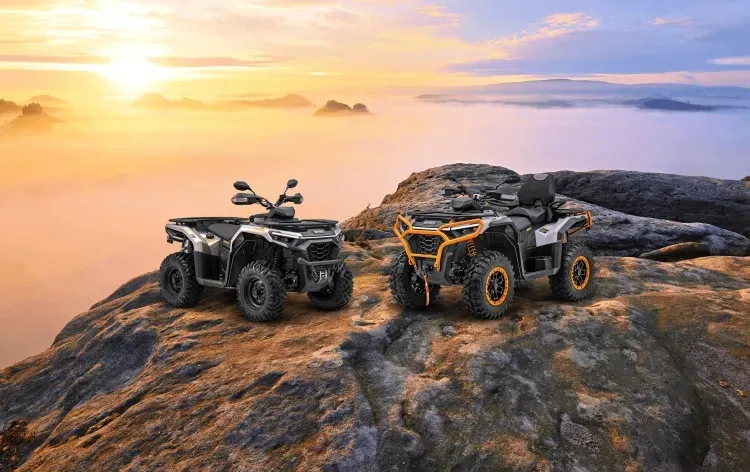
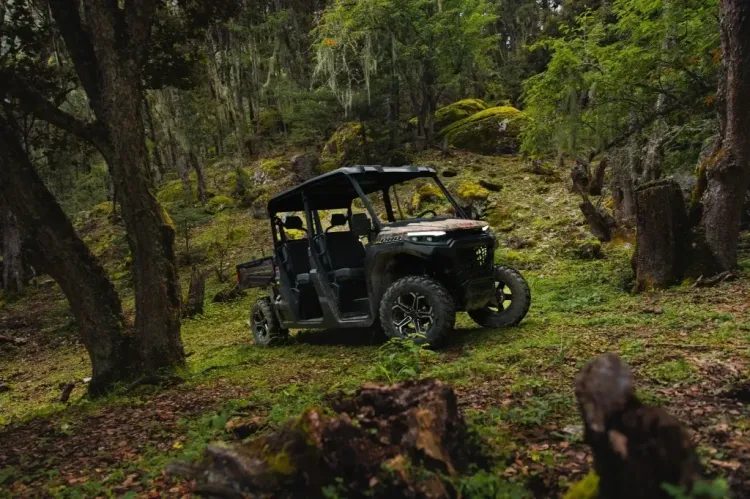
An ATV (All-Terrain Vehicle, commonly known as a quad or four-wheeler) is ridden, while a UTV (Utility Task Vehicle / Side-by-Side) is driven. Although both are built to handle tough off-road conditions, they differ significantly in design, purpose, and overall experience. ATVs are narrower and more agile, making them ideal for solo off-roading, whereas UTVs act like small off-road pickup trucks designed for hauling passengers, cargo, and heavy work.
ATV vs. UTV: Exterior & Structural Differences
Feature | ATV (All-Terrain Vehicle) | UTV (Utility Task Vehicle) |
Seating Style | Straddle seat (like a motorcycle) | Side-by-side seating (SxS), similar to a standard car |
Controls | Handlebars with hand-controlled steering | Steering wheel with foot pedals (throttle & brake) |
Passenger Capacity | Typically 1 person (some long-wheelbase models seat 2) | Typically 2 to 6 people (available in 2-, 4-, and 6-seat options) |
Body & Protection | Narrow and open-air, usually no roof, doors, or roll cage | Wider, equipped with a roll cage and seatbelts; optional doors, windshield, or fully enclosed cab |
Cargo Space | Front and rear small racks with limited carrying capacity | Rear cargo bed capable of hauling tools, feed, equipment, etc. |
Dimensions | Narrow profile, easily fits through tight trails | Wider body, lower maneuverability on narrow paths |
ATV vs. UTV: Usage Differences
ATVs Are Best For:
Use Cases: Solo off-roading, trail riding, hunting, ranch inspection, recreational sports, racing, and emergency response where rescuers must navigate extremely complex and tight terrain.
Key Advantages: Lightweight and agile with sharp handling; able to enter narrow trails, mud pits, sand dunes, and steep mountain inclines that larger vehicles cannot access.
UTVs Are Best For:
Use Cases: Farms, ranches, construction sites, landscaping, rescue operations, family off-road trips, and desert rallies (high-speed sand dune driving).
Key Advantages: Can carry multiple passengers, haul heavy loads, and tow equipment. Featuring a spacious cargo bed, it has exceptional payload and towing capacities—making it ideal for scenarios where "a full-size truck won't fit, but heavy gear needs to be moved."
ATV vs. UTV: Performance Characteristics
Performance Dimension | ATV | UTV |
Maneuverability | Lighter and narrower; excels on tight turns, dense woods, and narrow trails | Larger and heavier; less agile in tight spaces |
Stability & Safety | Higher center of gravity and open design; relatively higher rollover risk | Wider track width and equipped with roll cages; offers greater stability |
Payload & Towing | Small cargo capacity; best suited for light loads | Stronger cargo bed, towing, and payload capacity |
Speed | Varies widely by model; sport ATVs can reach very high speeds | Usually heavier, so top speed may not exceed sport ATVs (commonly around 25–50 mph) |
ATV vs. UTV: Regulations, Laws & Insurance Differences
(Note: There is no single US federal insurance requirement for ATVs/UTVs. Rules are set primarily by states, counties, and public land management agencies, resulting in significant variation across public roads, trails, and state parks.)
Public Roads:
Most states default to prohibiting ATVs/UTVs on paved public roads, making exceptions mainly for road crossings or agricultural/rural uses.
States that permit road use typically require street-legal modifications, including vehicle registration, license plates, a valid driver's license, lights, mirrors, turn signals, and a horn.
Insurance Requirements:
Where road driving is permitted, liability insurance is usually mandatory at a minimum.
Many states also require proof of liability insurance to ride on state lands, public trails, or state parks (e.g., Pennsylvania requires ATVs to carry liability insurance whenever leaving private property).
Private Property:
On self-owned private land where the vehicle is not driven on public roads, many states do not legally mandate insurance. However, financing, leasing, or specific property/venue rules may still require full coverage.
Helmets & Age Limits:
Helmet laws vary by state; some mandate helmets for all riders, while others only require them for those under 18.
Minors are often subject to safety training requirements, adult supervision, or minimum operational age limits.
Additional UTV Safety Rules:
Because UTVs feature roll cages and accommodate multiple occupants, regulations heavily emphasize seatbelt usage, strictly prohibiting exceeding passenger limits, maintaining roll cage integrity, and adhering to child restraint rules.
-
Oct 14 2026
learn more
 What's the Difference Between an ATV and a UTV?
What's the Difference Between an ATV and a UTV?
What's the Difference Between an ATV and a UTV?
-
Oct 14 2026
learn more
 Should I Buy an ATV or UTV for My Farm?
Should I Buy an ATV or UTV for My Farm?
Should I Buy an ATV or UTV for My Farm?
-
Oct 14 2026
learn more
 What Are Good Alternatives for Side-by-Side (UTV) Vehicle Insurance in the US?
What Are Good Alternatives for Side-by-Side (UTV) Vehicle Insurance in the US?
What Are Good Alternatives for Side-by-Side (UTV) Vehicle Insurance in the US?
-
Oct 14 2026
learn more
 How Long Do UTVs Last? Lifespan, Mileage & Key Factors
How Long Do UTVs Last? Lifespan, Mileage & Key Factors
How Long Do UTVs Last? Lifespan, Mileage & Key Factors