What Is an ATV Differential Lock? How It Works & When to Use It
Aug 13 2026
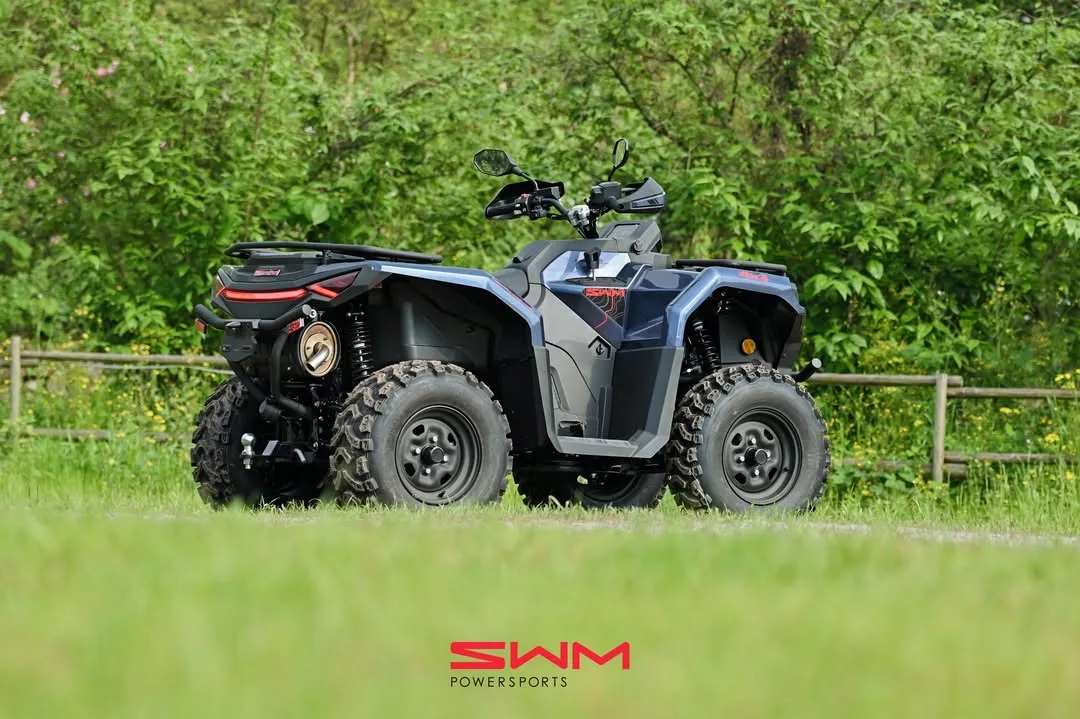
ATV differential locks (often called diff locks or lockers) are one of the most practical traction tools on modern four-wheel drive ATVs and UTVs. When one wheel loses traction on mud, sand, snow, or uneven rocks, a regular open differential will send almost all the power to the slipping wheel, causing the vehicle to jam. A differential lock, however, forces both wheels on the same axle to rotate at the same speed, transferring power to the wheel that still has traction.
This guide will explain in detail what an ATV differential lock is, how it works, what types are available, when to use it, how to operate it correctly, and common rider mistakes.
What Is an ATV Differential Lock
The differential is an important component in the ATV transmission system. Its function is to allow the left and right wheels on the same axle to rotate at different speeds. This is very necessary when turning on rough terrain, as the distance traveled by the outer wheel is longer than that of the inner wheel.
The disadvantage of the open differential is exposed in low adhesion conditions. If a wheel leaves the ground or gets stuck in soft ground, almost all the engine power will flow to the slipping wheel, and the wheel with better grip will receive almost no power, causing the vehicle to stop moving.
The differential lock solves this problem through a mechanical connection between the left and right half shafts. When locked, the two wheels are forced to rotate at the same speed, and the power distribution becomes more even. The wheel with better grip can pull the vehicle forward. The differential lock does not increase the engine horsepower; it merely makes the engine output power be utilized more effectively.
It can be imagined as the difference between pushing a shopping cart and having two wheels on a solid surface: the huge increase in traction is achieved when one wheel slips on ice compared to when both wheels are on a solid surface.
How Does an ATV Diff Lock Work?
When the differential lock is activated, the mechanical sleeve, clutch or electronic actuator inside the differential housing will connect the left and right half shafts together. This will cancel the differential function of the differential, making the end of the shaft equivalent to a solid shaft.
At this point, the differential no longer allows for a speed difference between the left and right wheels, but instead evenly distributes the power to both wheels. Even if one of the wheels slips, the other side can still continuously output traction to push the vehicle forward.
Important note: The differential lock is a low-speed tool mainly used for straight-line or small turns. Once locked, the steering of the ATV will become noticeably heavier because the front wheels can no longer rotate at different speeds. Using it on hard surfaces or at high speeds will accelerate tire wear and impose additional pressure on the half shafts, CV universal joints, and the differential itself.
Types of ATV Differential Locks
1. Selectable (Manual) Differential Lock
The rider can manually control the activation and deactivation through buttons, switches or levers. The advantage is that it is completely controlled by the rider, allowing precise decision-making on when to lock.
2. Automatic Differential Lock
The system automatically locks when it detects a significant speed difference between the wheels, and automatically unlocks when traction is restored.
3. Limited-Slip Differential (LSD)
It is not a true full lock. The LSD limits the slipping degree of one wheel relative to the other through clutches or gears. It is more smooth in daily use and exerts less pressure on the transmission system, but its traction in extreme conditions is not as good as that of a true full-lock differential.
Many modern ATVs combine the use of these systems - for example, using automatic LSD in the normal four-wheel drive mode, while providing an optional full-lock function to achieve maximum traction.
When Should You Use an ATV Differential Lock?
Although the differential lock can significantly enhance the vehicle's traction, it does not mean that it should always be kept in the on position. Only when additional grip is needed should the differential lock be activated to fully utilize its advantages while avoiding increased steering resistance and transmission system wear.
Scenarios suitable for activating the differential lock include:
Deep mud, soft sand or wet clay, where one side is prone to getting stuck
Steep, rutted or rocky slopes where the wheels may lift off or lose contact
Cross-axis obstacles (one wheel is higher and the other is lower)
Snow and ice surfaces, during low-speed straight-line driving
Controlled downhill on soft or uneven ground
Situations requiring maximum traction for escape
Scenarios where differential lock should not be used:
Paved roads, hard surfaces or any high-adhesion surfaces
High-speed driving
When making large turns
Normal lane cruise with traction control
The general principle is simple: Only activate the differential lock when it is expected that a single wheel will slip or lift, and release it immediately after passing the obstacle.
How to Correctly Activate And Deactivate The ATV Differential Lock
Although the specific operations may vary among different brands, the process for most models is similar:
First, switch the vehicle to 4WD mode.
Try to park or keep the speed extremely low.
Press the differential lock switch or pull the lever.
Observe the indicator lights. A constantly lit indicator light usually indicates complete locking; a flashing light indicates that it has not been fully locked.
If the indicator light is flashing, you can move the vehicle a few inches forward or backward, or gently turn the handlebars left and right to help align the gear teeth.
After the indicator light becomes constantly lit, slowly pass through the obstacle.
Immediately deactivate the lock after passing the obstacle. If it cannot be deactivated, you can move the vehicle slowly in a straight line while slightly turning the steering wheel left and right to release the restraint of the transmission system.
Advantages and Disadvantages of ATV Differential Locks
Advantages
Significantly enhance traction in difficult terrains
Reduce the probability of vehicle stalling
Enhance riding confidence on technical racetracks
Help with towing or heavy-load operations under low adhesion conditions
Disadvantages
After locking, the steering becomes heavy and the turning ability decreases.
Improper use will accelerate the wear of tires and transmission components.
Starting it on high-speed or high-adhesion roads may cause damage to the half shaft or CV joint.
If it is an optional configuration, it will increase the purchase cost.
Is the ATV Differential Lock Worth Having?
For riders who frequently encounter muddy, rocky, snowy or steep technical terrains, a differential lock is usually very worthwhile. If you mainly ride on well-maintained trails or areas with relatively stable traction, a good anti-slip system or standard four-wheel drive is usually sufficient.
Proper use of the differential lock can often determine whether to continue riding or spend an hour digging out the vehicle or using a winch. If you mainly ride on well-maintained racetracks or open areas with relatively stable traction, the additional complexity and the risk of misuse may not be worth the cost increase.
-
Sep 24 2026
learn more
 Best UTV Accessories for Hunting: Build the Right Hunting Setup
Best UTV Accessories for Hunting: Build the Right Hunting Setup
Best UTV Accessories for Hunting: Build the Right Hunting Setup
-
Sep 23 2026
learn more
 what is the best side by side utv for hunting?
what is the best side by side utv for hunting?
what is the best side by side utv for hunting?
-
Sep 21 2026
learn more
 How Much Snow Can a UTV Side-by-Side Plow?
How Much Snow Can a UTV Side-by-Side Plow?
How Much Snow Can a UTV Side-by-Side Plow?
-
Sep 21 2026
learn more
 UTV Tire Pressure: How Much PSI Should You Run?
UTV Tire Pressure: How Much PSI Should You Run?
UTV Tire Pressure: How Much PSI Should You Run?