ATV Ground Clearance: How Much Do You Really Need?
Aug 28 2026
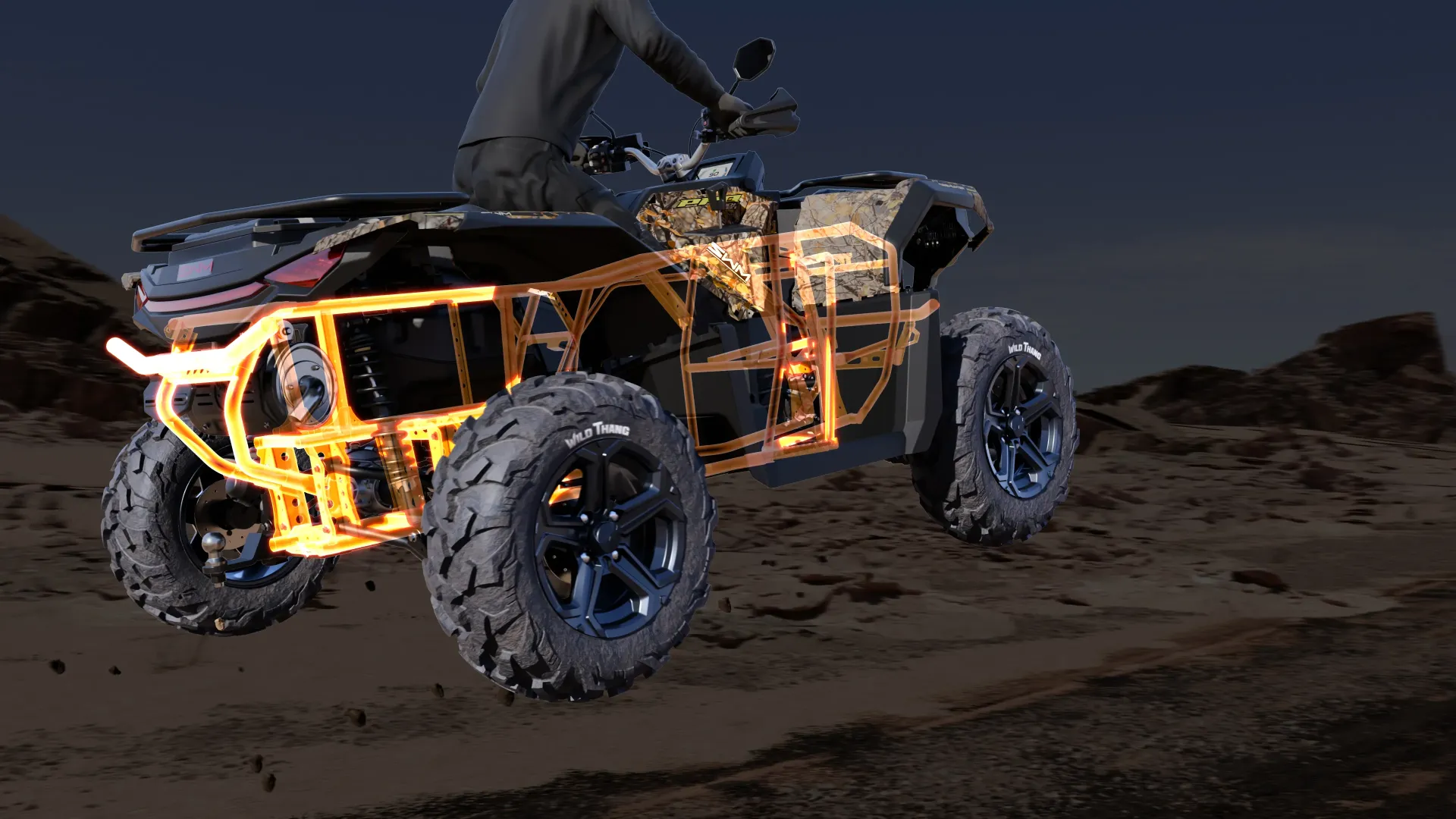
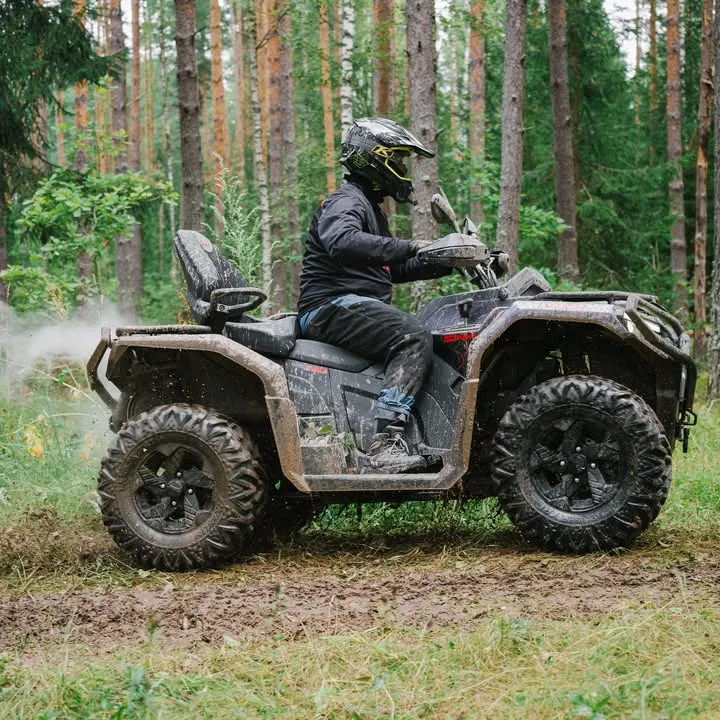
When choosing an ATV, ATV ground clearance is an often overlooked parameter that significantly affects the off-road driving capability. Especially for users who frequently travel on muddy roads, rocky areas, forest paths, farms, and rough mountain roads, insufficient ground clearance can cause the vehicle chassis to frequently hit the ground, affecting the driving experience and even causing damage to the vehicle.
However, this does not mean that a higher ground clearance is always better. Different usage scenarios have different requirements for ATV ground clearance. What truly matters is to select the appropriate ground clearance based on your terrain, load, tires, and suspension system.
What Exactly Is ATV Ground Clearance?
The ground clearance of an ATV refers to the shortest vertical distance from the lowest point of the chassis to the ground when the vehicle is stationary on a flat surface and the tire pressure is at the current level.
For most four-wheel all-terrain vehicles, the lowest point is usually the differential housing, the bottom of the engine crankcase, or a certain section of the frame. The actual measurement point may vary depending on the model. The truly useful ground clearance depends on the height of the lowest hard component beneath the machine.
This figure determines how high an obstacle you can clear without the chassis touching it, and also directly affects the vehicle's ability to pass through deep ruts, mud pits, and uneven terrain, as well as whether it is prone to damaging expensive components.
How Much Ground Clearance Do ATV Really Need?
Based on common riding scenarios, the practical suggestions are as follows:
General trail riding and farm/utility use
9-11 inches are usually sufficient. This range can handle most well-maintained trails, mild ruts, farmland, and moderate obstacles, while maintaining a reasonable center of gravity height, facilitating getting on and off the vehicle and loading/unloading goods.
Moderate off-roading (deeper mud, rocky sections, forest trails with roots and washouts)
10-12 inches can provide more useful safety margin. Many modern practical and recreational practical ATVs come within this range when manufactured.
For extreme mud, rock climbing or deep ruts
12 inches or more are recommended. Professional mud-terrain vehicles and heavily modified rock vehicles often reach 13-14 inches or even higher. Increasing the height significantly enhances obstacle clearance, but it also raises the center of gravity and puts more pressure on the transmission system.
For sport and competition ATVs
These vehicles are usually lower, mostly around 6-8 inches, because low center of gravity and agile handling are more important than extreme clearance.
Currently, the factory ground clearance of most mass-produced practical and off-road trail ATVs is approximately between 9.5-12 inches. Numbers over 12 inches often come from larger tires, lift kits, or models specifically designed for mud/rock terrain.
The core conclusion is: Match the ground clearance to the terrain you actually ride on, rather than the highest number available online.
The Trade-Offs: Why More Isn’t Always Better
A higher ground clearance can enhance the ability to navigate over obstacles, protect critical components of the chassis (engine housing, differential, oil pan, brake lines), reduce the risk of getting stuck at high elevations, and minimize direct impacts from rocks and debris.
However, the drawbacks are also real:
After the center of gravity rises, it becomes more prone to instability during slopes and sharp turns.
Increasing the suspension travel or installing lift kits often causes the constant velocity universal joint (CV joint) to be at a steeper angle, accelerating wear.
Larger and heavier tires will change the gear ratio, reduce low-speed torque, and shorten the belt lifespan (unless the clutch is re-tuned).
Getting on and off the vehicle becomes more strenuous, and loading or unloading shelves or cargo boxes is no longer convenient - this is especially important for farming and work purposes.
For most riders, the sweet spot is the factory or lightly upgraded 10-12 inches. Only when you frequently encounter terrain that truly requires higher passability will the maximum height be worth the cost.
How to Properly Measure Your ATV’s Ground Clearance
Don't just rely on the numbers in the brochure. Measure it yourself:
Park the ATV on a flat and hard surface (cement or compacted land).
Adjust the tire pressure to the recommended off-road or working pressure by the manufacturer.
Locate the true lowest point beneath the machine - usually the differential housing or a section of the frame.
Use a tape measure to vertically measure the distance from this point to the ground.
Check multiple positions (front, middle, rear) as the gap is often not uniform.
Any additional weight (rider, passenger, cargo, winch or full fuel tank) will compress the suspension and actually reduce the ground clearance. The static measurement figures are only upper limits for ideal conditions.
How to Increase ATV Ground Clearance If You Need More
If your existing gap has significantly restricted the clearance, consider the following upgrades based on practicality:
Upgrade to larger tires
This is the simplest and most cost-effective first step. For every 2 inches increase in tire diameter, the ground clearance at the axle and differential increases by approximately 1 inch. Combining with more aggressive mud or rock patterns can simultaneously enhance grip. Pay attention to the wheel arch friction issue. If the tires are significantly larger and heavier, it is recommended to adjust the clutch simultaneously.
Lift kit
A moderate lift of 1-2 inches is usually sufficient for most riders. When used with larger tires, it can bring significant improvements without overly altering the geometry. Higher lifts often require reinforced half shafts, longer brake lines, and careful positioning adjustments.
High ground clearance A-arm or complete suspension upgrade
These modifications can raise the vehicle's body while retaining or improving the suspension travel. They are more costly, but the effect is usually cleaner and more efficient than simple bracket lifts.
Any significant height increase should be accompanied by appropriate chassis protection and a careful assessment of its impact on stability and transmission lifespan.
Summary
Appropriate ATV clearance from the ground, is to be able to let you pass in real face of terrain, scraping the bottom of less, high sticks, less while still keep the numerical stability, practical vehicle.
For the majority of riders, this number falls between 9 and 12 inches. For extreme terrains, you can go higher, but only if you are willing to accept the trade-off in terms of stability and component stress.
-
Oct 08 2026
learn more
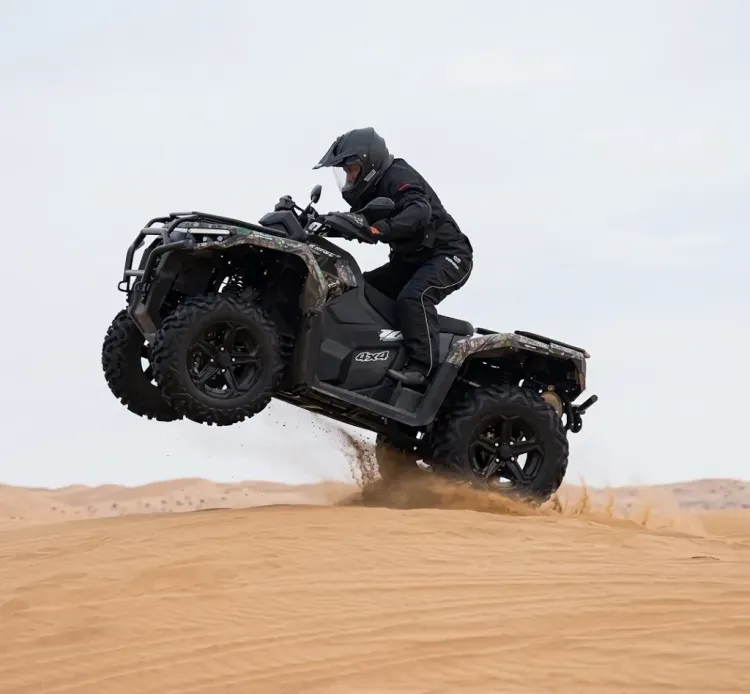 ATV Engine Knocking Noise: Causes and What to Check
ATV Engine Knocking Noise: Causes and What to Check
ATV Engine Knocking Noise: Causes and What to Check
-
Oct 08 2026
learn more
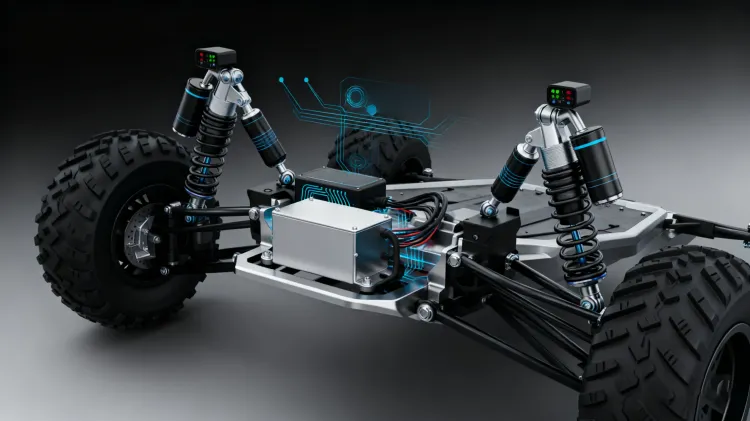 Is Electronic Suspension Worth It for ATVs & UTVs?
Is Electronic Suspension Worth It for ATVs & UTVs?
Is Electronic Suspension Worth It for ATVs & UTVs?
-
Oct 07 2026
learn more
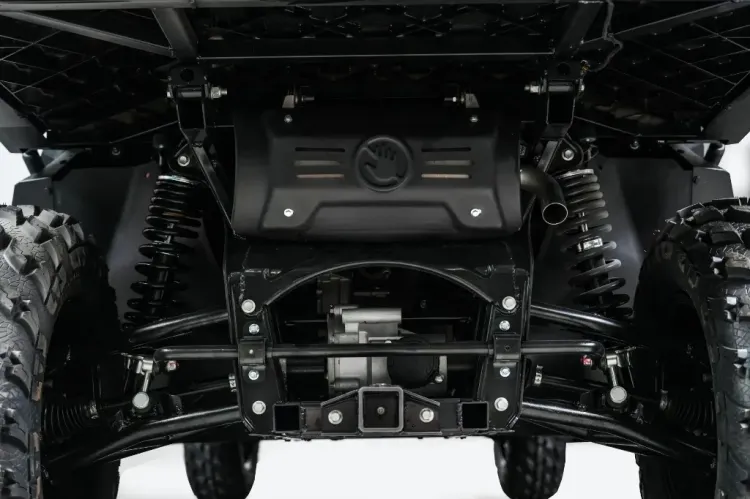 UTV Suspension: Types, Travel, and How It Works
UTV Suspension: Types, Travel, and How It Works
UTV Suspension: Types, Travel, and How It Works
-
Sep 30 2026
learn more
 First Buying ATV 10 Thing Need to Know
First Buying ATV 10 Thing Need to Know
First Buying ATV 10 Thing Need to Know