First Buying ATV 10 Thing Need to Know
Sep 30 2026
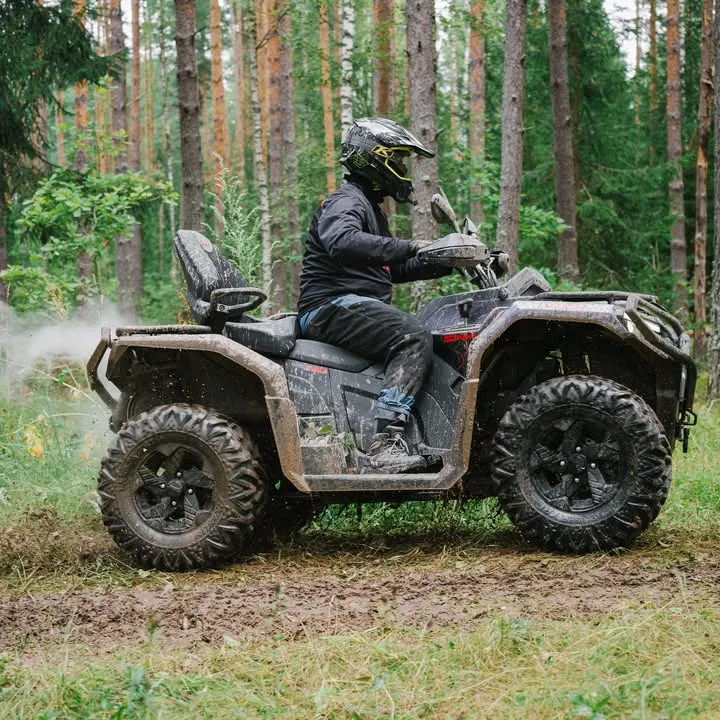
When buying your first all-terrain vehicle (ATV), you'll feel both excited and prone to making mistakes. Many beginners discover after purchasing that the vehicle has too much power, doesn't match the intended use, requires an excessive budget for maintenance, or the safety equipment is not properly prepared. In fact, as long as you think through the key issues before purchasing, the first ATV can be bought correctly, ridden smoothly, and used for a long time.
Here are the 10 most important things every first-time ATV buyer should know.
1. Clearly Define Your Main Purpose
This is the most important step and should come before looking at any models.
ATVs generally fall into three main use categories:
Work: Farm checks, hauling, towing, snow clearing, etc.
Recreation: Trail riding, mud, dunes, or mountain trails.
Mixed use: Daily work with weekend fun.
If you use it 80% of the time on farms or construction sites, prioritize practical models (with large space, many shelves, and sufficient torque). If you mainly go off-roading on weekends, sporty or sport-practical hybrid models would be more suitable. If you're not sure about the purpose, it's better to buy a car; otherwise, you might regret it later.
2. Choose the Right Size and Power
Two common beginner mistakes:
Jumping straight to a 1000cc machine that feels heavy, tall, and overly responsive.
Buying something too small to save money, only to find it struggles on hills or with loads.
For most adult beginners, a displacement range of 400-700cc is a relatively comfortable choice. This engine size provides sufficient power to handle common terrains and tasks, and is not overly difficult to control. People with shorter heights or lighter weights can give priority to smaller-sized vehicles; those with taller builds or who frequently need to carry people or load goods can opt for larger models.
Also decide whether you need a single-rider or two-up (MAX) version. If you often ride with a passenger, the two-up model is worth serious consideration.
3. 2WD or 4WD? Beginners Should Prioritize 4WD
Two-wheel drive (2WD) models are lighter, more fuel-efficient, and usually cheaper. Four-wheel drive (4WD) offers better traction in mud, on wet surfaces, and when climbing.
For beginners, it is highly recommended to choose 4WD first. When encountering off-road terrain for the first time, having more traction means more security. Many models support the switch between two-wheel drive and four-wheel drive. On flat roads, you can use two-wheel drive, and switch to four-wheel drive when needed, balancing flexibility and passability.
Only consider a pure 2WD machine if you’re certain you’ll mostly ride on flat, dry surfaces or in controlled environments.
4. Budget for the Total Cost, Not Just the Purchase Price
Many people focus only on the vehicle price and forget the extras. A realistic budget should include:
· The ATV itself
· Essential safety gear (helmet, goggles, gloves, chest protector, boots)
· Basic accessories (front bumper, lights, phone mount, storage)
· Trailer or transportation if needed
· Initial maintenance and consumables
· Insurance (where applicable)
Plan to set aside an extra 15–20% beyond the vehicle price for gear and early ownership costs. This prevents the unpleasant surprise of needing to spend more money right after buying the machine.
5. Safety Gear Is Essential, Not Optional
ATV does not have the body protection of a car, and when it falls, its body touches the ground directly. What beginners tend to overlook is the protection.
Minimum recommended gear:
· A certified full-face or off-road helmet
· Goggles or a helmet with a good anti-fog visor
· Protective gloves
· Chest protector or riding jersey with impact protection
· Sturdy high-ankle boots
The cost of these safety equipment is much lower than the cost of a single injury. Treat safety equipment as an investment as important as a car, rather than an optional add-on.
6. Learn the Basic Controls Before Hitting Hard Terrain
Don’t rush into challenging trails. First become comfortable with:
· Throttle and brake feel
· Shifting (if manual or semi-automatic)
· How to engage 4WD
· When and how to use the differential lock
· How the machine’s weight shifts on inclines
Suggestions in empty flat field exercises starting, braking, steering, and low speed through the obstacles. Once you have developed muscle memory for these operations, you can gradually attempt light off-road driving. Many novice accidents actually occur because "the vehicle is not familiar yet, but the difficulty level is increased".
7. Maintenance Is Simpler Than You Think—But You Must Do It
ATV maintenance isn’t complicated, but it can’t be ignored. Focus on these basics:
· Regular oil and filter changes
· Cleaning or replacing the air filter (more often in dusty conditions)
· Checking tire pressure
· Inspecting the drive belt or chain
· Monitoring coolant level
· Checking the brakes
Developing the habit of "conducting a simple check before and after each ride" can significantly reduce the probability of breakdowns. Choosing a brand and dealer with comprehensive after-sales service will make the replacement of parts and maintenance later much more convenient.
8. Start on Easy Terrain and Progress Gradually
Resist the urge to tackle the hardest trails right away. A sensible progression looks like this:
1. Flat forest roads and gravel paths
2. Gentle rolling terrain and shallow water crossings
3. Moderate mud or mild slopes
4. Rocks, steeper hills, and deep mud later
Riding with experienced cyclists is much safer than trying it alone. Many places have cyclist groups or experience activities. Novices can start by following along, which not only allows them to learn the techniques but also provides a greater sense of security.
9. Add Accessories and Modifications Gradually
It’s tempting to modify everything immediately, but new owners are better off starting with practical upgrades:
· Front bumper
· Winch (especially useful for mud or remote trails)
· Additional lighting
· Storage boxes or expanded racks
· Phone mount for navigation
Major changes to suspension, exhaust, or the engine are better left until you fully understand how the stock machine behaves. Factory setups are usually well-balanced for most uses, and heavy modifications can affect reliability and warranty coverage.
10. Always Test Ride and Buy from a Reputable Dealer
Spec sheets and photos never replace sitting on the machine and riding it. During a test ride, pay attention to:
· Riding position and comfort
· Throttle response
· Brake feel
· Visibility and control layout
· Noise and vibration levels
Buying from an authorized dealer also matters. A good dealer provides:
· Proper initial instruction
· Genuine parts availability
· Reliable after-sales service
· Support with registration and paperwork
Before buying, ask about warranty coverage, parts availability, and whether they offer any beginner guidance.
Final Thoughts
Buying your first ATV comes down to three core principles:
1. Be clear about how you’ll use it.
2. Choose the right size and power for your needs—not the biggest or most expensive option.
3. Treat safety gear and basic maintenance as seriously as the vehicle itself.
If you follow these 10 points, your first ATV is far more likely to become a long-term source of enjoyment rather than a source of regret.
Ready to start looking? Begin by clarifying your main purpose, then visit a dealer to sit on a few machines and take a test ride. If you have specific questions, feel free to leave a comment—we’re happy to help.
-
Sep 30 2026
learn more
First Buying ATV 10 Thing Need to Know
First Buying ATV 10 Thing Need to Know
-
Sep 28 2026
learn more
 How to Prepare an ATV for Hunting Season
How to Prepare an ATV for Hunting Season
How to Prepare an ATV for Hunting Season
-
Sep 23 2026
learn more
 Best UTV Accessories for Hunting: Build the Right Hunting Setup
Best UTV Accessories for Hunting: Build the Right Hunting Setup
Best UTV Accessories for Hunting: Build the Right Hunting Setup
-
Sep 23 2026
learn more
 what is the best side by side utv for hunting?
what is the best side by side utv for hunting?
what is the best side by side utv for hunting?