ATV Trail Riding vs Hunting: How to Choose the Right ATV
Sep 17 2026
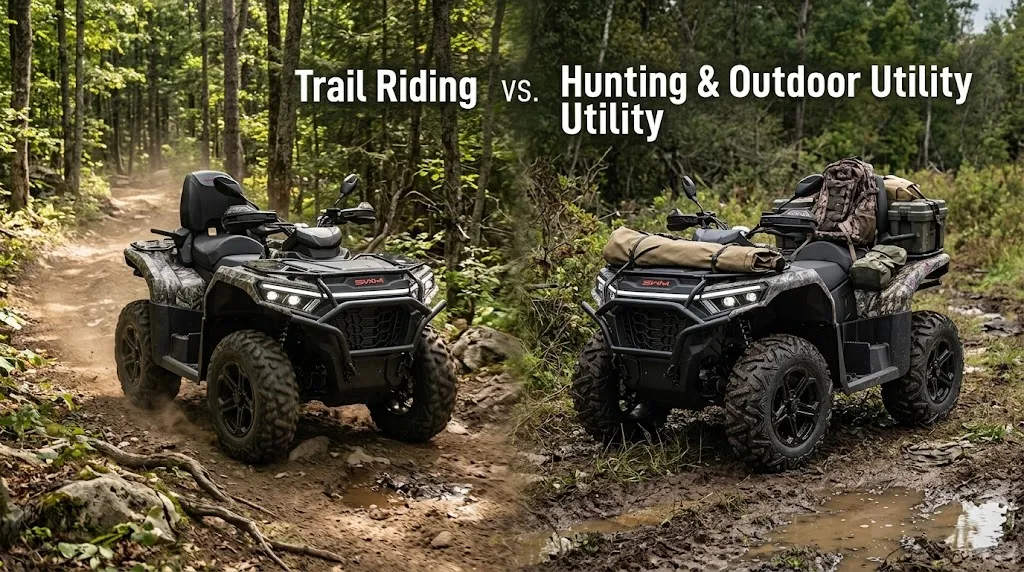
An ATV can be used for recreational trail riding, hunting, hauling, and many other outdoor activities. However, an ATV that works well for trail riding may not have the same priorities as an ATV used primarily for hunting.
When comparing ATV trail riding vs hunting, the biggest differences come down to how the vehicle is used. Trail riders often prioritize handling, suspension, maneuverability, and comfort. Hunters may place greater importance on cargo capacity, payload, 4WD, ground clearance, and towing capability.
If you plan to use one ATV for both activities, understanding these differences can help you choose a more versatile machine.
ATV Trail Riding vs Hunting: What's the Difference?
Trail riding is primarily focused on recreation and exploring off-road terrain. Riders may encounter winding trails, steep hills, rocks, mud, roots, and uneven surfaces. Handling and suspension performance can therefore have a major impact on the riding experience.
Hunting is generally more utility-oriented. An ATV for hunting may need to carry equipment, travel through rough or unmaintained terrain, and tow or haul gear.
The key differences can be summarized as follows:
Feature | ATV Trail Riding | ATV Hunting |
Primary focus | Recreation and exploration | Transportation and utility |
Riding style | Moderate to aggressive | Slow and controlled |
Terrain | Trails, hills, rocks, mud | Forests, fields, rough terrain |
Handling | High priority | Important |
Suspension | Comfort and control | Stability and terrain capability |
Ground clearance | Important | Very important |
4WD | Useful | Often important |
Cargo capacity | Moderate | High |
Towing | Occasional | Frequently useful |
Neither use case is necessarily better. The right ATV depends on where you ride and what you expect the vehicle to do.
What Makes an ATV Good for Trail Riding?
1. Maneuverability and Handling
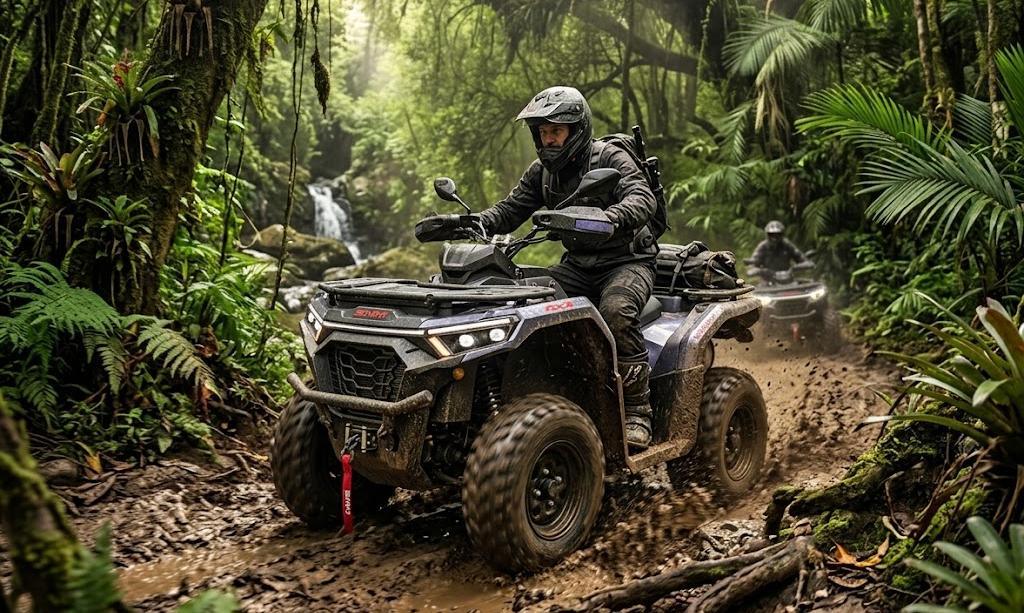
Trail riding can involve tight turns, narrow paths, steep sections, and technical terrain. An ATV with predictable steering and good maneuverability can make these situations easier to handle.
Consider the vehicle's overall size, weight, steering response, and turning characteristics. A maneuverable trail riding ATV can be especially useful when navigating narrow forest trails or technical sections.
For recreational riding, handling can be just as important as engine power.
2. Suspension and Ride Comfort
Off-road trails can expose riders to rocks, roots, ruts, and repeated bumps. A capable suspension system helps the ATV respond to uneven terrain while improving stability and rider comfort.
If you regularly spend several hours on the trail, suspension performance should be one of the factors you evaluate.
Instead of focusing only on suspension travel or individual specifications, consider how the overall suspension setup matches the terrain you ride most often.
3. ATV Ground Clearance
ATV ground clearance determines how much space exists between the lowest parts of the vehicle and the ground.
More clearance can reduce the likelihood of the underside contacting obstacles. However, ground clearance should be considered together with suspension, stability, tire selection, and overall vehicle design.
4. Power and Throttle Response
Engine power can be useful for climbing hills, carrying momentum, and handling challenging terrain. However, maximum horsepower is not the only consideration for trail riding.
Smooth and predictable throttle response can be particularly valuable on technical trails where precise control is more important than acceleration.
Choose an ATV based on the terrain and riding style you actually expect to encounter.
What Makes an ATV Good for Hunting?
1. Cargo and Payload Capacity
One of the most important differences between trail riding and hunting is the amount of equipment you may need to carry.
An ATV for hunting may transport food, water, clothing, tools, camping equipment, and other outdoor gear. Front and rear cargo racks can make this much easier.
Pay attention to both ATV cargo capacity and payload capacity.
Payload capacity refers to the total weight the ATV is designed to carry, including the rider and cargo. Always follow the manufacturer's specified payload limit.
2. 4WD and Traction
Hunting routes may extend beyond maintained recreational trails. Wet soil, mud, loose ground, steep slopes, and uneven forest terrain can all create traction challenges.
ATV 4WD can provide additional traction when conditions become difficult. This can be particularly useful when the vehicle is carrying additional equipment.
However, 4WD is only one part of off-road performance. Tires, ground clearance, suspension, weight distribution, and riding technique also affect traction and control.
3. Ground Clearance for Rough Terrain
Ground clearance can be particularly important when an ATV is used for hunting.
Instead of staying on established trails, riders may need to cross natural terrain containing fallen branches, rocks, ruts, and uneven ground.
Sufficient clearance can help the ATV pass over these obstacles while reducing the chance of the underside contacting the terrain.
For hunting applications, evaluate ground clearance together with 4WD, suspension, and overall terrain capability.
4. Low-Speed Control
Hunting generally involves more controlled, low-speed riding than recreational trail riding.
Smooth acceleration and predictable throttle response can make it easier to navigate wooded areas, slopes, narrow paths, and obstacles.
For this reason, an ATV for hunting should not be selected based solely on top speed or maximum engine output.
5. Towing and Hauling Capability
An ATV may also be used to move equipment or tow a compatible trailer, depending on the task.
If towing is part of your regular hunting routine, check the vehicle's ATV towing capacity before choosing a model. Always stay within the manufacturer's rated limits and consider the terrain where towing will take place.
Can One ATV Be Used for Both Trail Riding and Hunting?
Yes. A versatile ATV can be used for both trail riding and hunting when its specifications meet the requirements of both activities.
The key is to identify your primary use.
If trail riding is your main activity, prioritize:
Maneuverability
Suspension performance
Handling
Ground clearance
Rider comfort
If hunting is your primary use, place greater emphasis on:
Payload capacity
Cargo space
4WD and traction
Ground clearance
Towing capability
Low-speed control
For riders who switch between recreational riding and hunting throughout the year, a balanced ATV can provide a practical combination of recreational performance and utility.
ATV Accessories for Trail Riding vs Hunting
The accessories you need can also depend on how you use your ATV.
For trail riding, useful accessories may include:
Protective equipment
Storage bags
Skid protection
Winches
Additional trail storage
For hunting and utility use, practical options may include:
Cargo boxes
Rack extenders
Waterproof storage
Tie-down systems
Utility equipment
Towing accessories
The goal is not to add as many accessories as possible. Choose equipment that supports the terrain, riding conditions, and tasks you regularly encounter.
ATV Trail Riding vs Hunting: A Simple Checklist
Before making a decision, ask yourself:
Where will I ride most often?
What type of terrain will I encounter?
How much equipment do I need to carry?
Do I regularly ride through mud or steep terrain?
Do I need 4WD?
What level of ground clearance do my riding conditions require?
Will I use the ATV for towing or hauling?
Is handling or utility more important to me?
Do I need one ATV for multiple outdoor activities?
Answering these questions can help narrow your options before comparing specific ATV specifications.
Final Thoughts
When comparing ATV trail riding vs hunting, there is no single specification that determines which ATV is right for you.
Trail riding generally places greater emphasis on handling, suspension, maneuverability, and rider comfort. Hunting typically requires greater attention to cargo capacity, payload, 4WD, ground clearance, and towing capability.
If you want an ATV that can handle both activities, look for a balanced combination of off-road capability, utility, and controllability.
Ultimately, the right ATV should match how, where, and why you ride.
-
Sep 20 2026
learn more
 How to Read ATV Tire Size: 27×9-14 Explained
How to Read ATV Tire Size: 27×9-14 Explained
How to Read ATV Tire Size: 27×9-14 Explained
-
Sep 17 2026
learn more
 ATV Trail Riding vs Hunting: How to Choose the Right ATV
ATV Trail Riding vs Hunting: How to Choose the Right ATV
ATV Trail Riding vs Hunting: How to Choose the Right ATV
-
Sep 16 2026
learn more
 What Size UTV Do I Need? 5 Steps to Choose the Right One for You
What Size UTV Do I Need? 5 Steps to Choose the Right One for You
What Size UTV Do I Need? 5 Steps to Choose the Right One for You
-
Sep 15 2026
learn more
 How to Test a Stator on ATV: 4 Tests to Diagnose It
How to Test a Stator on ATV: 4 Tests to Diagnose It
How to Test a Stator on ATV: 4 Tests to Diagnose It