ATV Winter Riding Tips: How to Ride on Snow and Ice
Oct 13 2026
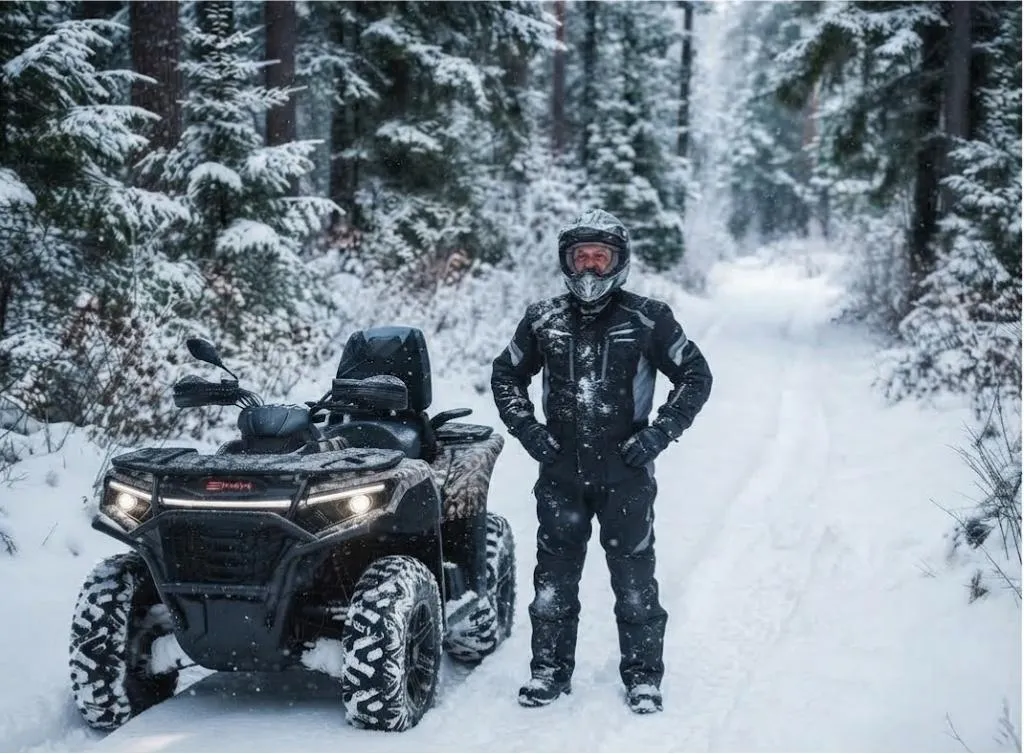
Winter does not mean the end of the ATV riding season. Snow-covered off-road routes, icy roads and winter forest trails all offer a completely different riding experience from other seasons. However, snow and ice can also change the grip of the road, visibility and the visibility of obstacles, so winter riding requires adjusting driving methods according to the environment.
If you plan to ride an ATV in winter, what you really need to master is not only vehicle preparation, but also how to choose routes, control speed, handle snow and ice surfaces, and how to free your vehicle from the snow when it gets stuck.
Check the Trail Conditions Before Riding
Winter cycling should start with the route assessment.
The same off-road route can be completely different in dry weather and after snowfall. Newly fallen snow may cover rocks, tree roots, grooves and potholes, while compacted snow and ice surfaces may significantly reduce grip.
Before setting off, you can check the local weather, snowfall conditions and the opening status of the off-road route. If the route has recently experienced heavy snow, freezing rain or rapid melting, you should reevaluate whether it is suitable for cycling.
Adjust Your Speed for Snow and Ice
One of the most important skills for winter ATV riding is to reduce speed according to the road conditions.
The speed that is familiar on dry roads may not be suitable for snowy conditions. Especially when entering a curve, going downhill or encountering compacted snow, you should slow down in advance instead of braking suddenly after entering a dangerous area.
At the same time, try to keep the throttle, brake and steering actions smooth. Suddenly accelerating may cause the wheels to skid, and suddenly steering may cause the ATV to lose stability on a low-grip road. The Wisconsin DNR also suggests that winter ATV/UTV riders be extra cautious when slowing down and approaching turns.
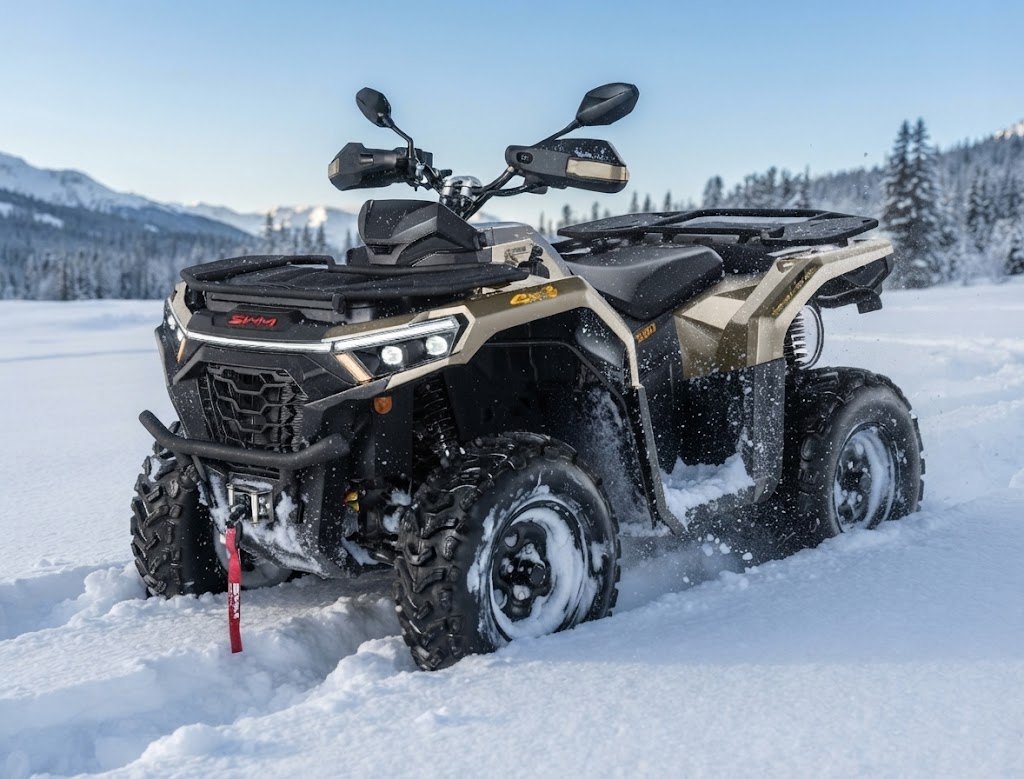
Choose a Stable Line Through Deep Snow
The deep snow sections require choosing the driving route in advance.
Don't just focus on the area a few meters ahead of the ATV. Instead, try to observe the terrain further away and predict the depth of the snow and any route changes. If possible, prioritize choosing the route that has formed tire tracks, has been compacted, and the bottom condition can be confirmed.
After entering deeper snow, avoid frequently changing directions. Maintaining a stable and controllable driving state is more important than constantly accelerating to find a higher speed.
If the vehicle starts to sink significantly or the wheels continue to spin, do not increase the throttle. Continuous spinning may cause the ATV to sink deeper into the snow. At this point, you should first stop to determine the vehicle's position, and then decide whether to reverse, change the route, or use rescue equipment such as a winch.
Use Extra Care on Icy Surfaces
The ice surface is a type of road condition that requires special caution during winter cycling.
Compared to ordinary snow, hard and icy surfaces usually have more difficulty in providing reliable grip. Once entering such areas, one should reduce speed and minimize sudden turns, accelerations, and braking operations.
If the ice ahead is unable to determine the thickness and load-bearing capacity, do not rely solely on the appearance of the ice layer to determine whether it can be crossed. For natural ice surfaces such as lakes and rivers, one should confirm the ice conditions and the allowed passage areas based on the information provided by local authorities.
For riders without training, it is not recommended to directly use the icy road as a practice area. One can first familiarize themselves with the turning and braking reactions of the ATV on the skidding road in a safe, open, and low-speed controllable area.
Approach Snowy Hills With Care
The slopes in the winter cross-country routes require more judgment.
Uphill Riding
Before climbing uphill, one should choose the route in advance and maintain a stable power output. Avoid suddenly changing direction or suddenly increasing the throttle while on the slope.
If the slope is covered with ice and snow and the grip is insufficient, do not force the vehicle to continue climbing. Re-selecting the route or returning is usually more controllable than allowing the vehicle to keep skidding.
Downhill Riding
When going downhill, it is more important to control the speed in advance.
Don't suddenly brake when the vehicle has already started to accelerate and slide. Before entering the slope, you should reduce the speed and use the engine braking or braking system reasonably according to the vehicle design and the user manual.
For steep slopes covered with ice and snow or where the road conditions cannot be confirmed, carefully assess whether it is worth continuing to pass.
Watch for Obstacles Hidden Under Snow
One particular issue with winter ATV riding is that the surface you see may not be the actual surface.
Accumulated snow may conceal:
Rocks and tree roots
Deep ruts
Fallen branches
Potholes
Ditches
Uneven terrain
Therefore, do not drive at high speeds on unfamiliar routes simply because the snow surface appears smooth.
Especially in forests, mountainous areas, and on old off-road trails, maintain a sufficient visual range and adjust your speed promptly based on the terrain ahead. If you encounter snow-covered depressions or areas where the depth is uncertain, it is best to choose a route where the ground conditions are clearly visible.
Carry the Right Recovery Gear
When winter cycling, not only should one consider whether one can "ride in", but also whether one can "get out" if something goes wrong.
If you plan to ride on a remote snowy route, you can prepare a winch, towing equipment, basic tools, lighting equipment and communication devices based on your vehicle and the route. It is also recommended that you carry extra clothing, emergency supplies and rescue equipment when winter cycling, and try to ride in groups.
If an ATV gets stuck in the snow, first stop the continuous idling, then observe whether the vehicle has already bottomed out and whether the surrounding terrain is suitable for reversing. Confirm safety before choosing to reverse, re-adjust the route or use rescue equipment.
Dress for Active Winter Riding
Winter gear should not only focus on "keeping warm", but also take into account the requirement for flexibility during the riding process.
It is recommended to adopt a layered dressing method to keep the body warm in low-temperature conditions while avoiding overly thick clothing that may restrict arm and leg movements.
Gloves, boots, and goggles are particularly important. Cold and wet hands may affect the operation of the throttle, brakes, and steering; goggles can reduce the impact of snow, wind, and intense reflection from the snow surface. Professional ATV safety advice also includes helmets, eye protection, gloves, and suitable boots.
Ride With a Winter Plan
Winter cycling is best planned in advance rather than decided on the spot.
Before setting off, inform your companions or others of your expected route and return time. If you are going to an area that is remote, try to ride in groups and prepare sufficient communication and emergency equipment.
In addition, you need to pay attention to whether the local off-road routes allow winter ATVs to pass through. Some snow-covered routes may share the same area with other winter outdoor activities, so when cycling, you need to be aware of other vehicles and users.
Know When to Turn Back
Winter cross-country cycling does not necessarily mean completing the original route.
If the snow suddenly deepens, visibility decreases, the ice condition cannot be confirmed, or the route has exceeded the handling capacity of the vehicle and the rider, continuing to move forward is not the only option.
Reducing speed in time, finding a safe location and returning to the confirmed route is sometimes a more reasonable choice than attempting to pass through unknown terrain. The most important thing about winter cycling is not how far you go, but maintaining control of the vehicle and the route in the constantly changing conditions.
Conclusion
The essence of winter ATV riding lies not merely in equipping the vehicle for cold weather, but in learning to adjust your riding style to changing snow, ice, and terrain conditions.
Familiarizing yourself with the route in advance, controlling your speed, maintaining smooth throttle and steering inputs, navigating slopes and icy patches with caution, and carrying essential rescue gear will all help make winter ATV riding more manageable and safe.
For ATV enthusiasts who enjoy off-roading year-round, winter is not a season that needs to be avoided. With a solid understanding of trail conditions and the ability to adapt your riding technique to the environment, off-roading in the snow can become an integral part of the year-round ATV experience.
-
Oct 13 2026
learn more
 How to Operate an ATV: Beginner's Guide & Safety Tips
How to Operate an ATV: Beginner's Guide & Safety Tips
How to Operate an ATV: Beginner's Guide & Safety Tips
-
Oct 13 2026
learn more
 ATV Winter Riding Tips: How to Ride on Snow and Ice
ATV Winter Riding Tips: How to Ride on Snow and Ice
ATV Winter Riding Tips: How to Ride on Snow and Ice
-
Oct 08 2026
learn more
 ATV Engine Knocking Noise: Causes and What to Check
ATV Engine Knocking Noise: Causes and What to Check
ATV Engine Knocking Noise: Causes and What to Check
-
Oct 08 2026
learn more
 Is Electronic Suspension Worth It for ATVs & UTVs?
Is Electronic Suspension Worth It for ATVs & UTVs?
Is Electronic Suspension Worth It for ATVs & UTVs?