How Cold Weather Affects ATV Performance
Sep 21 2026
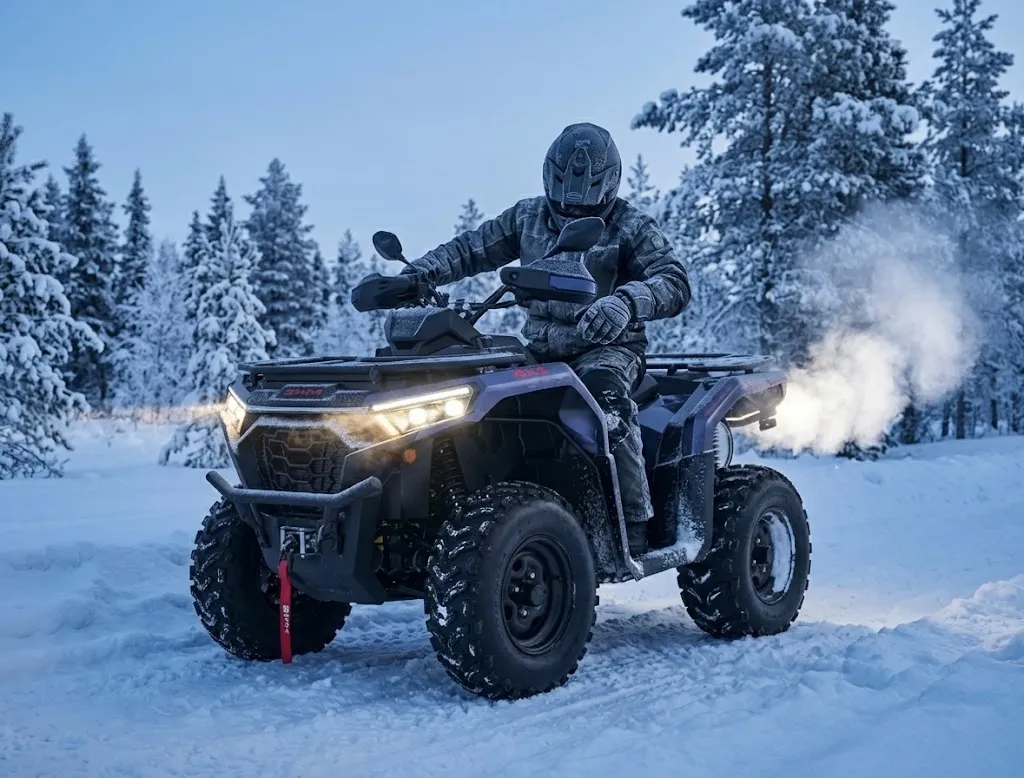
Ever start your quad on a cold winter day? You crank and it turns slow. The engine lingers before it feels ready. Then, when you finally ride, it feels off. Like it is not taking your inputs the way it should. You are not making this up. Low temperatures can mess with nearly every part of an ATV. That includes the battery and the tires.
In many places, people run four-wheelers all year. They clear snow, go ice fishing, hunt, do work on farms, and ride winter paths. If you want to know what the cold does to performance, it is not just about comfort. It also ties to trust in the machine, your safety, and avoiding expensive damage.
How Cold Weather Affects ATV Engine Starting and Operation
The engine is usually the first place you notice cold weather ATV problems.
The engine is the first place where problems occur.
Oil thickens: At low temperatures, the oil has poor fluidity, increasing the starting resistance.
Poor fuel atomization: Gasoline is difficult to evaporate in cold air, resulting in difficulty starting and unstable idle speed. This is particularly noticeable in carburetor models, while electronic fuel injection (EFI) performs better.
Cold start wear: Before the oil reaches the various components, there is dry friction between metals, leading to increased wear.
Longer preheating: The time to reach the working temperature is significantly prolonged, and the power is relatively weak during this period.
If you are wondering why your ATV struggles to start in cold weather, the fuel delivery system is often the primary culprit. SWM Powersports recommends checking the fuel injection system and spark plugs before winter riding, and visiting a professional shop for a cold-start inspection if necessary.
Cold Weather Fuel System Issues
Cold weather affects how fuel behaves before it ever reaches the combustion chamber.
Volatile substances decrease: Gasoline remains in a liquid state for a longer time, resulting in incomplete combustion and reduced power.
Carburetor icing: When air passes through the throat, it cools down and moisture freezes on the throttle or the metering hole, causing engine stalling - even if the outside temperature is above the freezing point. Carburetor icing in cold weather is one of the most overlooked causes of winter engine stalling in ATVs.
Water condensation: Temperature fluctuations cause condensation water to form in the fuel tank and fuel lines, which freezes and blocks the fuel lines.
Fuel consumption increases: Cold start enrichment and preheating times are prolonged, and fuel consumption is significantly higher in winter than in summer.
ATV Battery Performance in Cold Weather
The battery is often the first component to fail when temperatures drop.
Capacity reduction: Lead-acid batteries lose 30% - 50% of their starting capacity at freezing temperatures, and more than 50% at -18°C.
Demand increase: Cold engine oil and stiff components actually require more power.
Charging slows down: Short rides in winter are not enough to fully charge the battery.
Power consumption of accessories: Winches, lights, heated grips add to the burden.
The ATV battery runs out of power in winter, usually due to the combined effect of capacity reduction and increased load.
Lubrication System Challenges in Winter
Every lubricated component on your machine is affected by low temperatures.
Thicker oil everywhere. Engine oil, transmission fluid, differential oil, and grease all become more viscous. This increases internal friction and reduces efficiency.
Delayed lubrication. Until oil warms up and flows properly, components run with inadequate protection. This is especially hard on camshafts, bearings, and cylinder walls.
Recommendation. Use lower-viscosity oils in winter, such as 0W-40 or 5W-30 for the engine, and check your manual for cold-weather recommendations for gear oils and greases. Choosing the best oil for ATV winter riding is one of the simplest ways to protect your engine.
Cold Weather CVT Belt and Transmission Issues
Cold weather changes how power gets from the engine to the wheels.
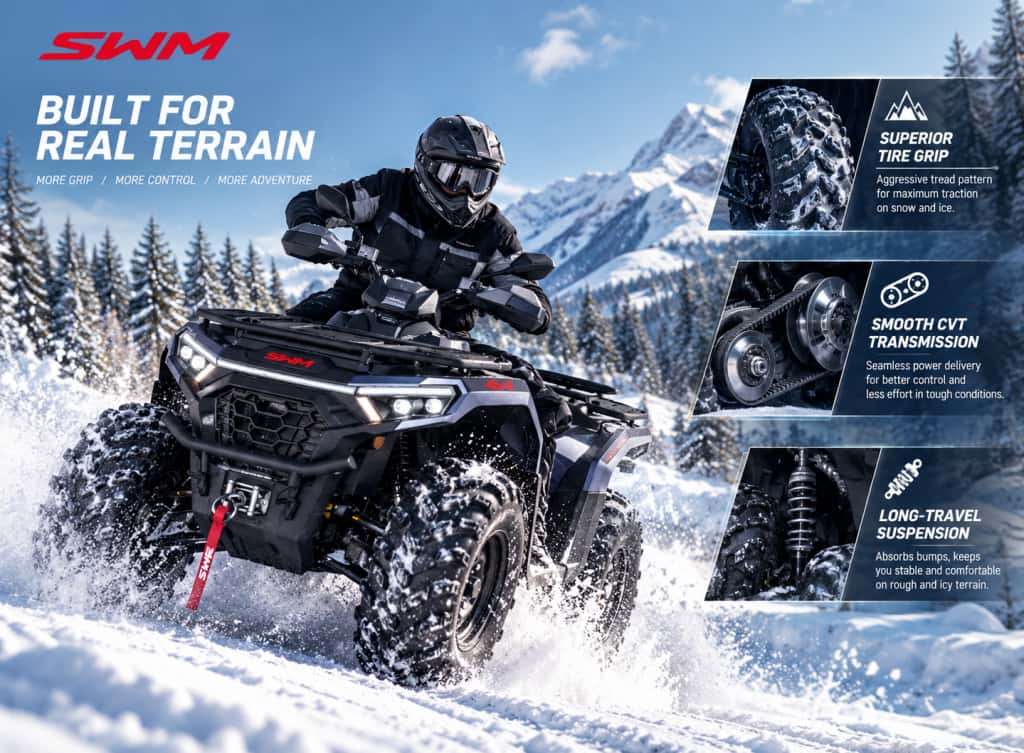
CVT belt behavior. Low temperature causes the rubber belt to harden, which may lead to slipping, uneven engagement, and even cracking. The CVT belt of ATV is prone to slipping in cold weather, which is a common problem in winter.
Clutch performance. Wet clutches engage more abruptly with cold, thick oil. This makes smooth starts difficult and can cause stalling.
Gear shifting. Manual transmissions feel notchier and require more effort to shift until the oil warms. If your ATV transmission is hard to shift cold, this is normal—but warming up properly helps.
Four-wheel drive engagement. Electronic or mechanical 4WD systems may respond more slowly in cold conditions, particularly if actuators or cables are stiff or frosted.
ATV Tire Grip and Pressure in Winter
Your only contact with the ground changes significantly in cold weather.
Rubber hardens. At low temperatures, the tire compound hardens and the grip decreases completely.
Tire pressure drops. For every 10°C drop in temperature, the tire pressure drops by approximately 1 PSI. Insufficient tire pressure increases resistance and damages the sidewall. Checking tire pressure in winter should become a routine task.
Snow and ice. Standard tires are insufficient. Aggressive tread patterns, anti-skid studs, or anti-skid chains are needed. Choosing tires suitable for snow and icy surfaces is crucial for safety.
Suspension stiffness. Shock absorbers and springs also stiffen in the cold, reducing suspension travel and comfort. This affects both ride quality and handling.
Cooling System Behavior in Cold Weather
Overheating isn't just a summer problem—cold weather creates its own cooling issues.
Freezing risk. Insufficient antifreeze ratio can cause freezing in the radiator, hose, or cylinder block, resulting in severe damage. Before winter sets in, be sure to check the antifreeze ratio.
Overcooling. In extremely cold conditions, the engine may not reach the operating temperature, leading to low combustion efficiency, high fuel consumption, and carbon buildup. Overcooling and overheating both pose problems.
Thermostat behavior. It is normal for the thermostat to remain closed for a longer period at low temperatures. However, a malfunction can cause either overcooling or overheating.
Winter ATV Riding Safety and Rider Experience
Cold weather doesn't just affect the machine—it affects the rider.
Reaction slows down: Cold hands and feet reduce reaction speed and control accuracy.
Visibility decreases: Fogging up of goggles, frosting of masks, and low-angle winter sunlight affecting vision.
Braking distance increases: Cold tires, hard brake pads, and slippery road surfaces working together.
Fault risk is higher: Coldness exerts pressure on every system, increasing the failure rate and making rescue more difficult. Adhering to winter riding techniques can significantly reduce risks.
How to Minimize Cold Weather Effects on Your ATV
You can't change the weather, but you can prepare your machine for it.
Warm up properly. Before cycling, idle the engine for 3 to 5 minutes to allow the oil to circulate and the belts to heat up.
Use the right oil. For winter, switch to a lower viscosity oil. Refer to the owner's manual.
Add fuel additives. Stabilizers or isopropyl alcohol can prevent fuel separation and carburetor icing.
Maintain your battery. Keep them fully charged and store them indoors or use a maintenance device. Learning to keep the batteries charged can prevent most winter start-up problems.
Adjust tire pressure. Check pressure frequently in cold weather and adjust for conditions. Consider winter tires, studs, or chains for serious snow and ice.
Check antifreeze. Make sure the coolant mixture is rated for the lowest temperatures you'll encounter. A 50/50 mix of antifreeze and water is usually sufficient, but extreme climates may require a stronger ratio.
Store properly. For long-term winter storage, add fuel stabilizer, fill the tank to prevent condensation, and disconnect or trickle-charge the battery.
Ride smoothly. Avoid aggressive throttle and braking. Let the machine warm up gradually and treat controls gently until everything reaches operating temperature.
For a complete overview, follow a dedicated ATV winter maintenance checklist before the first cold ride of the season.
Conclusion
Cold weather affects every major system on an ATV. The engine struggles to start and warm up. Fuel doesn't burn as efficiently. The battery loses capacity just when it's needed most. Oil thickens, belts stiffen, tires lose grip, and the rider's reflexes slow down. The result is a quad that feels weaker, less responsive, and more prone to breakdowns.
But none of this means you have to park your four-wheeler for the winter. With the right preparation—proper oil, a healthy battery, correct tire pressure, adequate antifreeze, and a few smart riding habits—you can keep your machine running reliably in cold conditions.
The key is understanding how cold weather affects ATV performance and why. Once you know how cold affects each system, you can take targeted steps to protect your ATV and enjoy winter riding with confidence.
-
Sep 21 2026
learn more
 How Cold Weather Affects ATV Performance
How Cold Weather Affects ATV Performance
How Cold Weather Affects ATV Performance
-
Sep 20 2026
learn more
 How to Read ATV Tire Size: 27×9-14 Explained
How to Read ATV Tire Size: 27×9-14 Explained
How to Read ATV Tire Size: 27×9-14 Explained
-
Sep 17 2026
learn more
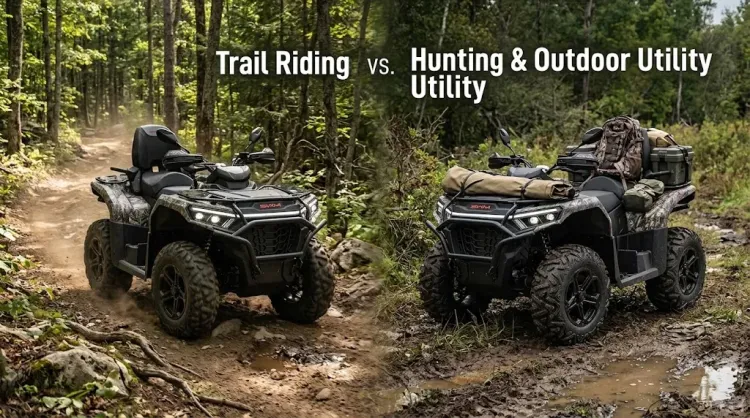 ATV Trail Riding vs Hunting: How to Choose the Right ATV
ATV Trail Riding vs Hunting: How to Choose the Right ATV
ATV Trail Riding vs Hunting: How to Choose the Right ATV
-
Sep 16 2026
learn more
 What Size UTV Do I Need? 5 Steps to Choose the Right One for You
What Size UTV Do I Need? 5 Steps to Choose the Right One for You
What Size UTV Do I Need? 5 Steps to Choose the Right One for You