How Much Does an ATV Weigh? 7 Facts Buyers Should Know
Aug 04 2026
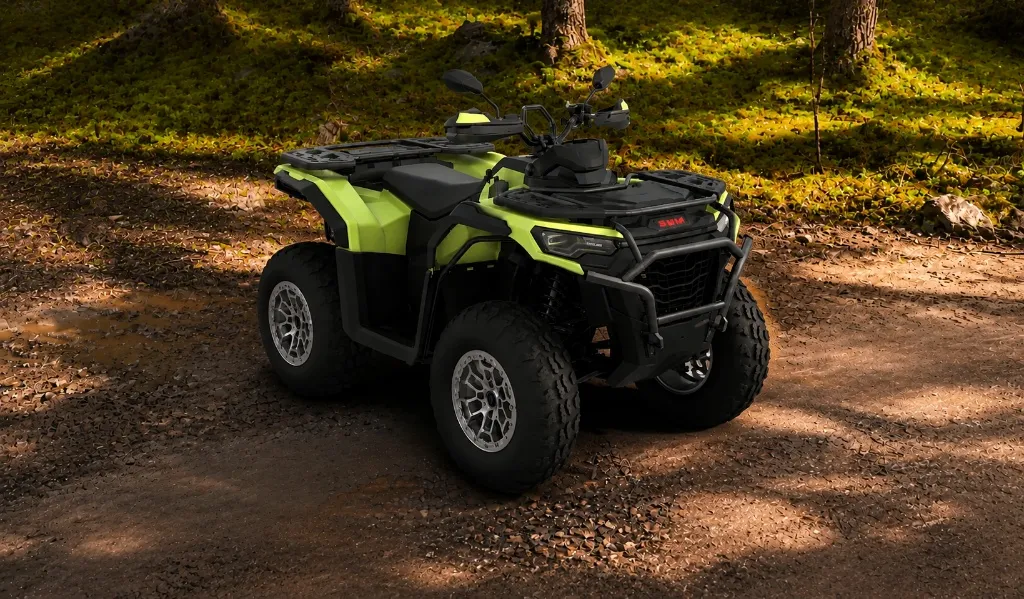
Shopping for your first ATV? Or maybe upgrading to something bigger. The question hits you right away: how much does an ATV weigh? Sounds simple, right? But it actually matters. A lot.
Think about it. Hauling it. Loading it. Riding it. Even just picking the right trailer. All of that hinges on that one number.
So here's the quick answer. A full-sized adult ATV usually lands somewhere between 500 and 900 pounds. But that's a broad range. It depends. On the engine size. On the drivetrain. On the suspension setup. And on whatever extras you bolt onto it after the fact.
This guide walks you through all of it. Average ATV weights, how engine size changes things, the whole dry weight versus wet weight confusion, and what those numbers actually mean when you're loading up for a trip. Get these numbers right and you won't end up overloading your truck or trailer.
Fact 1: How Much Does an ATV Weigh? Average ATV Weight Explained
Let's start with the big picture. Most adult ATVs weigh between 400 and 900 pounds. Youth models? Those usually stay under 300 pounds. For a full sized utility ATV, before you start adding bumpers and winches, you're generally looking at 600 to 700 pounds.
So where does the weight actually come from? It's not just one thing. The frame design. The engine displacement. And those heavy drivetrain bits – differentials, axles, 4x4 systems. They all pile on.
Now, before you walk into a dealer, or maybe you're just browsing trailers online, you'll want a quick reference. Here's a general breakdown. Grouped by ATV type, based on different types of ATVs.
Youth / Beginner ATVs (200 – 350 lbs / 90 – 160 kg): These are built light, specifically for younger riders. Smaller frame, smaller engine. Speed limiters too. Keeps things safe and manageable. Kids can turn them without a struggle. They learn the ropes without fighting the machine.
Mid-Size ATVs (350 – 550 lbs / 160 – 250 kg): Compact adult machines. They give you a nice balance – agility on one side, utility on the other. Squeeze through tight trails no problem. Yet they still handle light farm chores or property maintenance. And they do it without breaking a sweat.
Full-Size / Heavy-Duty ATVs (500 – 950+ lbs / 226 – 430+ kg): This is the serious workhorse category. We're talking steel racks, high torque engines, rugged construction. Built for heavy towing. Pushing snow. Plowing through deep mud. That's what they're made for.
ATV Weight Chart by Size
ATV Type | Engine Size | Average Weight (lbs) | Average Weight (kg) |
Youth ATV | 50cc – 125cc | 200 – 350 lbs | 90 – 160 kg |
Small Utility ATV | 150cc – 230cc | 300 – 450 lbs | 136 – 204 kg |
Mid-Size ATV | 250cc – 450cc | 350 – 550 lbs | 160 – 250 kg |
Full-Size ATV | 500cc – 700cc | 500 – 750 lbs | 226 – 340 kg |
Heavy-Duty ATV | 850cc – 1000cc+ | 700 – 950+ lbs | 317 – 430+ kg |
Look at those numbers, and it becomes evident: weight increases with engine size. But lighter doesn't always equal better and heavier doesn't always equal worse; finding your sweet spot depends on finding out exactly what it is you need - weight gives more traction when hauling heavy loads. Less weight keeps things nimble when you're weaving through trees.
Fact 2: ATV Weight by Engine Size: From 50cc to 1000cc Models
Engine size is often the key factor when it comes to ATV weight, making sense given how a larger engine requires a stronger transmission, heavier suspension parts and stronger frame to handle its extra power and torque. Upgrade to a larger displacement and everything gets bigger. The drive shafts, axles, suspension components. It all has to be tougher.
Knowing the average weight for each engine class helps you narrow things down. You want something that matches your skill level and your trailer's towing capacity.
50cc – 125cc Youth ATV Weight (200 – 350 lbs / 90 – 160 kg):
These lightweight machines are featherweights. Boasting single cylinder engines with minimal frame tubing and straightforward construction techniques, these compact machines are lightweight yet easy to handle for novice riders. Because their weight is so minimal, you can lift one directly into a pickup truck bed without needing a loading ramp; also their light construction means that should something go awry during practice sessions or should they tip over during racing, these lightweights won't crush young riders underfoot.
250cc – 450cc ATV Weight (Including Popular 400cc Models) (350 – 550 lbs / 160 – 250 kg):
This bracket encompasses the most beloved recreational quads available, such as those in the 400cc class. They offer an ideal blend of agility and usable power - lightweight enough for one person to push them out if they become stuck, yet heavy enough to tow small trailers containing firewood or gardening supplies - it's no wonder why these bikes remain such popular choices!
500cc – 700cc ATV Weight (500 – 750 lbs / 226 – 340 kg):
This is where you find the backbone of the utility ATV market. Most of these come with independent rear suspension and selectable 4x4. The extra metal in the drive shafts and differentials adds weight, sure. But that weight keeps the machine planted and stable when you're crossing uneven farm fields or tackling rocky trails.
850cc – 1000cc+ ATV Weight (700 – 950+ lbs / 317 – 430+ kg):
We're talking big bore V twin engines and heavy duty CVT transmissions here. These are the flagships, built for maximum work capability. Their sheer mass pushes the tires down hard for incredible grip. That's what you need when you're dragging heavy farm implements or blasting through deep mud holes where lighter machines would just spin and sink.
Fact 3: Dry Weight vs Wet Weight: What ATV Weight Really Means
Here's something a lot of first time buyers get tripped up on. Dry weight is the machine straight off the assembly line. No fuel, no oil, no coolant, no accessories. Just the bare bones metal and plastic. Wet weight is the real world number. That's with all the fluids topped off and the machine ready to ride.
The difference between those two numbers is basically the weight of everything that makes the engine run. And it's not a small difference.
When you're calculating the actual ATV weight (atv weight) for hauling or loading, keep these points in mind:
Manufacturer spec sheets usually list dry weight.
Why? Because smaller numbers look better on paper. But you can't start a dry weight ATV, and you sure can't ride it. Don't get fooled by the brochure.
Fluids contribute significantly to weight.
Gasoline weighs roughly 6 pounds per gallon and filling an entire tank can add 30-40 pounds alone, and adding engine oil, coolant, and differential fluid can add an additional 10-15 pounds. On large utility machines with multiple fuel tanks and fluid reservoirs, the gap between dry weight and wet weight could easily surpass 100 pounds!
Accessories push the final number even higher.
This is where things really start to add up. A steel front bumper might tack on 25 pounds. An electric winch? Another 30 pounds. Full coverage aluminum skid plates are good for 20 pounds. Throw in storage boxes, tool racks, and all your favorite ATV features, and you can see how the curb weight climbs fast.
Fact 4: How ATV Weight Affects Performance and Handling
Weight changes everything about how an ATV behaves on the trail. Heavy machines offer more stability and grip for serious work, while lighter machines tend to be easier to steer, tire less on long rides, and manage tighter trails more confidently.
Consider it as a trade off - weight can be seen as both an opportunity and hindrance for ATV riders, from farm work to recreational trail riding. In particular, its effect can be felt across a number of common ATV uses ranging from farm chores to trail riding recreationally; even its effect on how fast an ATV can go depends on its impact on acceleration and braking forces; more mass in an engine means more mass for brakes to control.
Here's how they compare:
Heavier ATVs:
l Provide more traction when towing as their tires dig deeper into the soil.
l Better stability on uneven terrain thanks to a lower center of gravity.
l Cut through soft mud and loose soil which would otherwise stop a smaller machine.
l Tend to feel planted and secure at higher speeds.
Lighter ATVs:
l Easier steering reduces rider fatigue on tight, twisty trails.
l Simpler to recover if you high center or get stuck.
l Better fuel economy on long adventure rides.
l More playful and responsive for sporty riding styles.
Fact 5: How to Transport an ATV: Truck Bed and Trailer Weight Guide
Getting your ATV from point A to point B safely means doing some math before you load up. Your truck's payload capacity has to be greater than the total weight of the ATV, all its fluids, any accessories, cargo, and even the loading ramps. Forget about any of those extra items and you could overload your suspension or exceed your trailer's axle rating. That's how accidents happen on the highway.
Follow these steps for a safe, legal transport setup:
Calculate your total shipping weight.
Start with the manufacturer's dry weight. Then add the weight of fluids and any accessories you've bolted on. Here's a real example. An ATV with a dry weight of 650 pounds can easily hit 750+ pounds once you top off the tank, add oil, and throw on some basic gear. That's the number you need to work with.
Check your truck bed and tailgate ratings.
Look at the sticker on your truck's door jamb. That tells you the real payload limit. Make sure it meets or exceeds: ATV wet weight + accessories + cargo. And check your tailgate rating while you're at it. Some trucks have surprisingly low tailgate weight limits that can't handle the load of a heavy ATV plus loading ramps.
Match your trailer to the load.
If you're using a trailer, check the Gross Vehicle Weight Rating (GVWR). Subtract the trailer's empty weight from the GVWR to find its actual carrying capacity. Always leave a 15% to 20% safety margin. Don't push it right to the limit.
Secure to the steel frame.
Use heavy duty ratchet straps rated for vehicle transport. And here's the critical part. Hook them to solid steel frame members or A arms. Never attach straps to plastic body panels, handlebars, or plastic bumper covers. Those will break under load.
Fact 6: ATV Weight vs UTV Weight: Which One Is Heavier?
Let's settle this one quickly. UTVs are way heavier than ATVs. We're talking 2 to 3 times as much. A side-by-side UTV weight (side-by-side UTV weight) starts around 1,200 pounds and can push past 2,000 pounds. That's because they have larger steel frames, full roll cages, multiple seats, and cargo beds.
Both are off road vehicles. Both handle rough terrain. But they're built for completely different jobs.
ATVs (400 – 900 lbs / 180 – 410 kg):
These are straddle style machines with single or tandem seating. Handlebar steering and a narrow track width. You can slip through 50 inch forest trails without breaking a sweat. Compact and easy to store.
UTVs / Side-by-Sides (1,200 – 2,000+ lbs / 544 – 907+ kg):
These are more like mini trucks. Automotive style seating, full steel roll cages, steering wheels, and big dump beds. Because they're so heavy, most UTVs need tandem axle trailers. They won't fit in a standard pickup bed, and even if they do, the payload capacity usually isn't enough.
If you're just doing solo property checks or quick trail rides, an ATV gives you plenty of capability with much less hassle for storage and towing.
Fact 7: How SWM Balances ATV Weight and Performance
SWM approaches ATV design with a specific philosophy. They balance weight, frame strength, suspension capability, and overall performance. The goal isn't just to make a machine lighter or heavier. It's to make it work right for the conditions riders actually face.
A well designed ATV needs enough structural integrity to handle towing and rough terrain. But it also needs to stay responsive and agile when you're maneuvering through tight spots.
High strength alloy steel frame design:
SWM uses high strength alloy steel frames across their ATV lineup. This construction is specifically engineered for demanding off road use. The approach helps deliver exceptional durability and reliability without adding unnecessary structural dead weight.
Suspension performance and weight management:
Suspension travel plays a big role in how an ATV manages its own weight. SWM focuses on suspension systems that enhance travel and off road comfort. That helps riders maintain precise control over uneven surfaces.
Take the SWM TRAILHUNTER 850 for example. The estimated dry weight comes in at 924 pounds (420 kg). The TRAILHUNTER 850 MUD version? That one tips the scales at a claimed 948 pounds (430 kg) dry. These specs show exactly how heavy mechanical components, larger tires, suspension systems, and utility focused configurations all contribute to the final ATV weight.
Conclusion
Understanding how much an ATV weighs goes far beyond satisfying curiosity. It is an integral component of selecting an appropriate machine for your needs, safe transport arrangements and staying under control while on the trail. Weight can range anywhere from 200 pounds for youth models up to over 950 pounds for commercial grade workhorses. Engine displacement and fluid fill levels play the biggest roles in where your machine lands on that scale.
When you're planning your trailer setup or loading into a truck bed, always use the real world wet weight plus accessories. Don't rely on the dry weight spec from the brochure. That number is just for show.
Look for a machine that strikes a solid engineering balance between weight, frame strength, and engine power. That's what gives you the performance you need, whether you're working the farm or riding for fun. Get it right, and your ATV will handle exactly the way you expect it to. Every time.
-
Sep 20 2026
learn more
 How to Read ATV Tire Size: 27×9-14 Explained
How to Read ATV Tire Size: 27×9-14 Explained
How to Read ATV Tire Size: 27×9-14 Explained
-
Sep 17 2026
learn more
 ATV Trail Riding vs Hunting: How to Choose the Right ATV
ATV Trail Riding vs Hunting: How to Choose the Right ATV
ATV Trail Riding vs Hunting: How to Choose the Right ATV
-
Sep 16 2026
learn more
 What Size UTV Do I Need? 5 Steps to Choose the Right One for You
What Size UTV Do I Need? 5 Steps to Choose the Right One for You
What Size UTV Do I Need? 5 Steps to Choose the Right One for You
-
Sep 15 2026
learn more
 How to Test a Stator on ATV: 4 Tests to Diagnose It
How to Test a Stator on ATV: 4 Tests to Diagnose It
How to Test a Stator on ATV: 4 Tests to Diagnose It