UTV Group Riding Safety Guide: Mastering Spacing, Signals, and Speed Control
Aug 26 2026
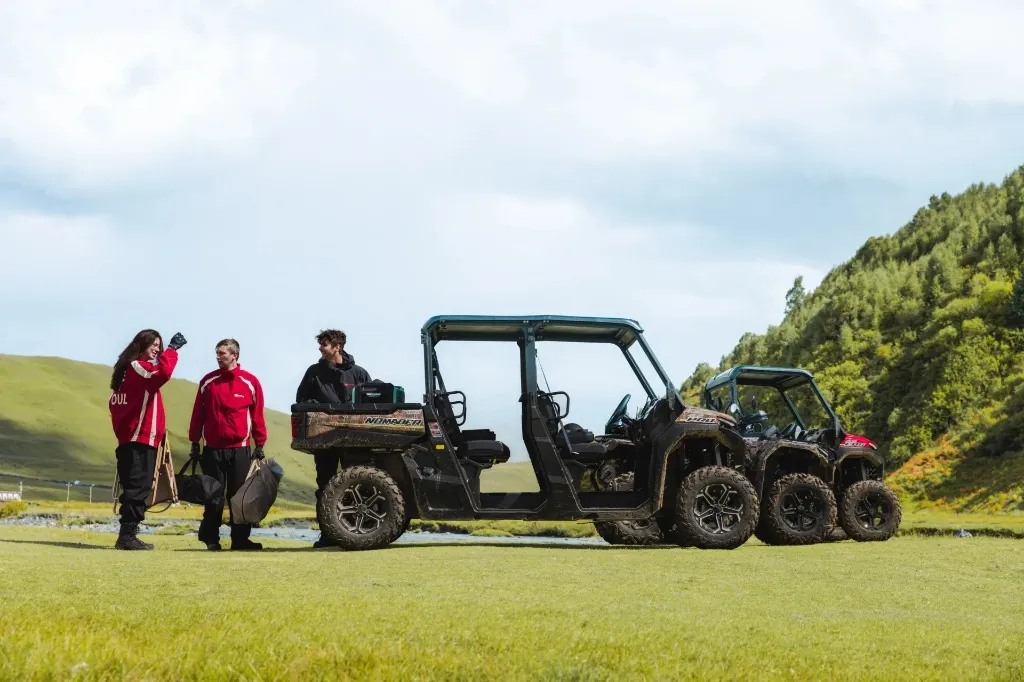
In UTV off-roading, solo riding offers freedom and flexibility, but what truly tests a rider's skill and teamwork is often riding in a group. Many people encounter the same problems when forming a team for the first time: the rider in front suddenly slows down, almost causing a rear-end collision; the rider behind falls behind and cannot be contacted; different riders use different hand signals; and inconsistent speeds cause the team to fall apart.
Proper vehicle spacing, communication signals, and speed control during group rides directly determine whether the outing is safe and enjoyable—or full of close calls and accidents. This article breaks down these three core elements and provides a practical, ready-to-use system for safer group riding.
Basic Principles of Group Riding
Before diving into specific techniques, establish these foundational rules:
Clear Role Assignment
Leader: Responsible for route selection, pace control, and scanning the trail ahead
Middle riders: Maintain formation and relay signals
Sweep (rear rider): Ensures no one is left behind and handles issues at the back of the group
Unify the Rules Before Departure
Even with experienced teammates, spend 3–5 minutes before every ride confirming spacing standards, hand signals, and communication methods. This prevents most misunderstandings.
Safety Always Comes Before Speed and Excitement
The group’s overall pace should match the slowest or least experienced rider. Dropping riders or forcing others to catch up creates unnecessary risk.
Vehicle Spacing: The First Line of Defense
Spacing is the most commonly overlooked—and most accident-prone—aspect of group riding.
Recommended Spacing Standards
Trail Condition | Recommended Spacing (in vehicle lengths) | Notes |
Smooth, open trails | 4–6 vehicle lengths | Standard following distance |
Mud, sand, or loose gravel | 6–8 vehicle lengths | Longer braking distances and reduced visibility from dust |
Uphill sections | Slightly closer | Prevents slower vehicles from falling behind |
Downhills and corners | Significantly wider | Higher demands on braking and control |
Heavy dust or poor visibility | 8+ vehicle lengths | Priority is keeping the vehicle ahead in clear view |
A practical rule of thumb: you should be able to fully see the rear wheels of the vehicle in front. If you can only see the roof or the view is completely blocked by dust, you are too close.
Key Factors That Affect Spacing
Speed: Higher speeds require greater following distances.
Trail conditions and visibility: Soft surfaces and dust significantly increase risk.
Vehicle differences: Suspension travel, tire grip, and braking performance vary—spacing cannot be one-size-fits-all.
Rider experience: Newer riders generally need more reaction time and should maintain greater distance.
Common Mistakes and How to Fix Them
l Following too closely (“tailgating”): The most frequent and dangerous error. A sudden stop by the lead vehicle can easily cause a rear-end collision.
l Spacing too wide: The group becomes stretched out, making it hard to see signals and increasing the chance of riders getting separated.
l Inconsistent spacing: Indicates unstable following rhythm—adjust throttle and focus deliberately.
Practical tip: When the vehicle ahead slows down, lightly tap the brakes first as a warning instead of slamming them. This gives riders further back more time to react.
Signal System: The Language of the Group
Without a shared set of signals, group riding becomes a conversation where everyone speaks a different language. Hand signals form the foundation; radios are a valuable supplement.
Recommended Common Hand Signals
Meaning | Hand Signal | When to Use |
Stop | Arm raised high, palm facing forward | Hazard ahead or need to regroup |
Slow down | Arm pushed downward repeatedly | Alert following riders to reduce speed |
Speed up / Catch up | Arm waved forward | When the group is becoming too stretched out |
Obstacle ahead | Point toward the obstacle and move arm up and down | Rocks, deep ruts, drop-offs, etc. |
Need assistance | Arm circling above the head | Mechanical issue or rider in distress |
Single file | Point forward and tap up and down | Narrow sections |
Tighten formation | Both hands motioning inward | Before entering technical terrain |
Signal relay principle: The rider who first notices the issue initiates the signal. It is then passed from front to back. Following riders should acknowledge with a simple return gesture.
Radios and Backup Communication
All riders should use radios on the same channel and agree on short, clear phrases (e.g., “Lead vehicle slowing,” “Rock on the right”).
Radios are for essential communication, not casual conversation—keep transmissions brief.
Group chats on phones can serve as a backup but are less reliable in remote areas with poor signal.
When Signals Fail
In heavy dust, tight corners with limited visibility, or at night, hand signals may not be visible. In these situations:
l Increase following distance
l Reduce speed
l Rely more on radio communication
l Stop and regroup if necessary
Speed Control: Keeping the Group in Sync
Speed control is not about how fast you can go—it is about keeping the entire group moving together smoothly.
Core Principles of Matching Speed
l Base the group pace on the slowest or least experienced rider.
l The leader must frequently check the group behind rather than focusing only on their own ride.
l Following riders should not accelerate aggressively to catch up. If separated, stop or use the radio to reconnect.
Speed Recommendations by Terrain
Open, smooth trails: Moderate speed is acceptable, but keep it steady and avoid constant acceleration and deceleration.
Technical corners and obstacle sections: Significantly reduce speed to give following riders time to react.
Narrow single-track or meeting points: Travel at a speed that allows an immediate stop.
Heavy dust or low visibility: Substantially lower speed—safety takes priority.
Previewing Speed Changes
Good leaders signal decelerations or accelerations in advance using hand signals or radio. Sudden hard acceleration or emergency braking is one of the biggest disruptors of group rhythm.
Handling Special Situations
Large groups
When there are more than 6–8 vehicles, consider splitting into two smaller groups, each with its own leader and sweep.
Mixed experience levels
Place less experienced riders in the middle of the group, with skilled riders both ahead and behind for support.
Mechanical issues or rider discomfort
Immediately notify the entire group via radio to stop. The sweep confirms the rear is secure, and the leader selects a safe location to regroup.
What to do if you fall behind
Do not panic and speed up to catch the group. Stop and wait, or use the radio to reestablish contact before continuing.
Conclusion: Good Habits Matter More Than the Vehicle
Successful UTV group riding is not about who has the fastest machine or the most aggressive style. It is about whether the whole group can complete the ride safely, orderly, and efficiently.
Remember these three key points:
Proper spacing is the foundation that prevents rear-end collisions
Clear signals are the bridge that prevents misunderstandings
Steady speed is the expression of true group coordination
Before your next ride, take a few minutes to align on these rules with your teammates. Experienced riders know that discipline is what protects the fun.
-
Oct 08 2026
learn more
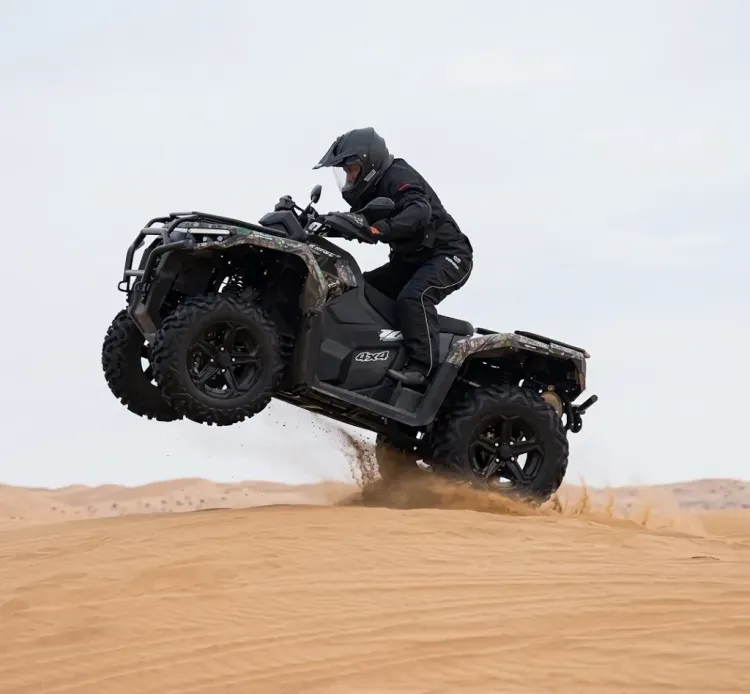 ATV Engine Knocking Noise: Causes and What to Check
ATV Engine Knocking Noise: Causes and What to Check
ATV Engine Knocking Noise: Causes and What to Check
-
Oct 08 2026
learn more
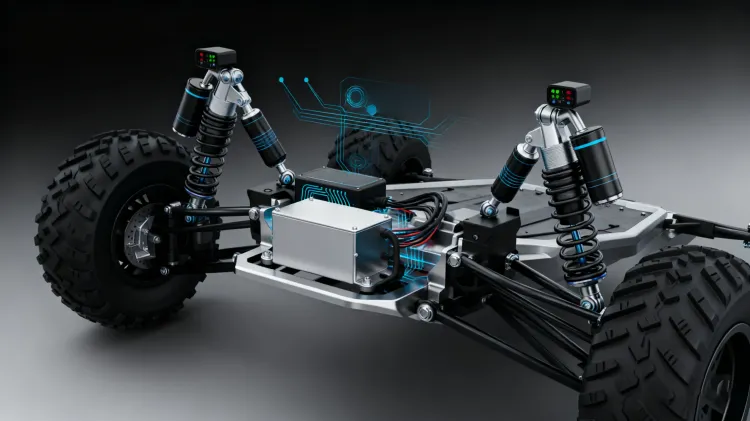 Is Electronic Suspension Worth It for ATVs & UTVs?
Is Electronic Suspension Worth It for ATVs & UTVs?
Is Electronic Suspension Worth It for ATVs & UTVs?
-
Oct 07 2026
learn more
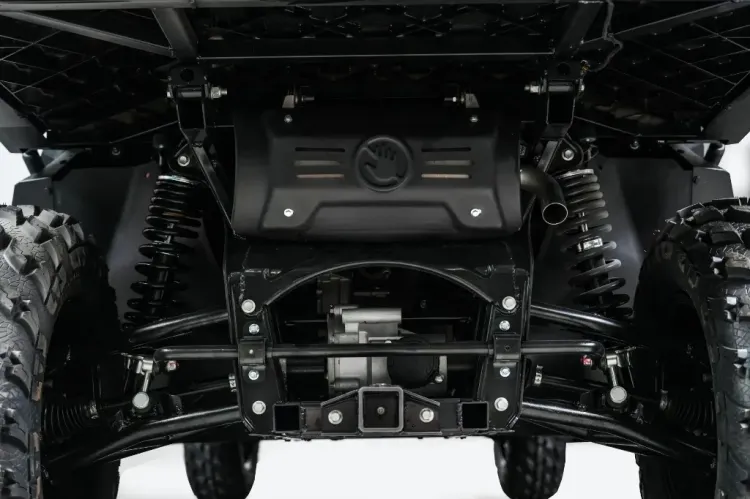 UTV Suspension: Types, Travel, and How It Works
UTV Suspension: Types, Travel, and How It Works
UTV Suspension: Types, Travel, and How It Works
-
Sep 30 2026
learn more
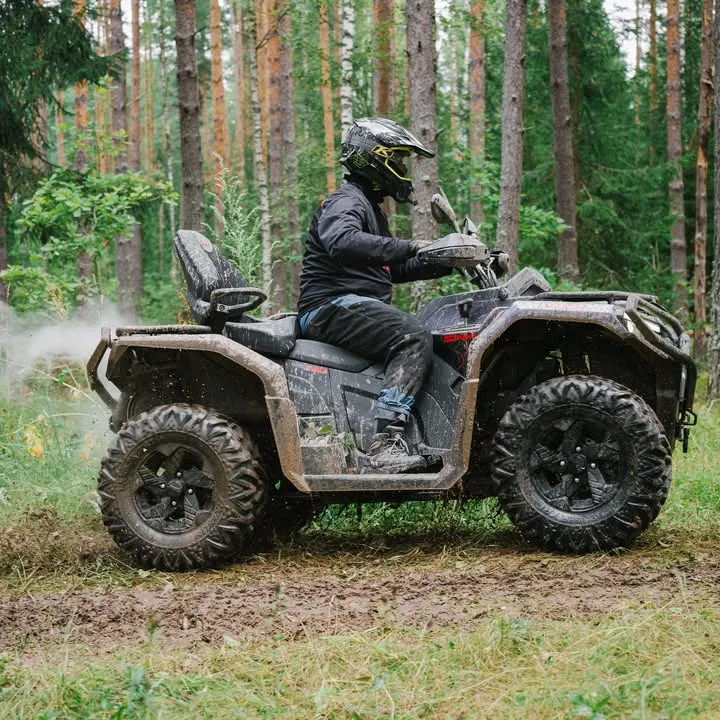 First Buying ATV 10 Thing Need to Know
First Buying ATV 10 Thing Need to Know
First Buying ATV 10 Thing Need to Know