What Makes an ATV Good Off-Road?
Jun 11 2026
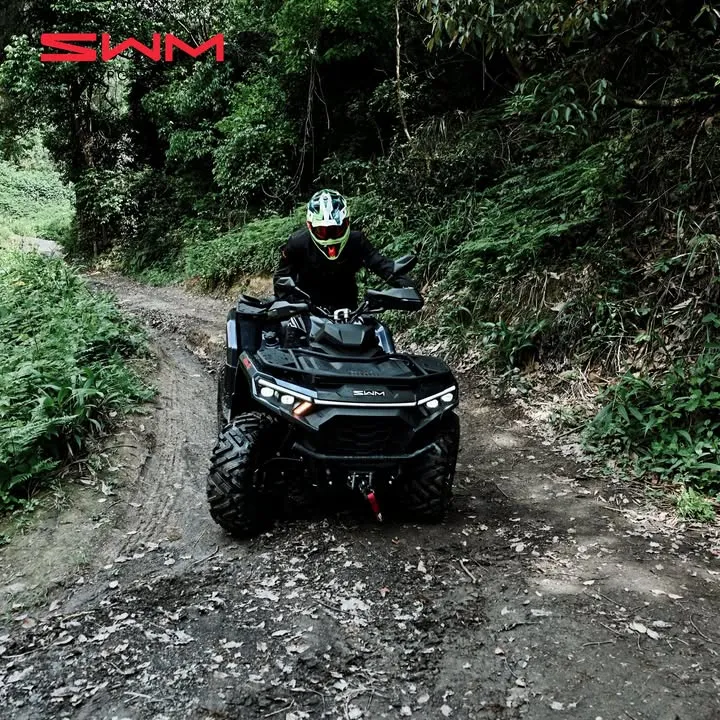
Off-road riding pushes machines to their limits in a way pavement never can. Loose gravel, deep mud, steep rocky climbs, and uneven forest floors demand a vehicle built just for that punishment. ATVs dominate this environment not by accident, but because every core element of their design — from the ground up — is engineered to handle terrain that would stop most other vehicles dead. Here’s why.
Ground Clearance Creates Room to Move
Ground clearance is key for any ATV before hitting the trails. It's the space between the vehicle's bottom and the ground. Off-road ATVs usually have about 10 to 13 inches. This lets them roll over bumpy stuff like rocks and roots without damage. So, enough clearance means a smoother ride and less risk of getting stuck.
This matters because off-road terrain is never flat. Obstacles appear at unpredictable heights and angles. A machine with inadequate clearance gets high-centered — stuck with its belly resting on an obstacle and its wheels spinning in the air. High ground clearance prevents that entirely, letting the ATV pass over rather than into the problem.
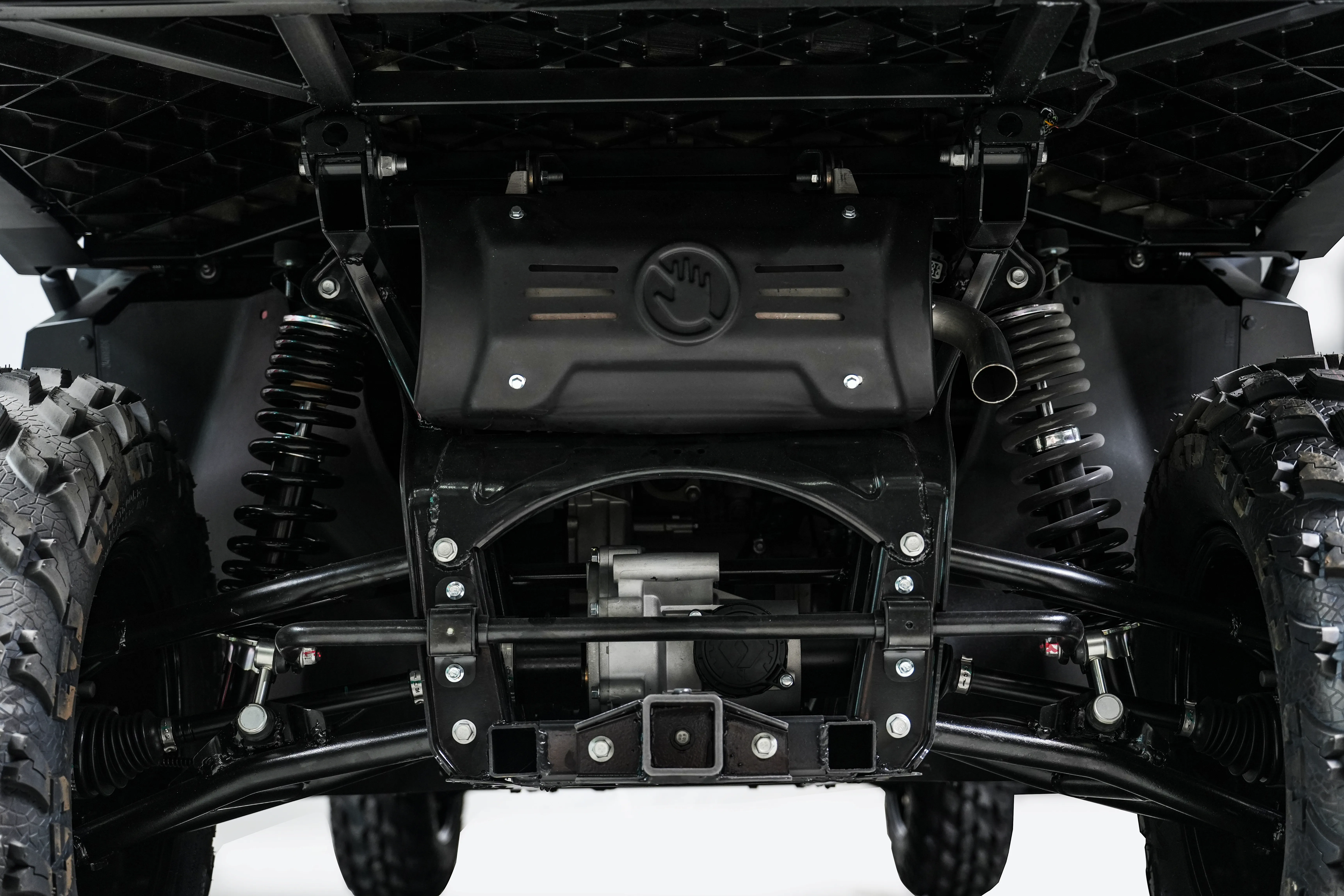
Utility ATVs are basically built with this already in mind, from the factory. Compared to sport ATVs that are optimized for speed, utility versions sit a bit taller, keep their mechanical internals higher up off the ground, and they come reinforced underneath with skid plates that take the hit from rocks without really damaging the engine or the transmission. That blend of extra height + protection is what makes them actually capable in rough conditions, not only “capable looking” from a distance.
Tires Built for Traction, Not Tarmac
Standard road tires are made to keep in touch with a smooth, steady. Off road terrain is more like the polar case— soft, loose, wet, and uneven, all at once. ATV tires handle it head on, with aggressive tread patterns, thicker sidewalls, and terrain-specific compound choices.
Mud tires carry deep, widely spaced lugs that bite into soft ground and eject debris with each rotation, preventing the tread from packing up and losing grip. All-terrain tires use a more versatile pattern that handles loose rock, dirt, and light mud without sacrificing stability on harder surfaces. Paddle tires are purpose-built for sand, using raised scoops at the rear to generate forward drive in conditions where conventional tread would simply spin out.
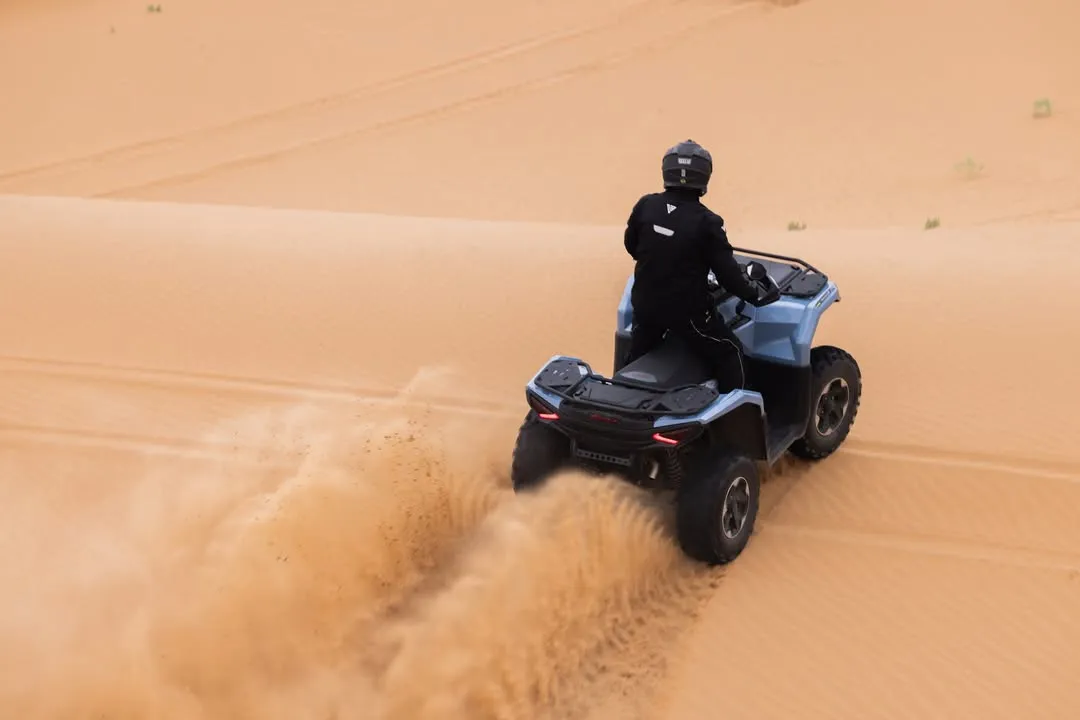
The construction matters as much as the pattern. A 6-ply sidewall resists punctures from sharp rock edges and resists deformation when tire pressure is lowered for soft terrain. Running lower PSI — typically 5 to 6 on loose or muddy ground — deliberately widens the contact patch, spreading the ATV’s weight across a larger footprint and dramatically improving traction. That kind of flexibility is something road vehicles simply aren’t designed to use.
Suspension That Keeps All Four Wheels on the Ground
Off-road performance depends not just on power, but on continuous traction. A wheel that lifts off the ground contributes nothing — and on technical terrain, maintaining contact across all four wheels is the difference between controlled progress and a loss of steering.
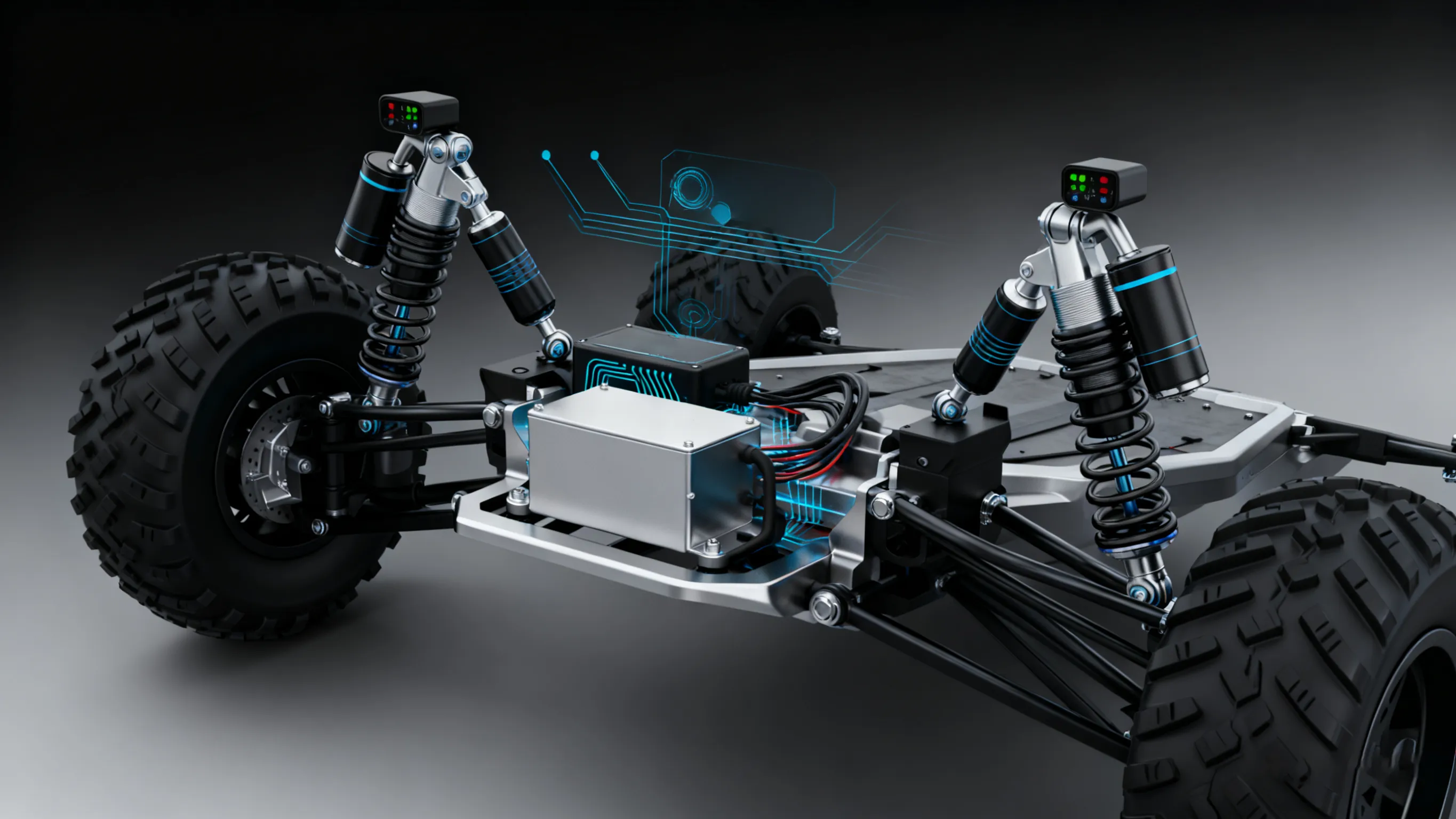
Modern ATVs address this with independent suspension systems, most commonly a double A-arm configuration front and rear. Each wheel moves independently along its own travel arc, meaning a rock or drop under one wheel doesn’t transfer its full force to the opposite side. The ATV stays level and stable even as individual wheels rise and fall across uneven ground.
Suspension travel — the total distance a wheel can move through its range — is the measure of how large an obstacle the system can absorb. Entry-level machines offer around 5 to 7 inches of travel. Serious off-road ATVs provide 9 to 12 inches or more, allowing them to roll over substantial obstacles at speed without bottoming out or losing wheel contact. Paired with properly tuned shock absorbers, this level of travel means the machine follows the terrain rather than fighting it, keeping momentum and control intact on ground where both are difficult to maintain.
4WD Drivetrain Puts Power Where It’s Needed
Traction is useless if the engine’s power can’t reach the ground efficiently. On slippery, loose, or steep terrain, a two-wheel-drive vehicle concentrates all its drive force on just two contact points — and when those points break traction, forward progress stops.
A 4WD ATV distributes power across all four wheels, multiplying the number of grip points working in the vehicle’s favor at any given moment. When one wheel loses traction in mud or on wet rock, the others continue to drive. The result is consistent forward movement in conditions where 2WD would dig, spin, or stall.
The most capable off-road setups go further with a locking front differential, which forces both front wheels to rotate at the same speed regardless of traction differences between them. On a standard open differential, the wheel with less resistance receives more power — exactly the opposite of what’s needed when one wheel is buried in mud and the other is on firm ground. A locked differential eliminates that imbalance and keeps both wheels pulling equally.
Low-range gearing compounds this advantage on steep climbs and slow technical terrain. By reducing the gear ratio, low range multiplies available torque without requiring the engine to rev hard. The ATV moves slowly but with tremendous force — enough to crawl over obstacles that would overwhelm a machine relying on momentum alone.
How These Systems Work Together
An ATV that is actually able off-road, isn’t really about one single thing. It’s more like how everything works together, kind of in a chain, not just a checklist. Ground clearance keeps the chassis from scraping and catching on rough stuff. The tires, they help turn the engine power into real forward grip, not just spinning. Suspension does the unglamorous job of keeping all four tires on the ground when the surface is jagged or off-balance. Then 4WD, paired with low-range gearing, makes sure the power gets sent to every wheel, but in the right cadence, for whatever situation is going on.
Each system reinforces the others. High clearance is only useful if the suspension can manage the terrain that clearance exposes you to. Aggressive tires only perform when the drivetrain delivers torque to all four of them. A capable 4WD system only helps if the suspension keeps those wheels planted enough to actually grip.
That integration — purpose-built from the wheels up — is what separates an ATV from other vehicles in off-road environments. It’s not incidental capability. It’s designed in.
-
Oct 23 2026
learn more
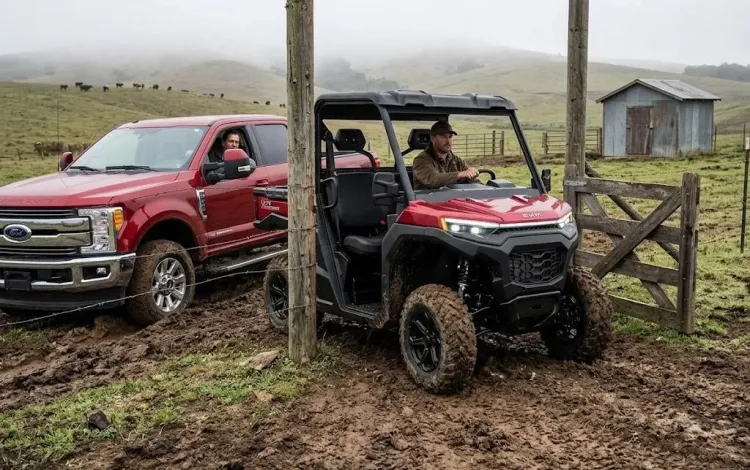 Is a Side-by-Side Considered a Motor Vehicle in the US?
Is a Side-by-Side Considered a Motor Vehicle in the US?
Is a Side-by-Side Considered a Motor Vehicle in the US?
-
Oct 22 2026
learn more
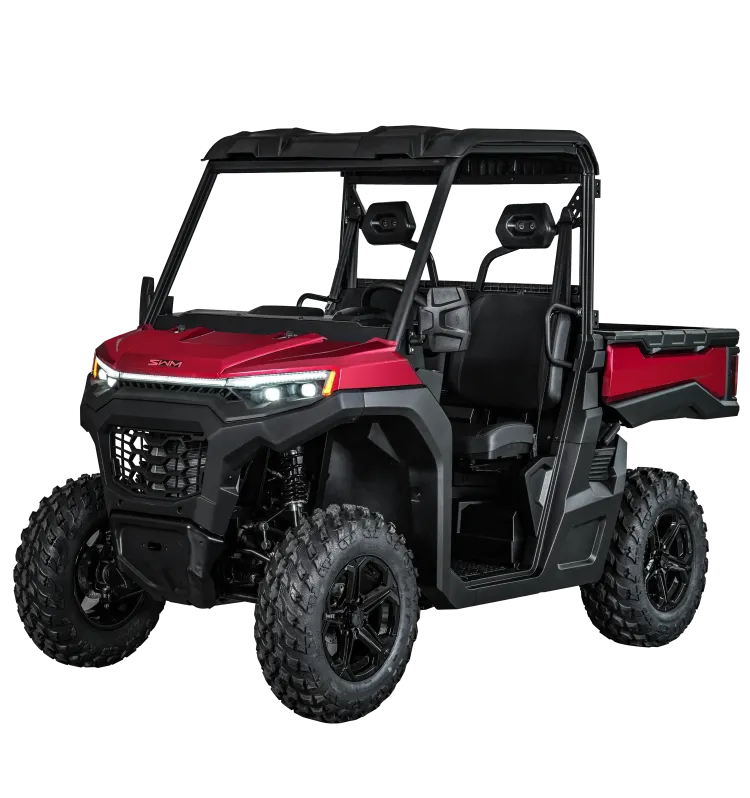 How Much Does a 4-Seater Side-by-Side Weigh for SWM UTV?
How Much Does a 4-Seater Side-by-Side Weigh for SWM UTV?
How Much Does a 4-Seater Side-by-Side Weigh for SWM UTV?
-
Oct 23 2026
learn more
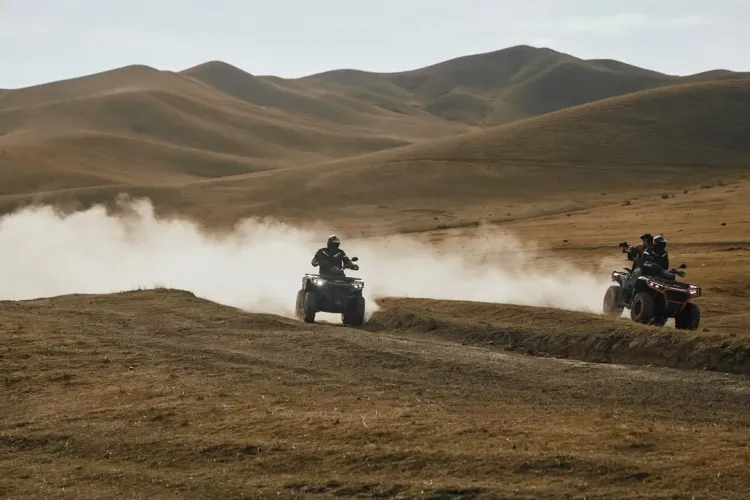 How to Plan a Weekend ATV Adventure
How to Plan a Weekend ATV Adventure
How to Plan a Weekend ATV Adventure
-
Oct 20 2026
learn more
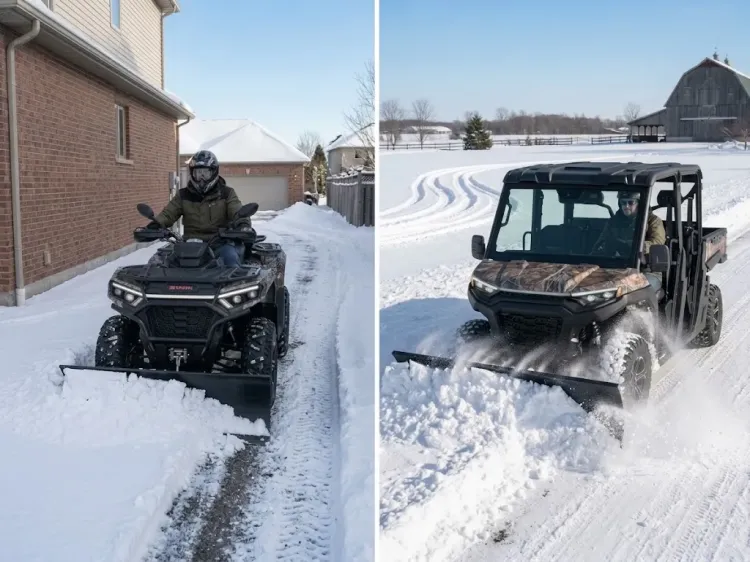 ATV vs UTV for Snow Plowing: 5 Key Differences
ATV vs UTV for Snow Plowing: 5 Key Differences
ATV vs UTV for Snow Plowing: 5 Key Differences