What Size UTV Do I Need? 5 Steps to Choose the Right One for You
Sep 16 2026
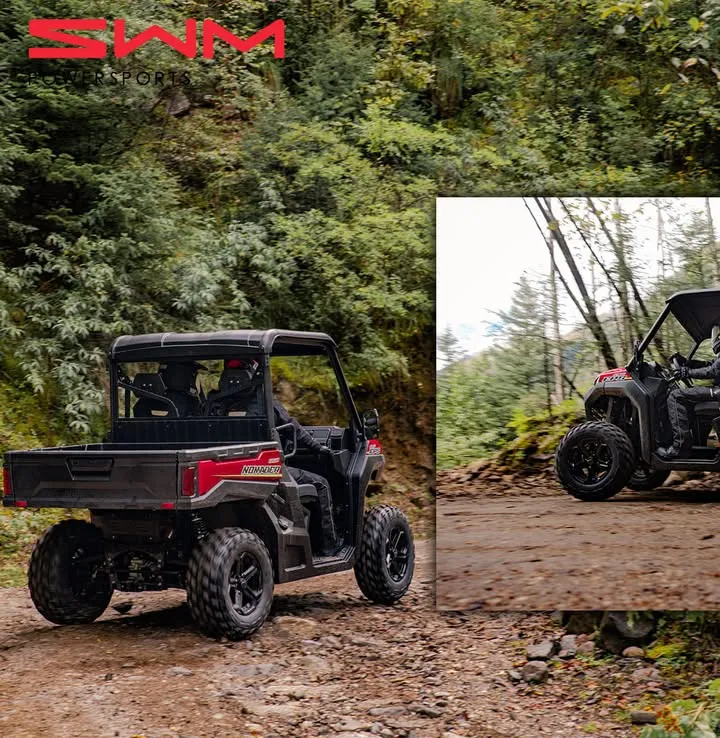
You can upgrade the suspension. You can install a louder stereo. You can even swap out the tires. But if you buy a UTV that is the wrong physical size, you are stuck with it forever.
The question “What size UTV do I need?” is actually five hidden questions in one:
Will it fit through the trails I ride?
Will it fit in my garage or on my trailer?
Can my property’s terrain handle its weight and turning radius?
Am I carrying people or cargo?
Am I buying for weekend fun or weekly work?
Step 1: The Width Decision – Where Will You Actually Drive?
Width is the most critical dimension because it determines access. Unlike height or length, width cannot be compensated for by driving skill. If the machine is too wide for the trail, you are not going through.
50 to 54 Inches – The Narrow-Lane Specialist
Who this is for:
Riders who frequent dense forests, rocky mountain passes, or historical wagon trails. Also ideal for those who need to load the UTV sideways into a pickup truck bed or a narrow toy hauler.
The Physical Reality:
l These machines are built to slip through gaps that are barely wider than a standard ATV.
l They feel nimble because they are light, usually weighing under 1,400 lbs (635 kg).
l The trade-off is shoulder room. Two average-sized adults will touch shoulders. Helmet clearance is minimal.
The Hard Question: Do you have a specific trail system within 50 miles of you that has a posted width restriction sign? If the answer is no, do not buy this category. The comfort sacrifice is not worth it for casual use.
60 to 65 Inches – The Versatile All-Rounder
Who this is for:
This is the default choice for 70% of buyers. It fits recreational dunes, open desert, gravel roads, and most ungated forest service roads.
The Physical Reality:
The extra 10 inches of width translates directly into lateral stability. You can corner faster without the fear of tipping.
Suspension engineers have more room to design longer control arms, meaning the ride quality over whoops and washboards is dramatically smoother.
Two adults sit comfortably with elbow room.
The Hard Question: Can you accept that you are banned from narrow-gauge trails?
66 to 72+ Inches – The Workhorse Platform
Who this is for:
Farmers, ranchers, hunters hauling heavy game, and property managers. This width is not about fun—it is about stability under load.
The Physical Reality:
These are heavy machines (often 1,800+ lbs / 816 kg). The wide stance allows them to carry 1,000+ lbs in the cargo bed without leaning dangerously on side slopes.
The cab is often designed for three-across seating.
Crucial warning: This width makes them illegal on most public OHV (Off-Highway Vehicle) trails. They are designed for private land.
The Hard Question: Is your primary use case work (hauling, spraying, towing) rather than recreation? If yes, width is your friend. If no, it is a burden.
Step 2: The Length and Wheelbase Trap
“Crew” or “Long” version of the same model. But longer does not mean better—it means different physics.
Short Wheelbase (Usually under 100 inches / 254 cm)
Best for: Technical rock-crawling, tight switchbacks, and riders who enjoy lifting a front wheel over obstacles.
The catch: The ride is choppy. Short wheelbases pitch forward and backward over bumps, making passengers motion-sick on long straight roads.
Long Wheelbase (Usually 115 inches / 292 cm and above)
Best for: Dune jumping (stability at speed), carrying rear passengers, and towing heavy trailers (less rear-end squat).
The catch: You need a three-point turn to navigate what a short-wheelbase machine does in one smooth arc. On a narrow cliffside road, the longer machine will have its front wheels around the corner while the rear wheels are still straight—this creates a “cutting the corner” effect that can drop a wheel off the edge.
The Honest Assessment for Rear Seats
If you are buying a 4-seater because you “might” take friends along:
Reality check: Rear seats in most shorter-wheelbase 4-seaters are sized for children under 5’4” (162 cm) or for cargo. Full-sized adult legs will be cramped after 20 minutes.
Only choose a 4-seater if two rear passengers will ride with you every single weekend. Otherwise, buy a 2-seater and use the saved length for easier parking and sharper turning.
Step 3: The Height & Clearance – Overhead and Underbelly
Two height measurements matter, and they are often confused.
Overall Height (Roll Cage / ROPS)
Most UTVs stand between 72 and 78 inches (183–198 cm) tall.
The garage test: Measure your garage door opening from the floor to the top of the door header. Now subtract 6 inches (15 cm) for your trailer’s tire squat or driveway incline. If your garage is a standard 7-foot (84-inch) door, you are safe. If you have a 6’8” (80-inch) door, you are playing with fire—especially if you add a roof light bar or high-rise snorkel intake.
The helmet test: Sit in the driver’s seat wearing your full-face helmet. Have someone measure from the top of your helmet to the roll cage. You need at least 4 inches (10 cm) of clearance. In a rollover, the cage flexes; without this gap, your spine absorbs the impact.
Ground Clearance
This is the distance between the ground and the lowest point of the chassis (usually the differential).
9–11 inches (23–28 cm): Adequate for gravel roads and light grass. You will high-center on logs or deep ruts.
12–14 inches (30–36 cm): The sweet spot for serious off-roading. You can straddle most fallen branches.
15+ inches (38+ cm): Designed for extreme mud bogs. Warning: Higher ground clearance raises the center of gravity, making the UTV tippier on side-hills. Wider is mandatory to compensate.
Step 4: The Weight-to-Cargo Formula – Payload and Towing
Size is not just about physical dimensions; it is about mass. A small UTV might physically fit your garage but mechanically fail your workload.
The 80/20 Rule
Ask yourself: What is the heaviest single item I will carry in the cargo bed in the next 12 months?
If under 400 lbs (181 kg): Any standard UTV size will manage. Focus on width and length.
If 400–800 lbs (181–363 kg): You must look at the cargo bed dimensions (length x width), not just the weight rating. Can you physically fit a full hay bale or a 55-gallon drum between the wheel wells? Measure the bed’s internal width—many are only 40 inches wide between the fenders, which is too narrow for standard pallets.
If over 800 lbs (363 kg) or towing over 1,500 lbs (680 kg): You need a long-wheelbase, wide-stance machine. The extra length prevents the front wheels from lifting off the ground when you accelerate with a heavy trailer.
The Trailer Compatibility Check
This is the most overlooked size constraint.
Your UTV must fit on your trailer deck with the tailgate closed.
Measure your trailer’s usable length. A standard 12-foot (144-inch) trailer can hold a short-wheelbase UTV. A 4-seater often requires a 14-foot (168-inch) trailer.
Critical: Check the trailer’s width between the fenders. If your UTV’s overall width is 64 inches, but your trailer’s inner fender width is only 60 inches, your tires will sit on top of the fenders—a dangerous and illegal loading scenario.
Step 5: The Fit Test – How to “Try On” a UTV Without Driving It
Since you cannot test every trail before buying, perform this static fit test at the dealership or a private seller’s lot.
1. The door frame test: Walk the UTV through the narrowest doorway on your property (or the gate to your pasture). If you cannot push it through with 2 inches of clearance on each side, you will never feel comfortable driving it through.
2. The garage pivot: Measure your garage’s interior length. Now imagine backing the UTV in. Most people forget that the winch fairlead and rear hitch add 4–6 extra inches of protrusion. Add those to the manufacturer’s published length.
3. The passenger shoulder test: Sit in the driver’s seat. Have a friend of similar size sit in the passenger seat. Both of you place your elbows on the armrests. If your elbows touch, that UTV is too narrow for all-day riding.
4. The turning radius simulation: Mark a circle on the ground with a radius of 15 feet (4.5 meters). If the UTV cannot make that circle without stopping and reversing, it is too long for dense woodlands.
Summary
Your Ideal UTV Size = (Terrain Constraint) + (Garage Constraint) + (Human Mass) + (Cargo Mass)
Terrain: If you have narrow trees → Small Width. If you have open hills → Large Width.
Garage: Measure the door. Subtract 6 inches. That is your Maximum Height.
Human Mass: If your combined weight with a passenger exceeds 400 lbs, you need a Long Wheelbase to keep the front wheels on the ground.
Cargo Mass: If you carry more than 500 lbs weekly, you need a Heavy-Duty Frame—which only comes in large sizes.
-
Sep 20 2026
learn more
 How to Read ATV Tire Size: 27×9-14 Explained
How to Read ATV Tire Size: 27×9-14 Explained
How to Read ATV Tire Size: 27×9-14 Explained
-
Sep 17 2026
learn more
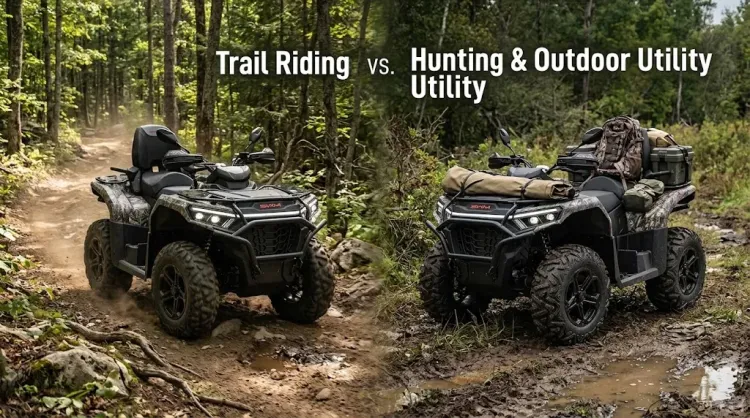 ATV Trail Riding vs Hunting: How to Choose the Right ATV
ATV Trail Riding vs Hunting: How to Choose the Right ATV
ATV Trail Riding vs Hunting: How to Choose the Right ATV
-
Sep 16 2026
learn more
What Size UTV Do I Need? 5 Steps to Choose the Right One for You
What Size UTV Do I Need? 5 Steps to Choose the Right One for You
-
Sep 15 2026
learn more
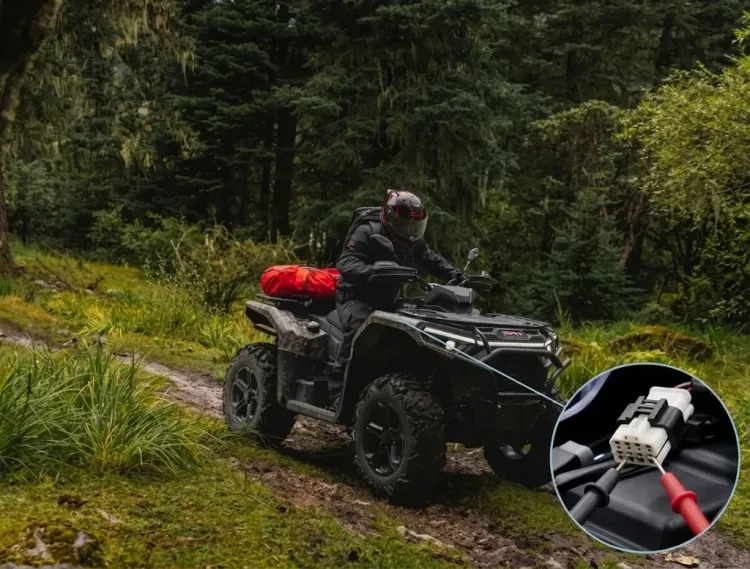 How to Test a Stator on ATV: 4 Tests to Diagnose It
How to Test a Stator on ATV: 4 Tests to Diagnose It
How to Test a Stator on ATV: 4 Tests to Diagnose It