How Wide Is an ATV? 7 Things Buyers Should Know
Aug 03 2026
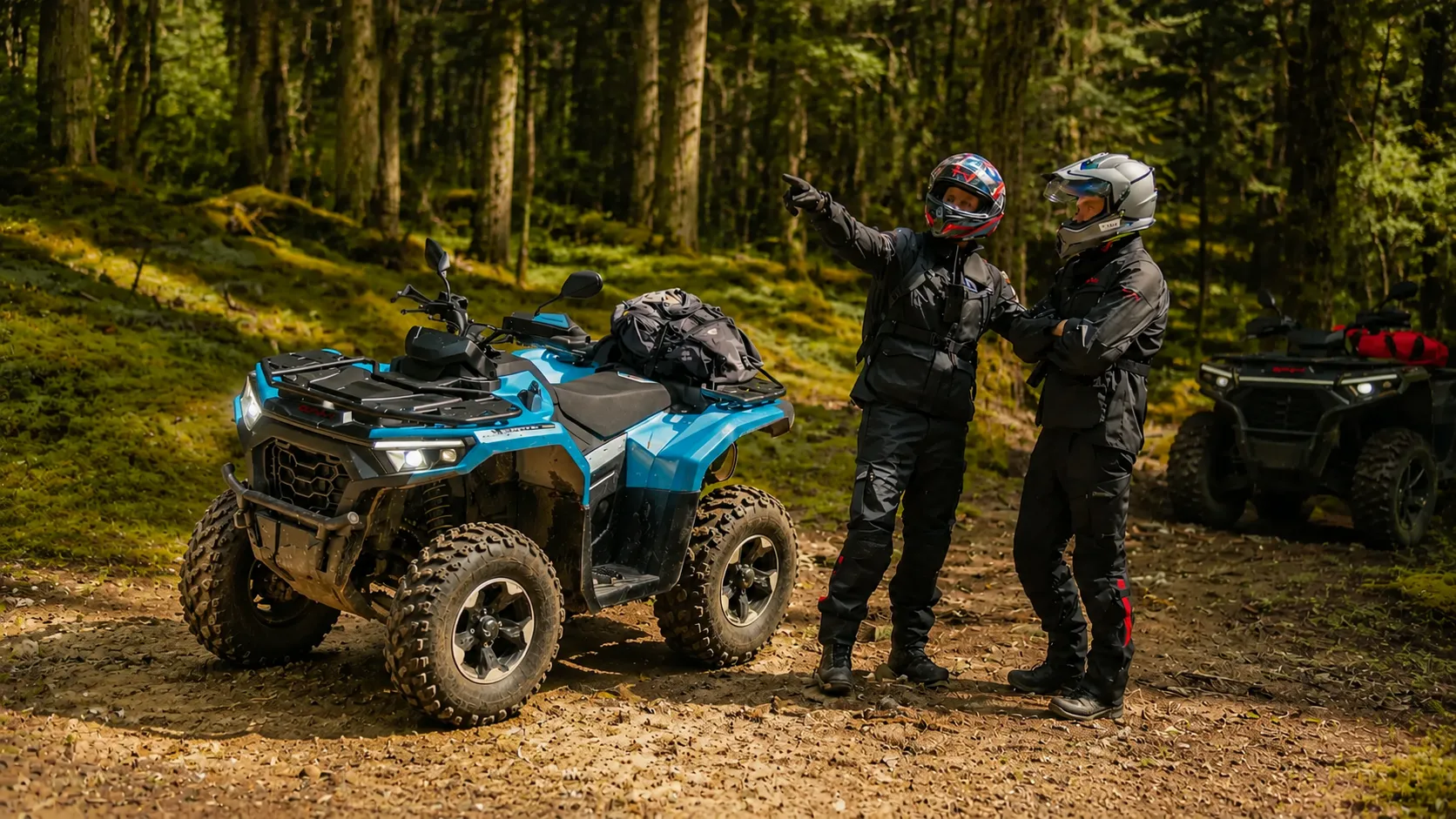
So you're shopping for an ATV, and you've probably asked: how wide is an atv anyway? That number matters more than you think – it decides if it fits your truck, which trails you can ride, and how stable you feel on side slopes. Most full-size adult ATVs run 42 to 50 inches (107-127 cm). But actual width shifts – depends on suspension, tires, and whether it's utility or sport. Get it wrong, and you might not squeeze through a trail gate or sit flat between your pickup's wheel wells. You're balancing stability for turns against maneuverability in tight woods. A wider track – the distance between tire centerlines on the same axle – resists tipping but makes narrow trails a pain. The trick? Match the width to where you plan to ride, how you'll haul it, and what work you expect.
7 Key ATV Width Facts
Before we get into the weeds, here are the quick hits. These are the numbers and rules that most buyers really need to know up front.
1. Full size range – Most adult utility ATVs fall between 42 and 50 inches across.
2. Youth specs – Machines built for younger riders usually measure 30 to 38 inches wide.
3. Trail width limits – Quite a few OHV trail systems enforce a 50-inch maximum width on specific routes. Go over, and you are turned away.
4. Truck bed fit – The space between the wheel wells in your pickup bed decides whether the ATV drops in flat or sits crooked.
5. Engine size connection – Bigger displacement typically comes with a wider chassis and suspension arms to keep things stable under power.
6. Aftermarket changes – Swapping to wider tires or adding wheel spacers can push your machine past that standard width before you even realize it.
7. Use case matters – The right width depends on your trails, your transport setup, and the actual jobs you need the ATV to handle.
How Wide Is an ATV: Size Chart and Typical Uses
Okay, let us break it down practically. Most standard utility ATVs come in around 45 to 48 inches wide. That range works for common ATV uses – tending fields, hauling gear – and still fits on most recreational trails. Gives you enough stance to feel steady on side slopes. Fits fine on a single-axle trailer too. And if you know that width early, you can plan your garage and tow setup well before the machine shows up.
Now, width is not just about the trail. It also ties into engine size and riding style. Get all three in sync, and the trail feels much better. Take a look at this quick comparison table. It breaks down average widths by category so you can see where each type lands.
ATV Type | Engine Displacement | Average Width | Typical Use Cases |
Youth ATV | 50cc – 70cc | 30 – 34 in (76 – 86 cm) | Basic training on flat open ground, always under adult supervision |
Junior ATV | 90cc – 125cc | 34 – 38 in (86 – 96 cm) | Light trail riding for growing riders with some experience |
Mid-Size Utility | 250cc – 500cc | 40 – 45 in (102 – 114 cm) | Daily field maintenance and tighter wooded trails |
Full-Size Utility | 450cc – 700cc | 42 – 48 in (107 – 122 cm) | Farm work, towing, and standard public trail riding |
High-Performance / Heavy-Duty | 800cc+ | 46 – 50+ in (117 – 127+ cm) | Desert dunes, mud bogging, and two up cruising |
ATV Width by Engine Size: From Youth ATV to Full-Size Models
Engine size pretty much sets up the whole frame. Smaller engine? Narrower chassis. Simple as that – they are built for lighter riders. That is just how it works. As the engine gets bigger, the frame gets beefier. They stretch out the suspension A-arms too. All to handle the extra power and soak up rougher impacts. You also want to match the engine size to the rider's build. And pair it with solid off-road riding skills. That combination is what keeps you in control when you carve through turns.
50cc to 70cc youth ATVs (30 to 34 inches wide) – These are compact machines. Built for young riders. Always under adult supervision. That narrow 30- to 34-inch stance makes them incredibly easy to steer at low speeds. Perfect for the backyard or a flat practice field. But here is a tip – keep them on level ground. That narrow track does not like side hills.
90cc to 125cc junior ATVs (34 to 38 inches wide) – Move up a class, and the track widens to 34 or 38 inches. That extra width adds cornering stability. Good for intermediate riders who are starting to carry more speed. Fits growing teenagers nicely. And it stays narrow enough to dodge trees on forest trails.
250cc to 500cc mid-size ATVs (40 to 45 inches wide) – These are entry-level adult machines. They keep things moderate – 40 to 45 inches. A good choice if you prefer easy steering over raw power. On tight, twisty hunting trails where you are weaving between trunks, that narrower stance works in your favour.
450cc to 700cc full-size utility ATVs (42 to 48 inches wide) – This is the sweet spot for most adult buyers. Width usually settles around 45 to 48 inches. That hits a solid balance between cargo capacity, stability, and trail access. These machines carry gear on the front and rear racks without issue, and they still clear the width restrictions on many standard recreational routes.
800cc+ high-performance and heavy-duty ATVs (46 to 50+ inches wide) – Modern big displacement machines often push 46 to 50 inches or even wider. They need that broad stance to handle the engine output. These are the rigs for aggressive dune riding, deep mud, or two up touring where you want maximum tire contact and stability at speed.
Why ATV Width Matters: Trail Access, Transport, and Storage
Knowing how wide an ATV is matters because it touches three real world things. Trail access. Transport logistics. And where you park it at night. Overlook any of these, and you could face pricey tickets, a damaged tailgate, or a garage door that refuses to close. A little planning around these three limits keeps your riding trips smooth and your stress low.
OHV trail restrictions – Some OHV trail systems enforce a strict 50-inch maximum width on specific routes. That applies to single track and narrow designated trails. If your machine sits wider than 50 inches because of aggressive tire tread or aftermarket wheels, you might get stuck at the entrance gate. Some trails simply do not allow it.
Truck bed fit guide – Truck beds have wheel wells that take up space. You need to check the width between those wells against your ATV width before you load up. Standard full size pickups like the Ford F-150, Chevy Silverado, or Ram 1500 usually fit narrower models fine. But wider full size ATVs might need to straddle the wheel wells, sit on a raised rack, or ride on a separate trailer.
Garage and storage door clearance – A standard single garage door is about 8 to 9 feet wide. That sounds like plenty until you add a lawnmower, shelving, and storage bins. A wider ATV eats up floor space fast. In a compact garage, you might end up with barely enough room to walk past it. Measure your actual storage spot before you commit.
How to Measure ATV Width Correctly Before Buying
If you want the real number, here is the right way to get it. Park the ATV on flat ground. Make sure the tires are at standard pressure. Then run a tape measure straight across the two widest outside points. Measuring on uneven ground or with low tires throws off the suspension geometry. That gives you a false reading. Take measurements in three different spots to catch the absolute maximum physical profile.
Three key spots to measure
Track width – This is the horizontal distance between the outermost points on the left and right tire sidewalls on the same axle.
Control stance – Measure from the end of the left handlebar grip to the end of the right one. Include any aftermarket handguards if you have them.
External accessory protrusions – Look at side steps, front heavy duty bumpers, or storage boxes. These can stick out beyond the tire profile and add critical inches.
Measure tire sidewall to tire sidewall – Put the ATV on level concrete. Straighten the handlebars. Run your tape from the widest bulge on the left tire sidewall straight across to the widest bulge on the right sidewall. That gives you the ground stance. It is also the number the trail gate attendants will check.
Measure handlebar and handguard width – Stretch the tape across the outer ends of the grips or handguards. On some sport models with a narrower track, the handlebars can actually be wider than the tires. That becomes your limiting factor when squeezing through tight openings.
Include racks and bolt-on accessories – Run the tape across any installed side steps, heavy bumpers, or storage boxes. Aftermarket parts often push out past the sidewalls. Those extra fractions of an inch can make or break a fit.
How ATV Accessories Change Vehicle Width
When you shop for an ATV, it pays to understand the base ATV features and match that factory width to your riding environment before you even think about modifications. That said, aftermarket parts can shift the numbers significantly. Tires, wheel offset, and installation choices might add inches to your overall stance. A wider setup improves side hill stability, no question. But it can also push a trail legal machine past that 50-inch limit. Run the math on any upgrades so you stay compliant and safe.
Wider aftermarket tires and negative offset wheels – Moving from smooth stock tires to aggressive mud tires adds width because of those chunky shoulder lugs on the sidewalls. Pair wide tires with negative offset wheels, where the mounting surface sits inward and pushes the wheel outward, and you gain serious mud grip while widening your stance.
Wheel spacers for stability – Wheel spacers are metal discs that bolt between the hub and the wheel. They push the tires outward. A 1.5-inch spacer adds 3 inches to the total width. It is a cost effective way to boost cornering stability. But you have to monitor the total width so you do not accidentally violate local trail rules.
Heavy duty bumpers and body guards – Aftermarket front bumpers and side protection bars often extend past the plastic bodywork. They offer great protection for the radiator and suspension arms. Just check that they do not add unnecessary bulk to the sides.
ATV Width vs UTV Width: Which One Fits Your Riding Needs?
Here is the short version. A standard ATV runs 42 to 50 inches wide. A UTV, or side by side, starts at around 50 inches and can stretch all the way to 64 or even 72 inches. The big difference comes down to seating. ATVs use a straddle style where you sit centered on the machine. UTVs have bucket seats side by side, just like a car, and they come with a roll cage. That makes UTVs significantly wider, heavier, and less nimble on tight forest trails.
Feature | ATV | UTV |
Typical Width | 42 – 50 in (107 – 127 cm) | 50 – 72 in (127 – 183 cm) |
Seating Layout | Straddle style, rider sits on top | Side by side bucket seats |
Best For | Tight wooded trails, solo riding, and trail cruising | Heavy hauling, passenger transport, and work duty |
Maneuverability | Higher, sharper turning | Lower, wider turning radius |
If your main goal is weaving through dense forest, loading into a standard pickup bed, or hitting those strict 50-inch trails, a traditional straddle ATV is the more practical choice. On the other hand, if you need to carry passengers, haul heavy loads in a dump bed for farm work, or blast across open desert where width is not an issue, the wider UTV gives you more comfort and carrying capacity. Just know it takes up more space on the trailer.
Conclusion
So, what is the takeaway? Get a straight answer on how wide an ATV is. That helps you pick the right machine. One that stays stable at speed. One that fits your trailer or truck bed. And one that keeps you legal on local trails. Whether you are looking at compact youth models or 50-inch heavy-duty workhorses, matching that physical width to your actual terrain saves you from loading hassles and getting turned away at the trailhead.
Keep in mind that tires, wheels, and protective accessories all change the final stance width. If you upgrade, measure again. And if you are looking for a quality machine built for outdoor recreation, farm work, or demanding off road conditions, check out SWM. They offer solid ATV models that fit a range of riding styles and environments. Knowing your width is the first step to picking the right one for your trails and your trailer.
-
Sep 20 2026
learn more
 How to Read ATV Tire Size: 27×9-14 Explained
How to Read ATV Tire Size: 27×9-14 Explained
How to Read ATV Tire Size: 27×9-14 Explained
-
Sep 17 2026
learn more
 ATV Trail Riding vs Hunting: How to Choose the Right ATV
ATV Trail Riding vs Hunting: How to Choose the Right ATV
ATV Trail Riding vs Hunting: How to Choose the Right ATV
-
Sep 16 2026
learn more
 What Size UTV Do I Need? 5 Steps to Choose the Right One for You
What Size UTV Do I Need? 5 Steps to Choose the Right One for You
What Size UTV Do I Need? 5 Steps to Choose the Right One for You
-
Sep 15 2026
learn more
 How to Test a Stator on ATV: 4 Tests to Diagnose It
How to Test a Stator on ATV: 4 Tests to Diagnose It
How to Test a Stator on ATV: 4 Tests to Diagnose It